
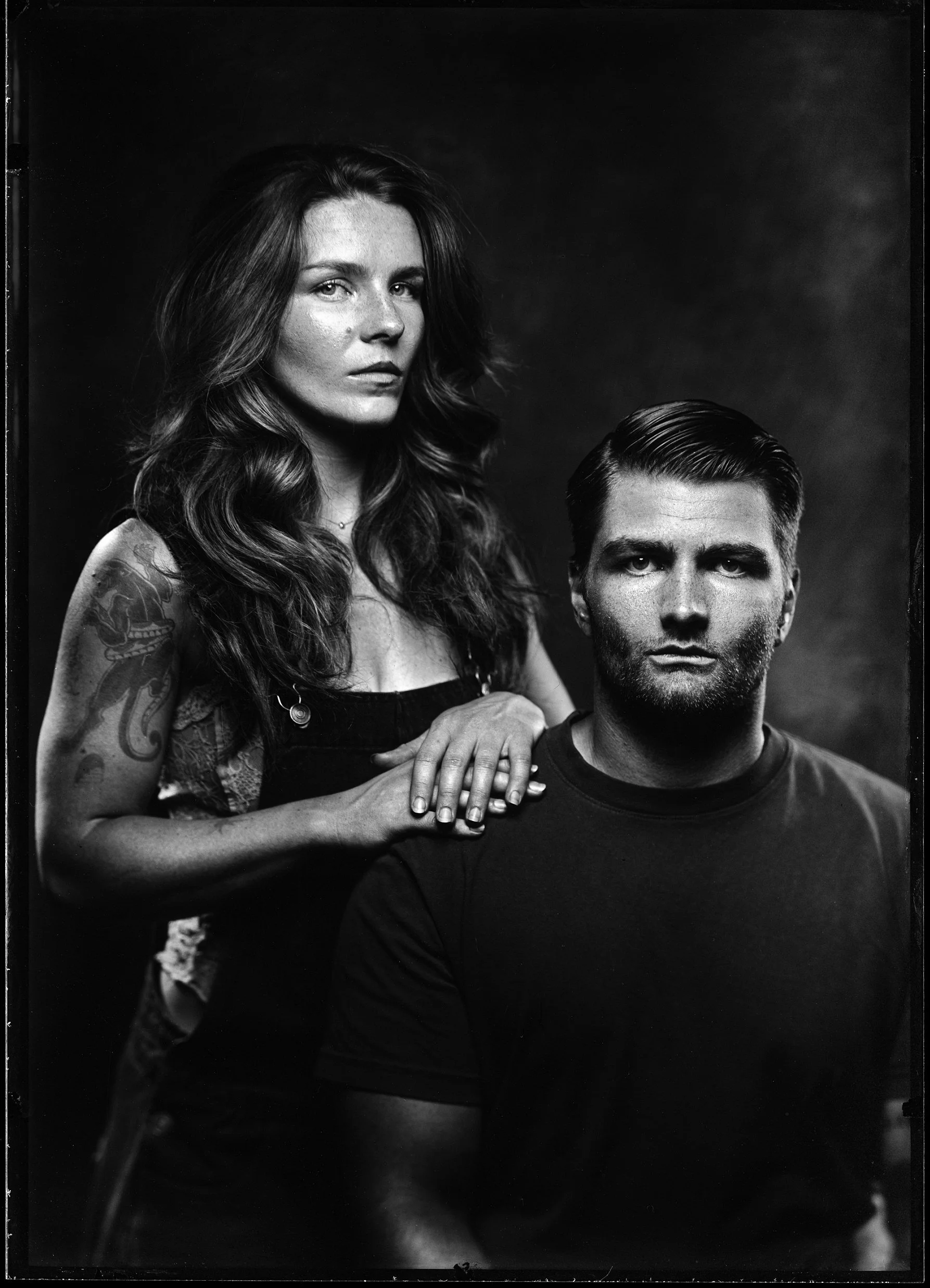
I shape the composition and the pose. What I cannot direct is the story you two have.
Tintype Portraits for Couples, Weddings + Engagements
Every photograph from your wedding will exist as a file. This one exists as an object too.
A tintype is made on a sheet of blackened metal, by hand, in about twenty minutes. Properly varnished it will still be here in a hundred and fifty years, long after the drives and the clouds and the formats have all been replaced. You get the plate itself; scans and a short film of the process are available alongside it.
I photograph couples at every stage — dating, engaged, newly married, thirty years in — and every kind of couple is welcome here, including LGBTQ+ couples. An engagement session is the most common reason couples come in: it gives you something to send to family that is not a phone screenshot, and it is a much calmer experience than a wedding-day shoot. Some of my favorite plates, though, are of people who have been together for decades. Nothing about this is only for the newly engaged.
The set most people end up wanting is three plates from one sitting: the two of you, and each of you alone. Most people have no serious portrait of themselves by themselves, and those are almost always the ones that get hung.
Couples
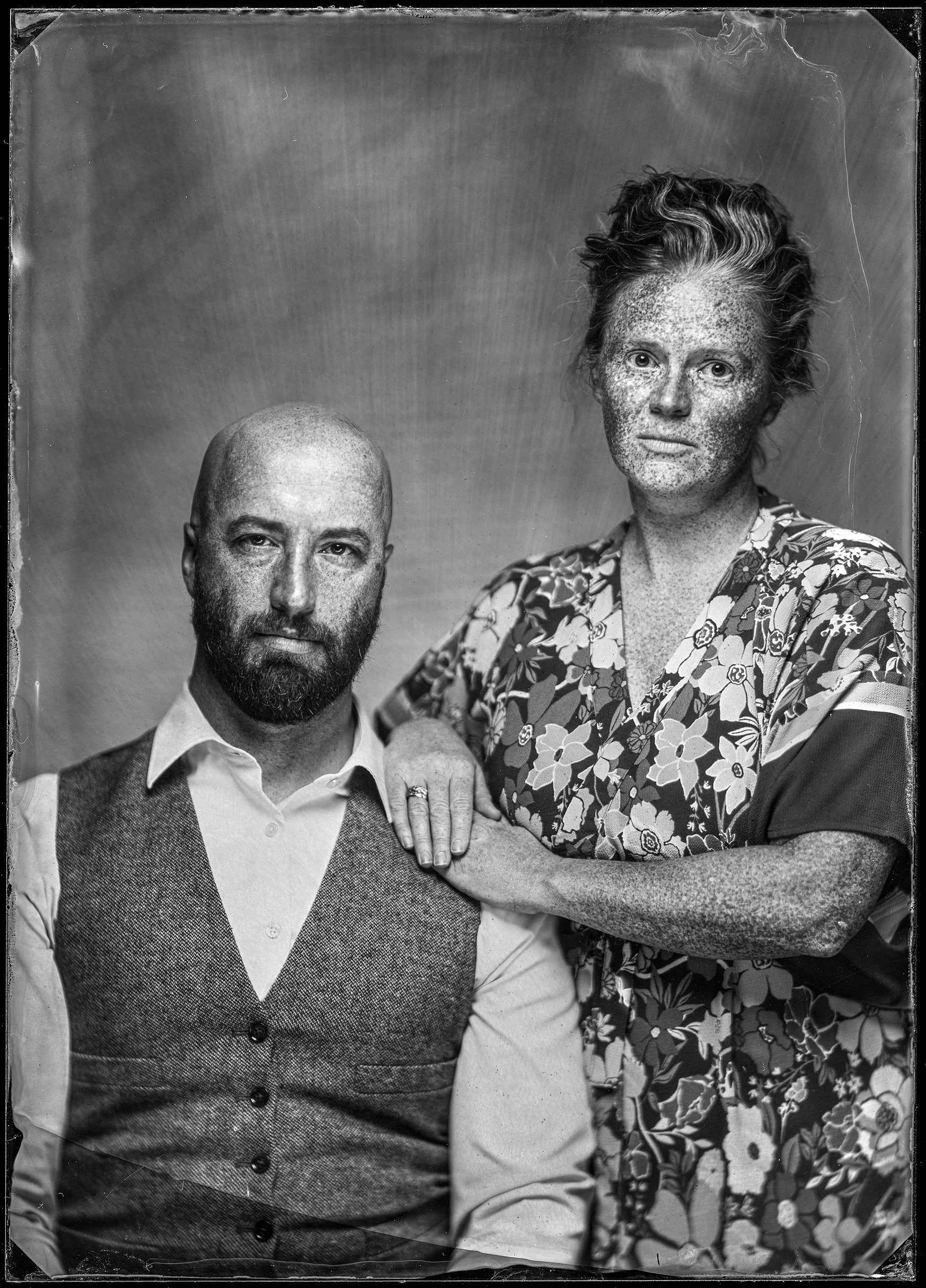
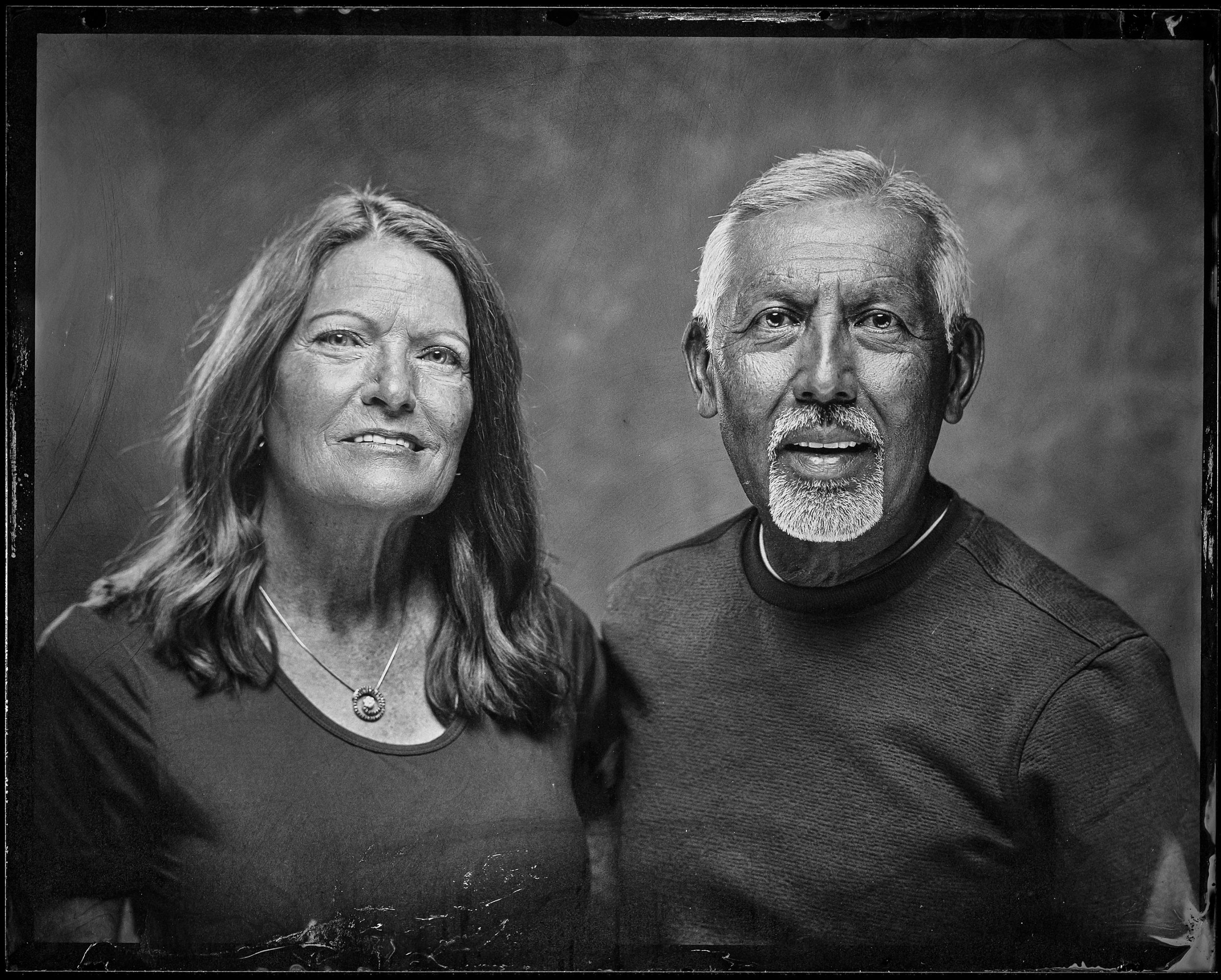
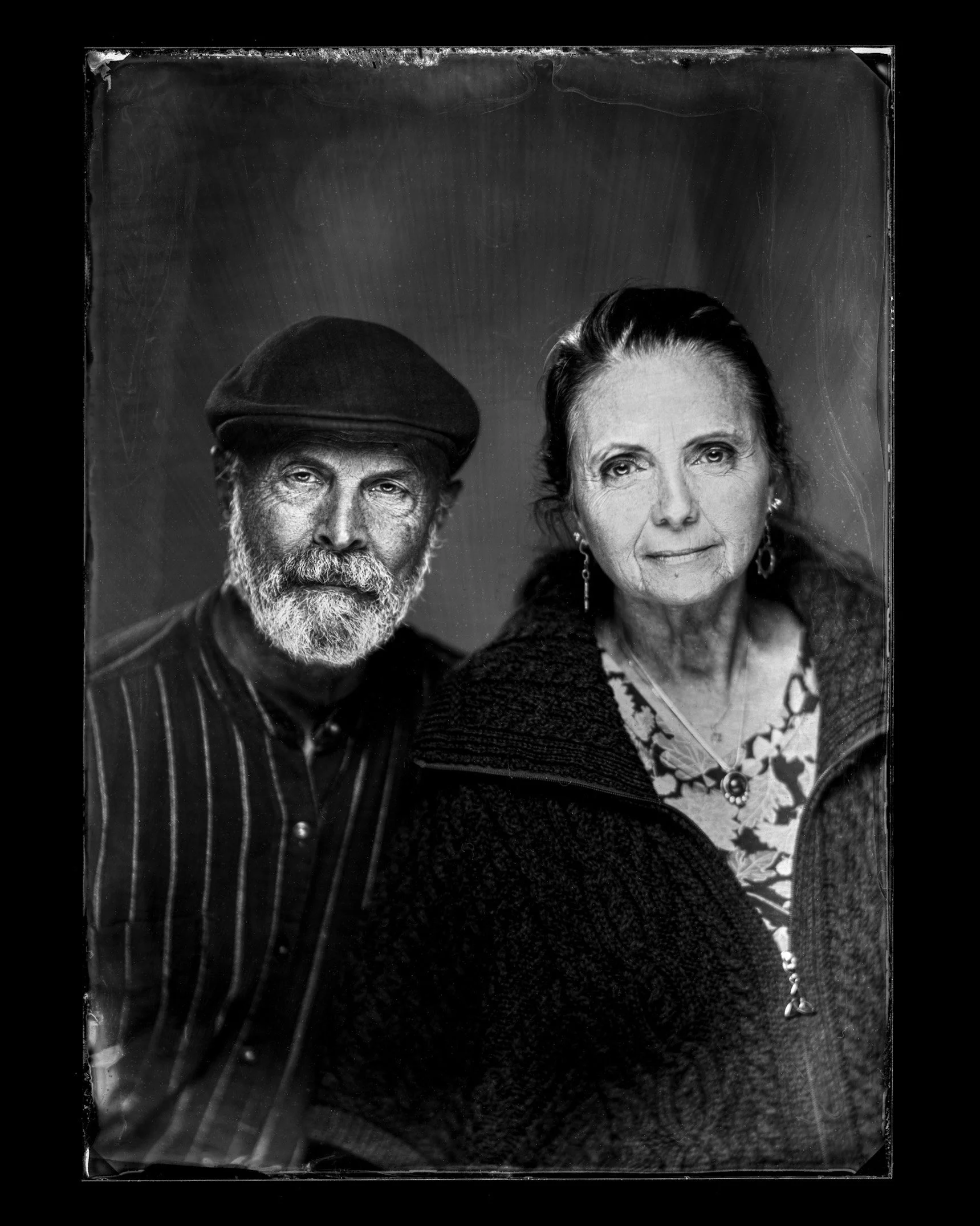
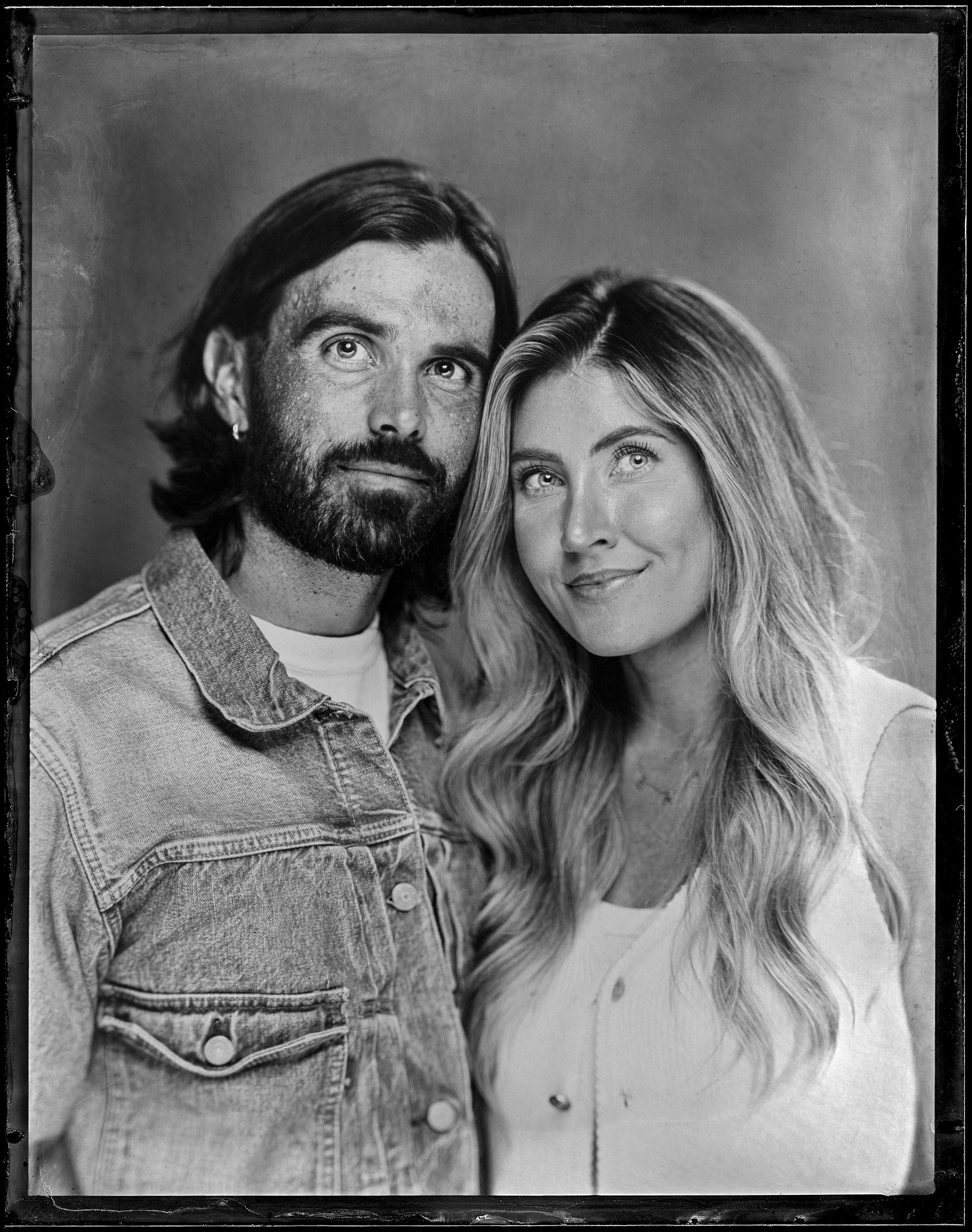
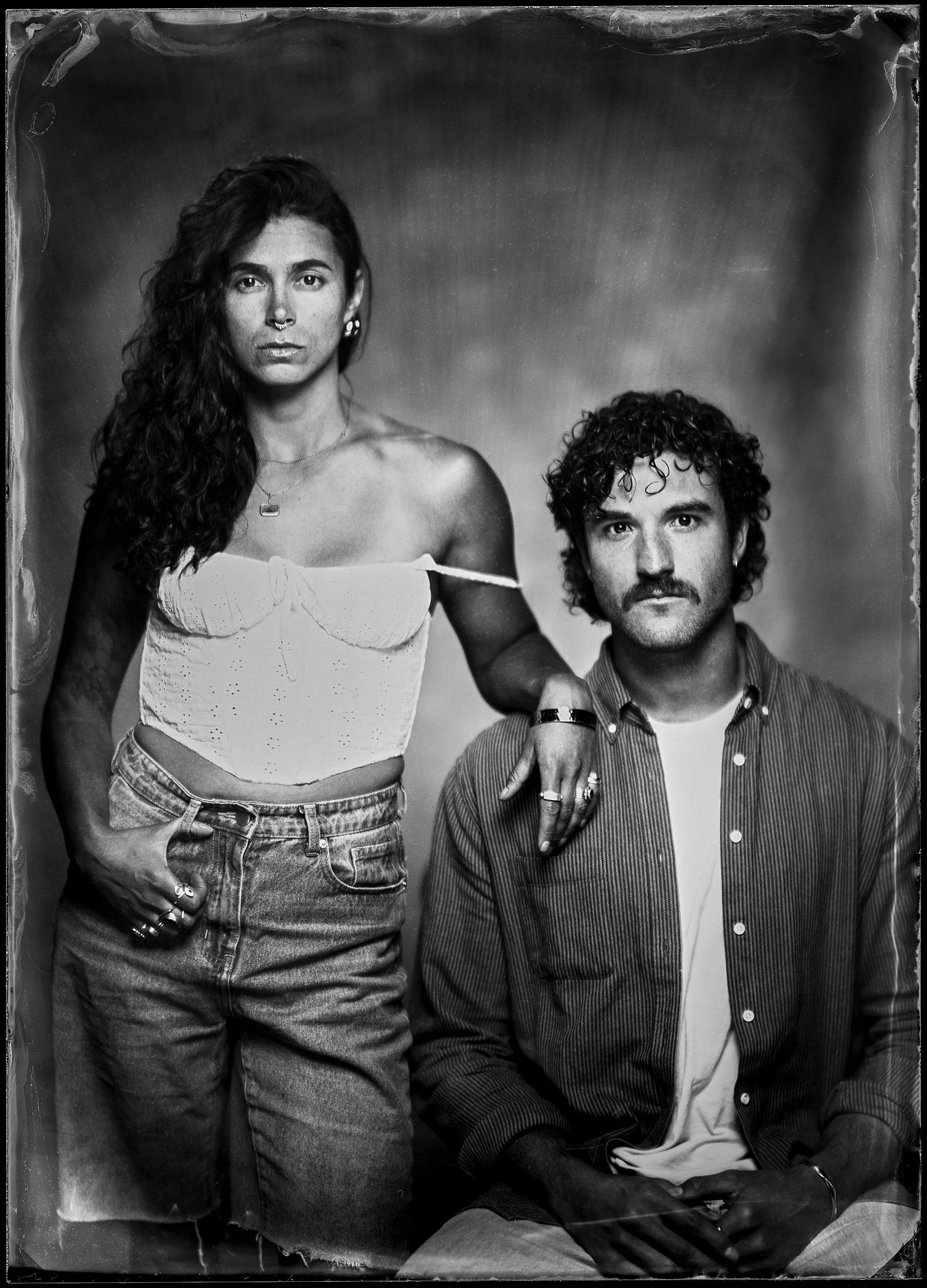
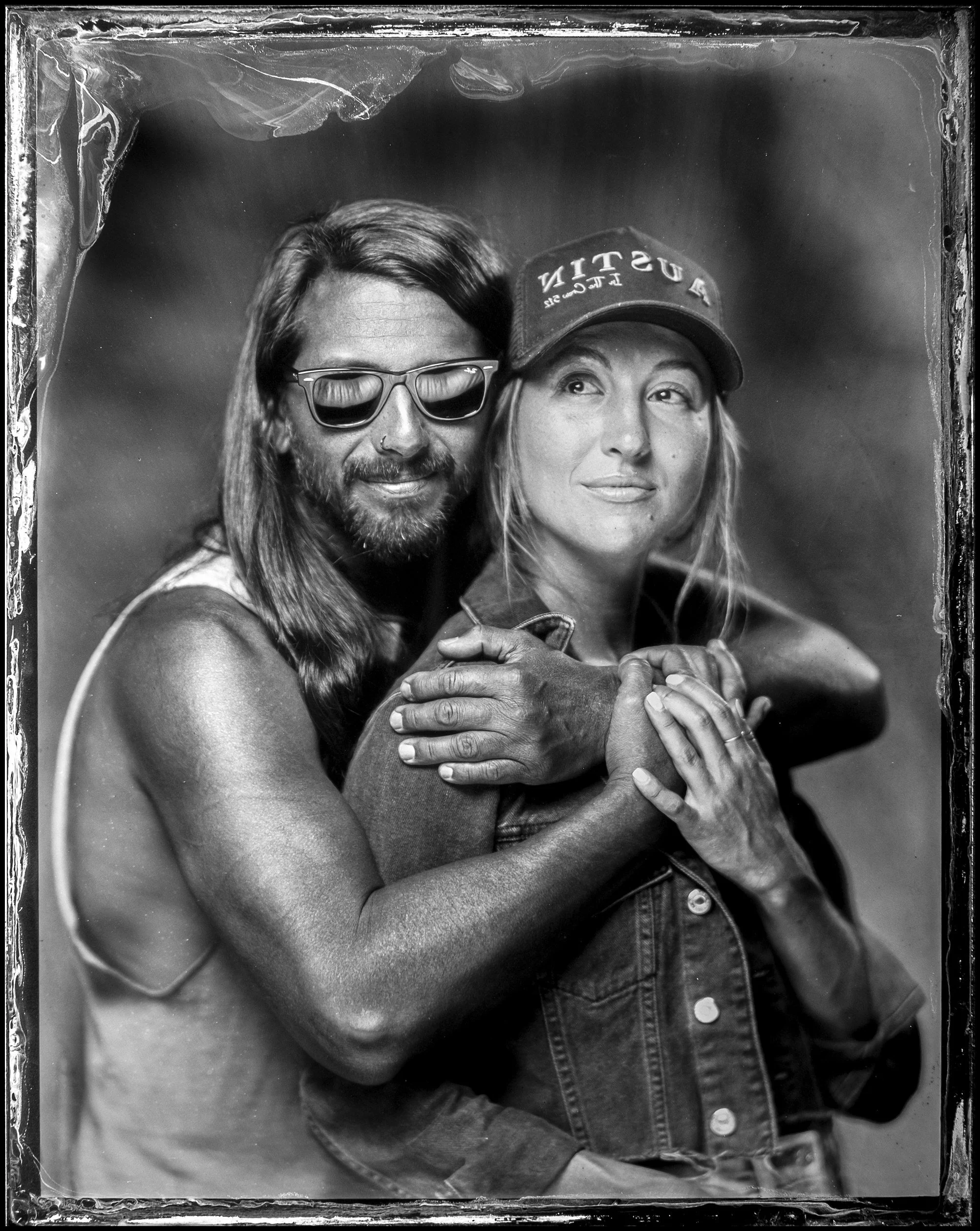
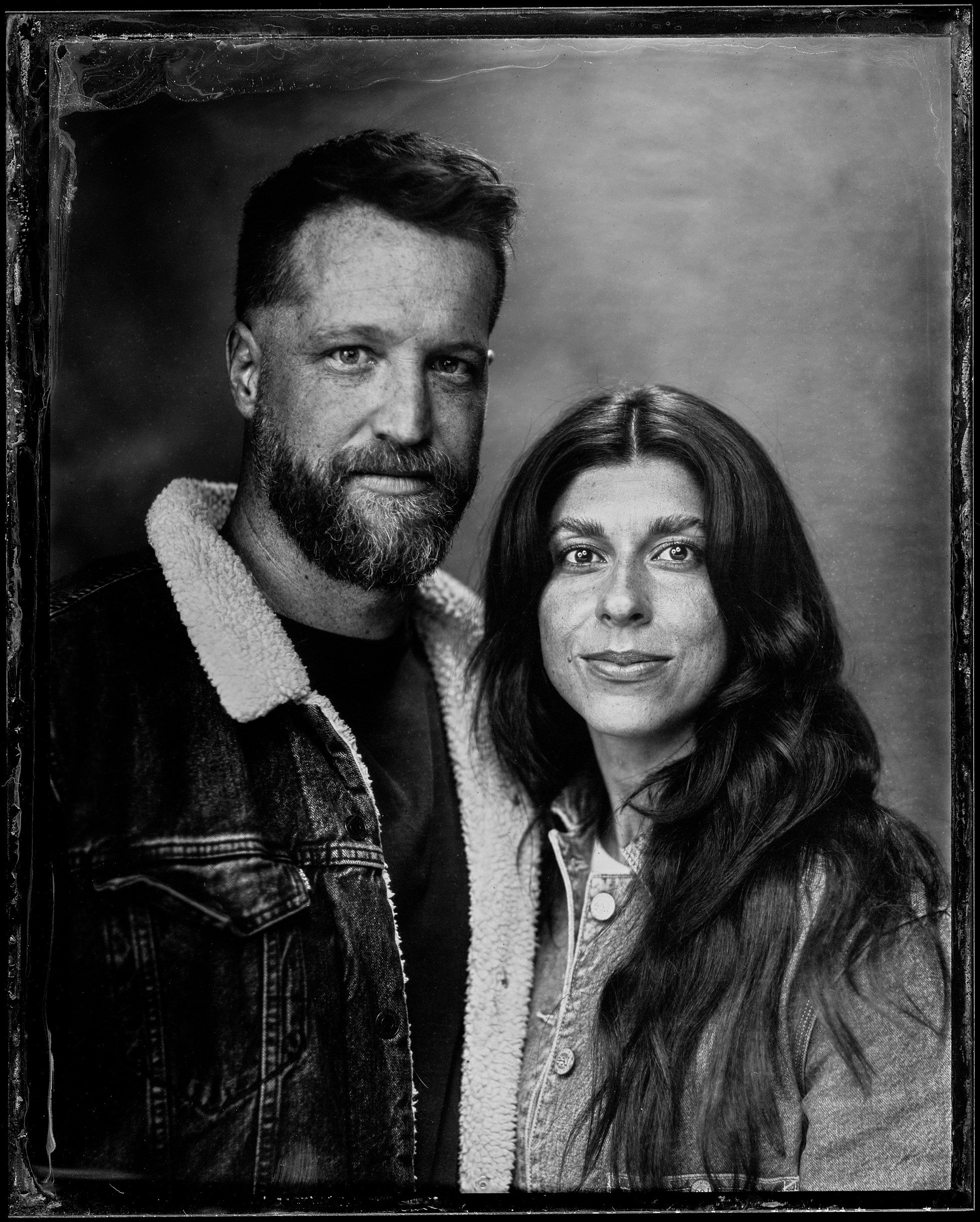
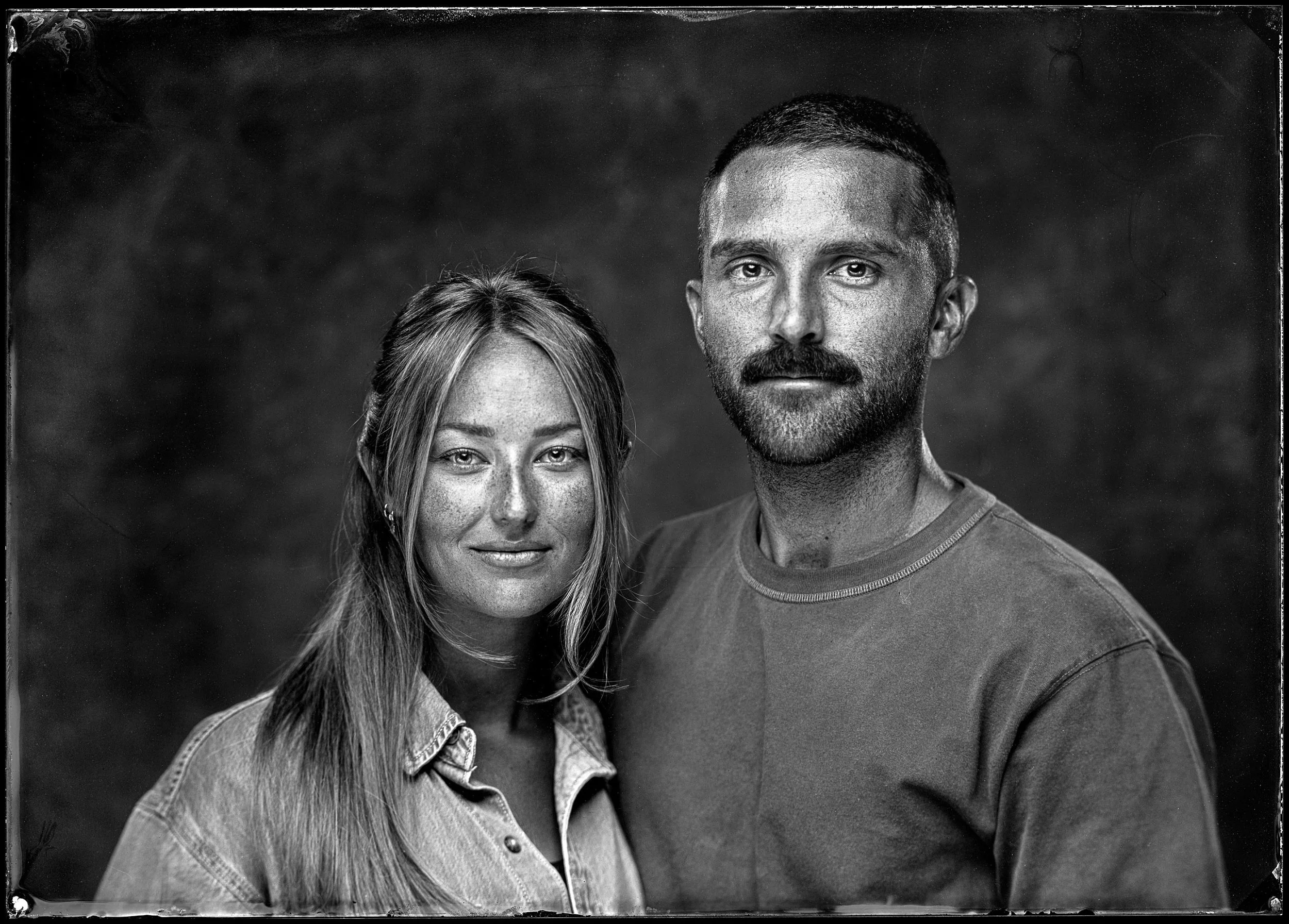
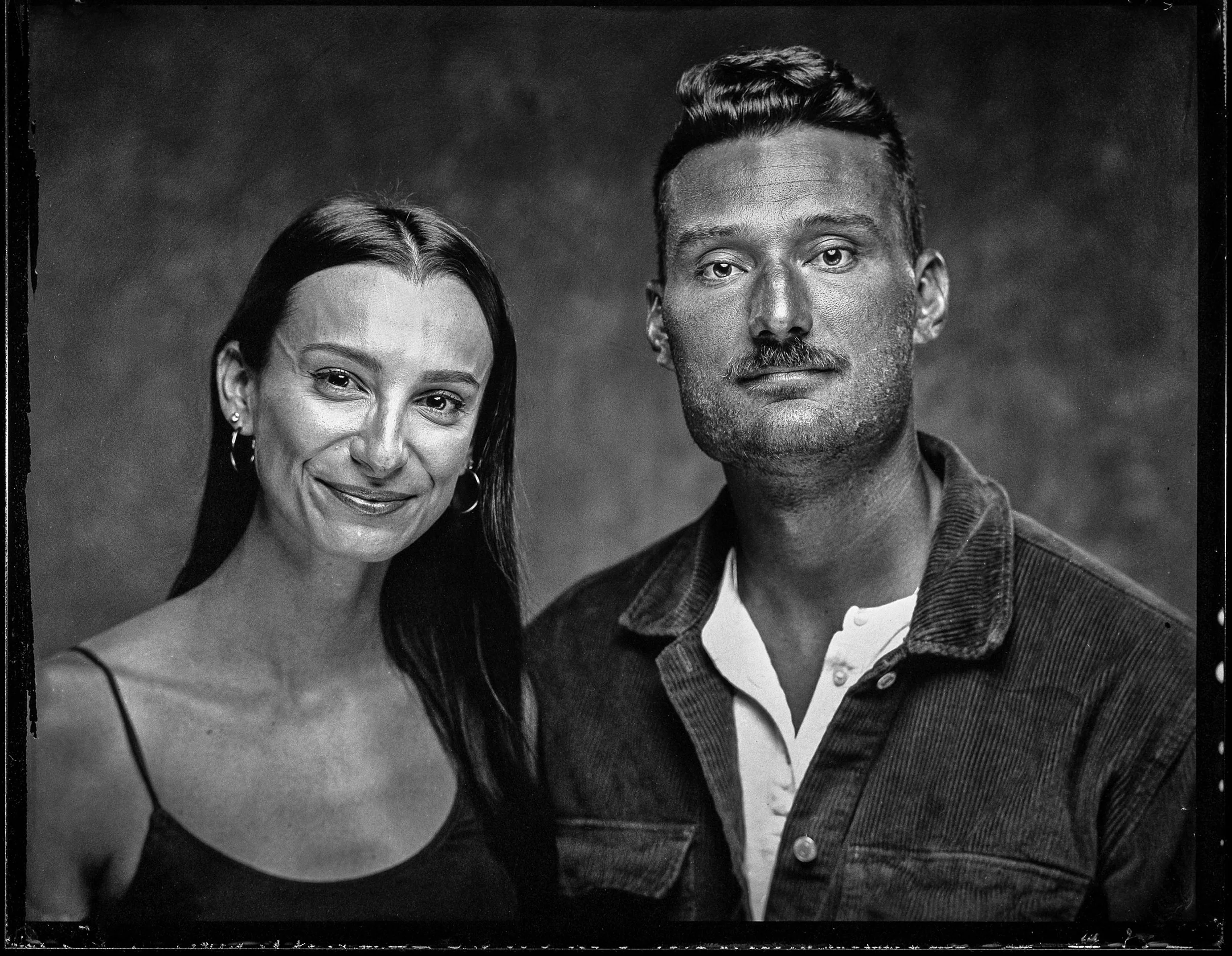
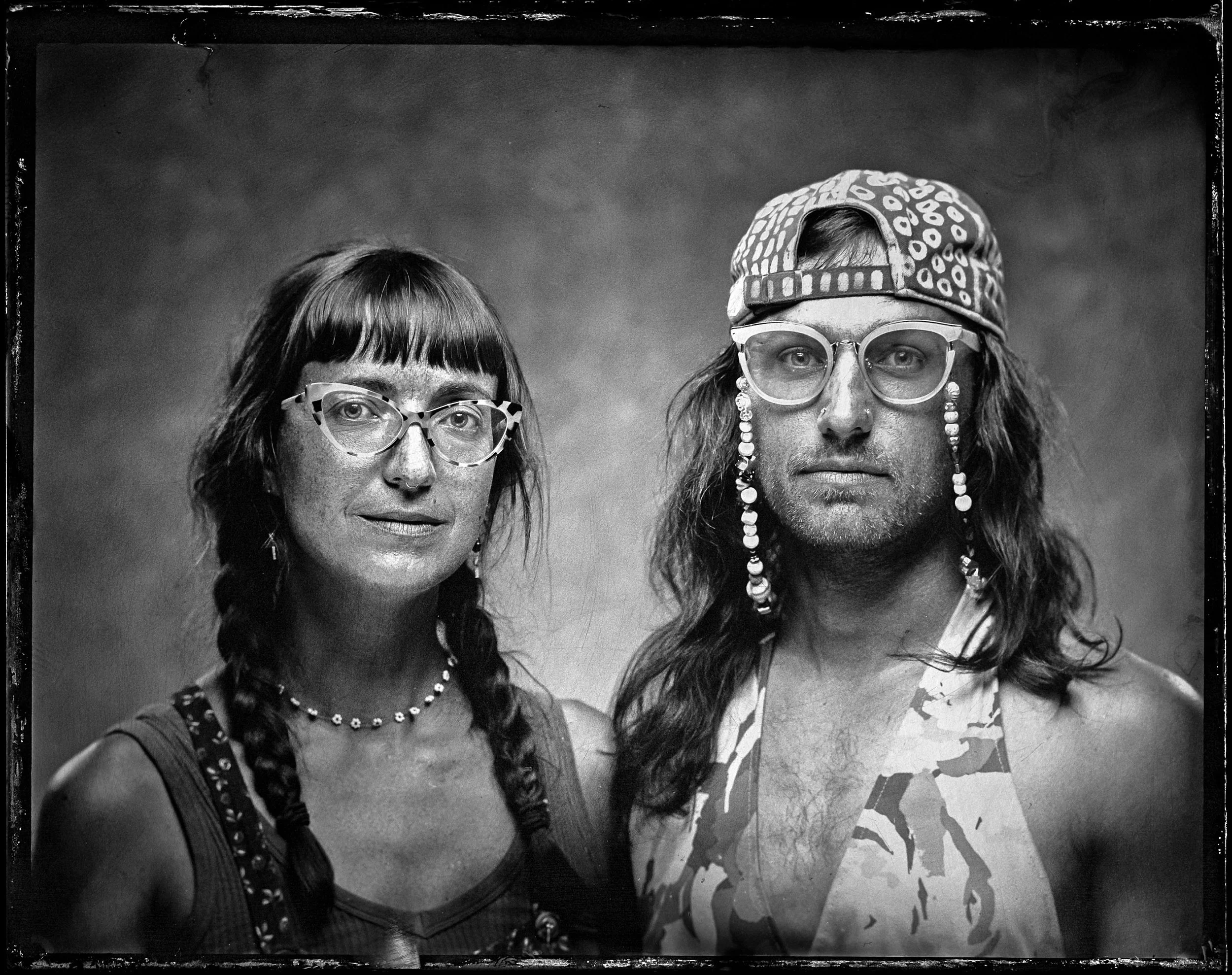
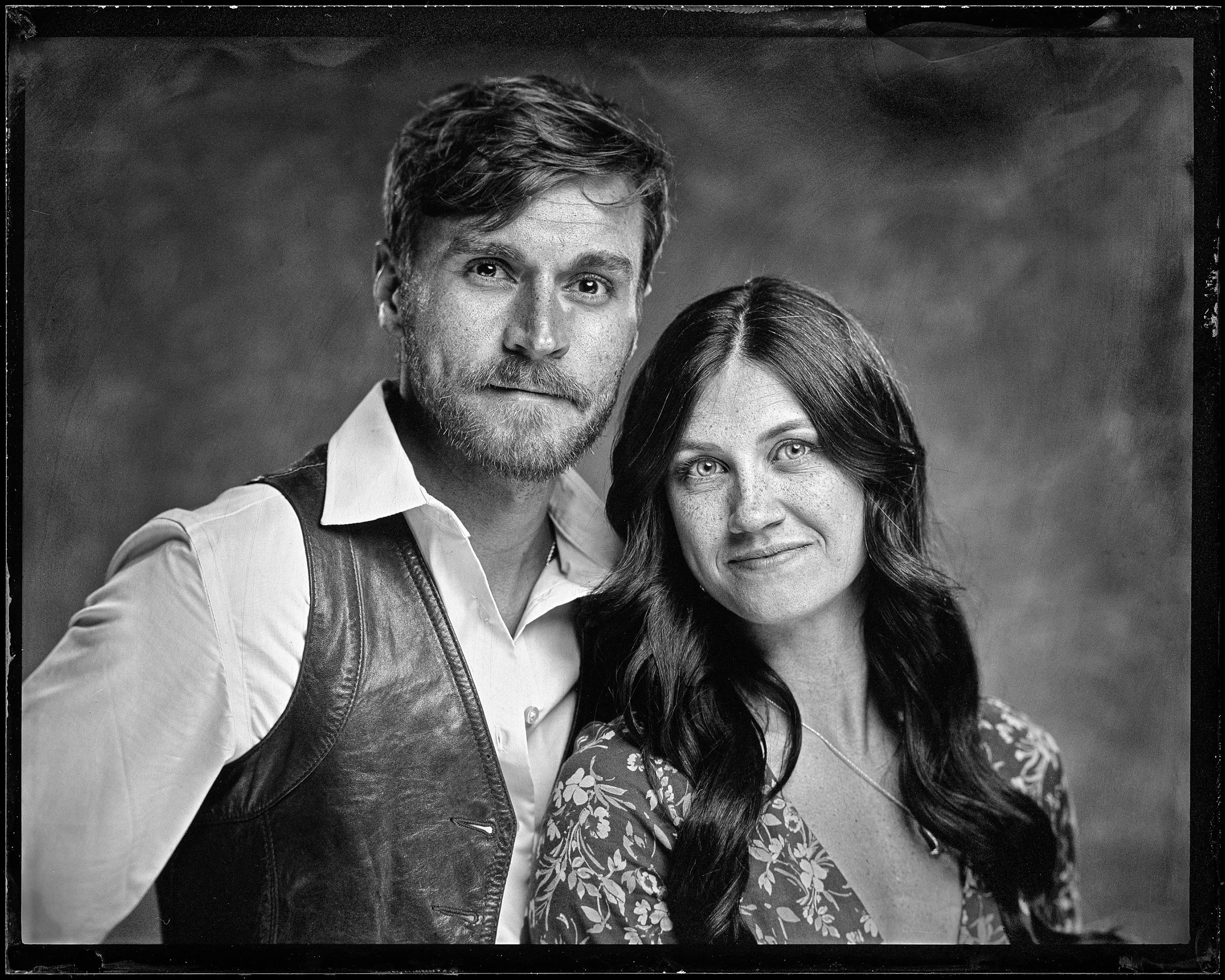
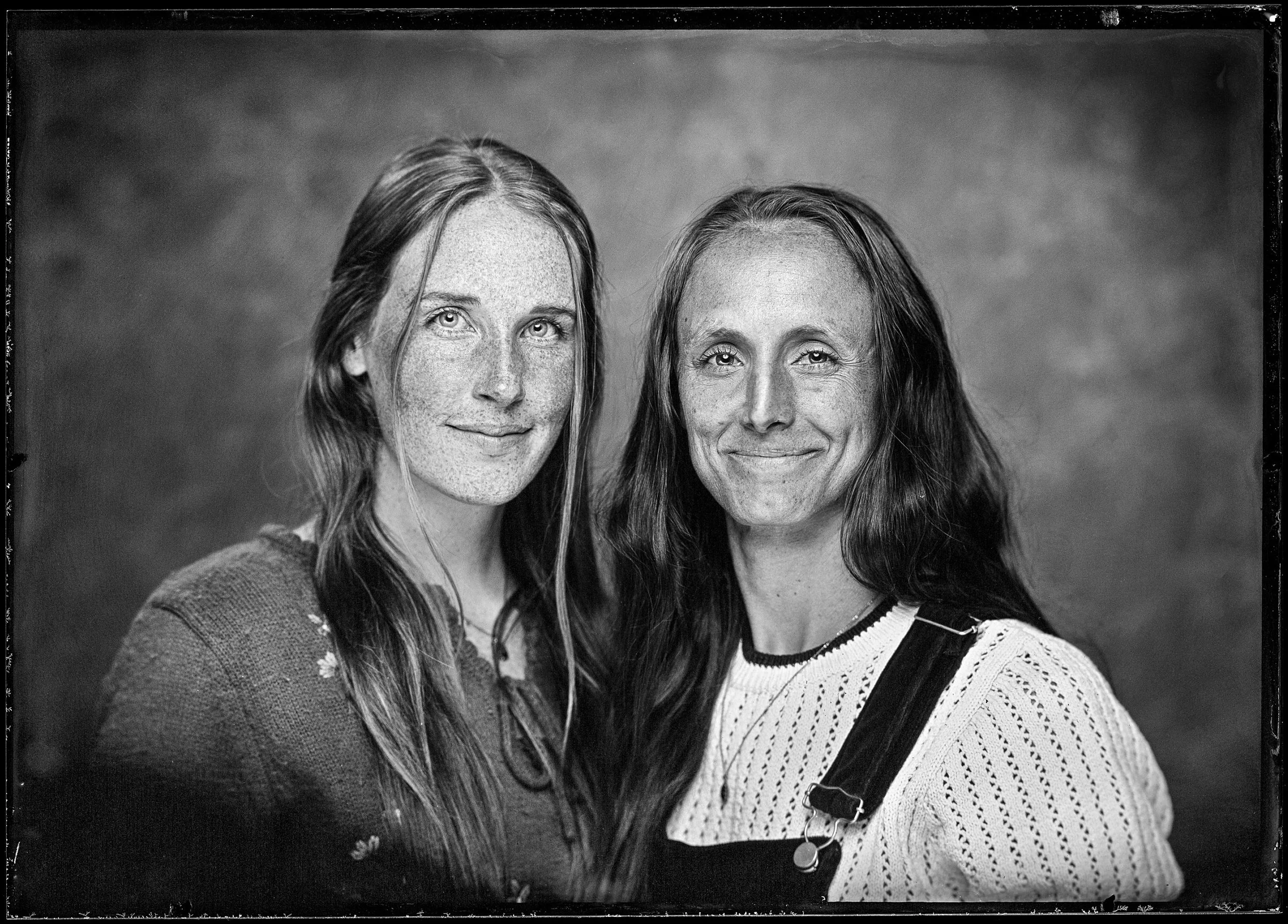
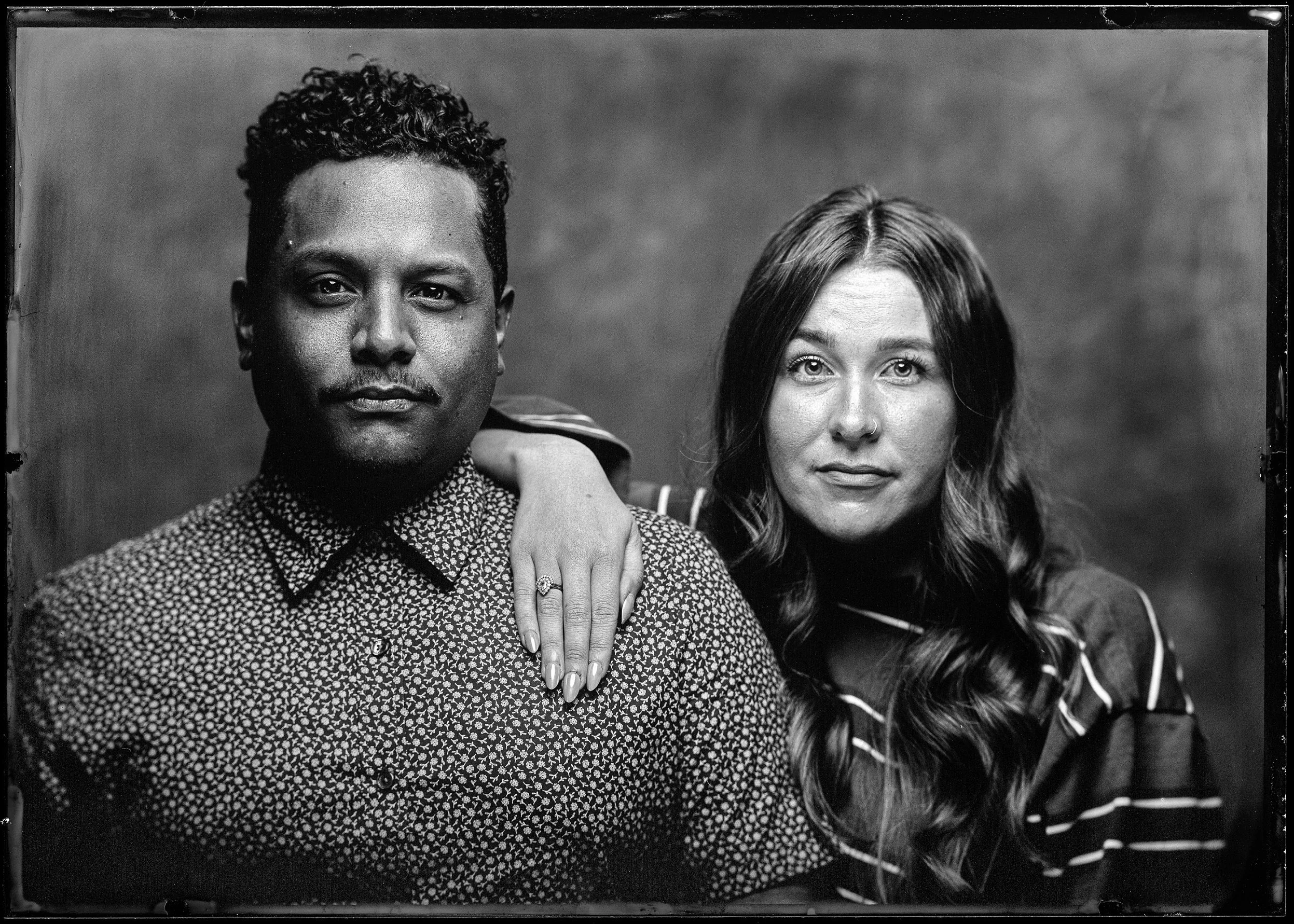
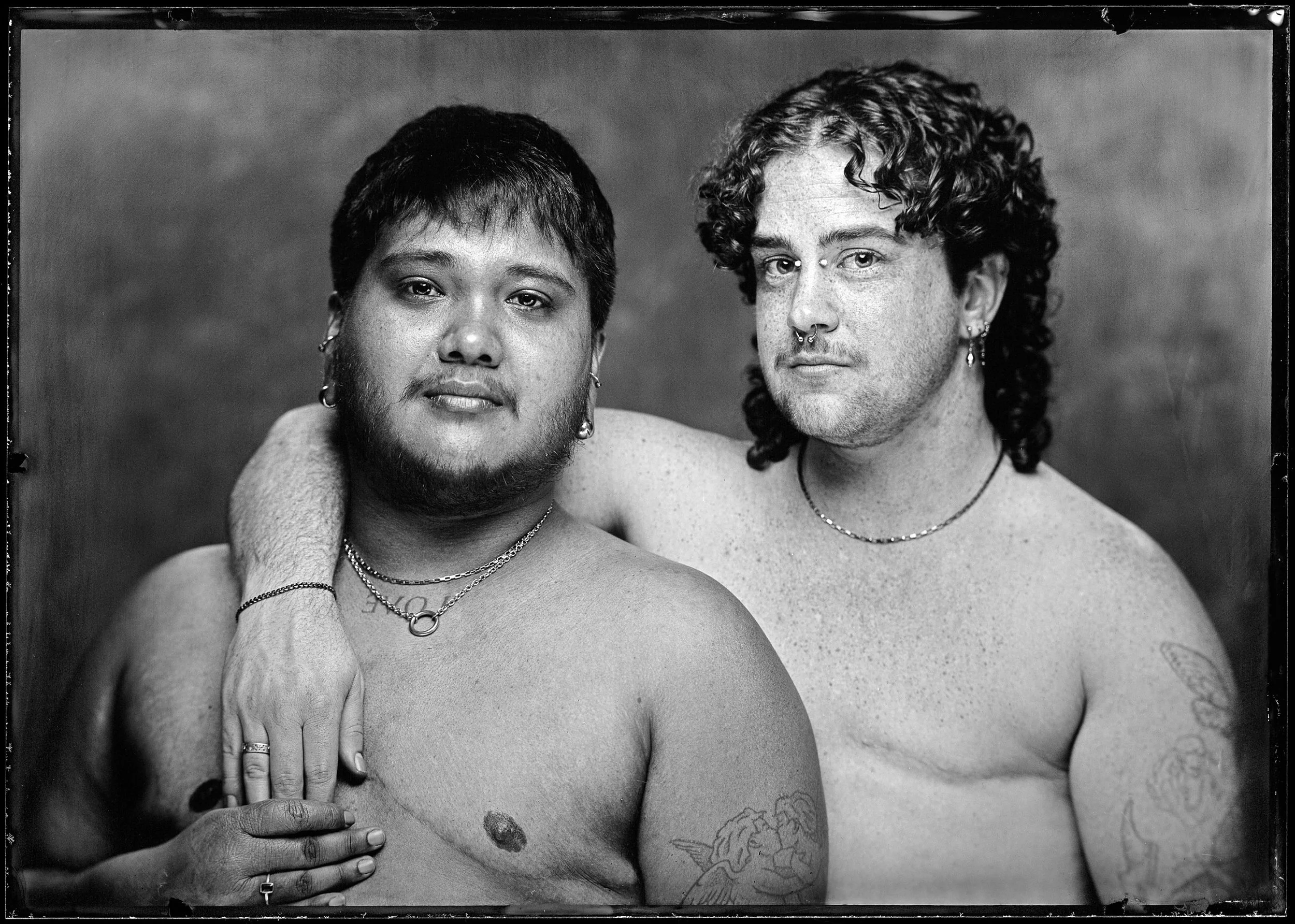
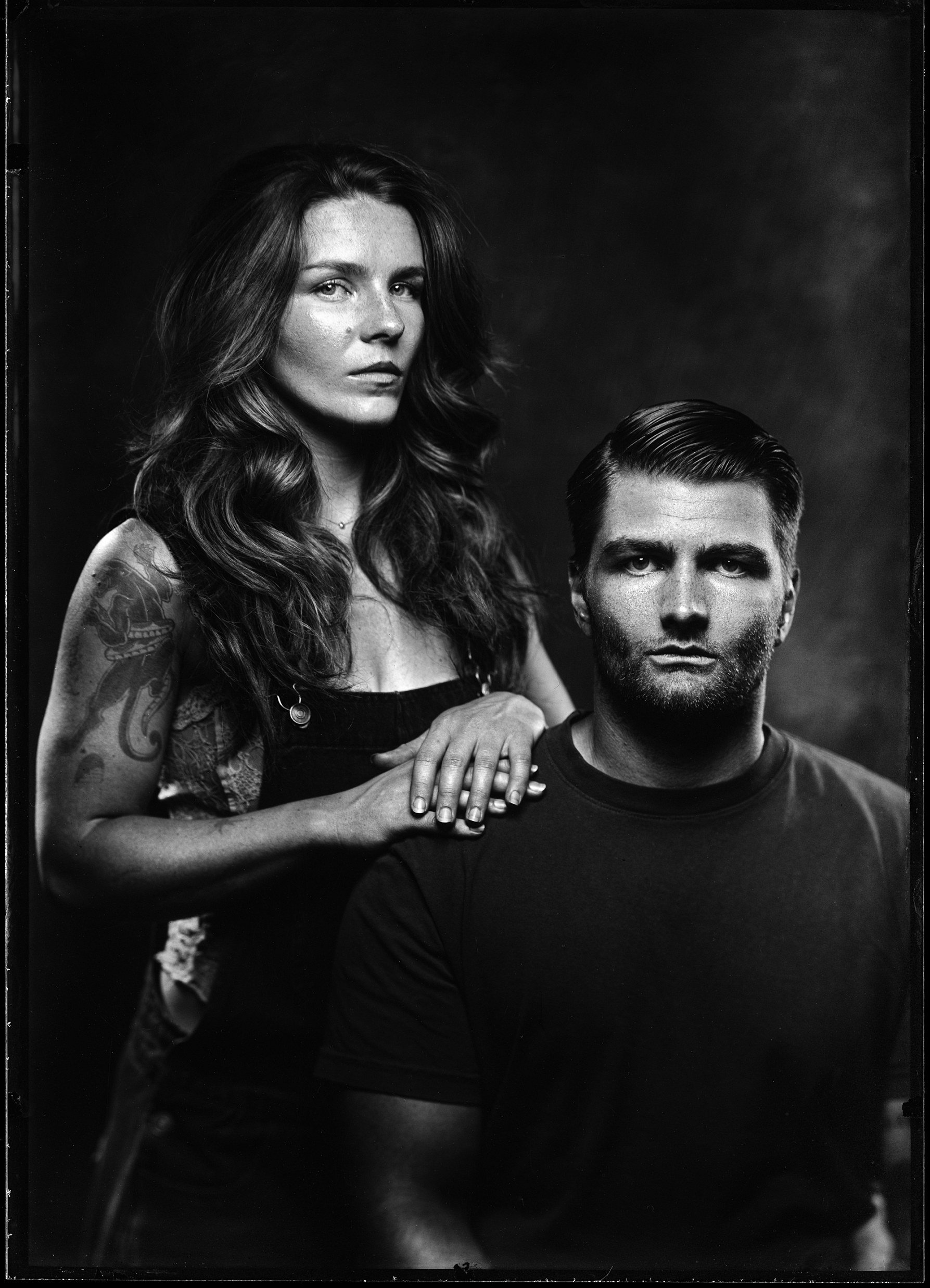
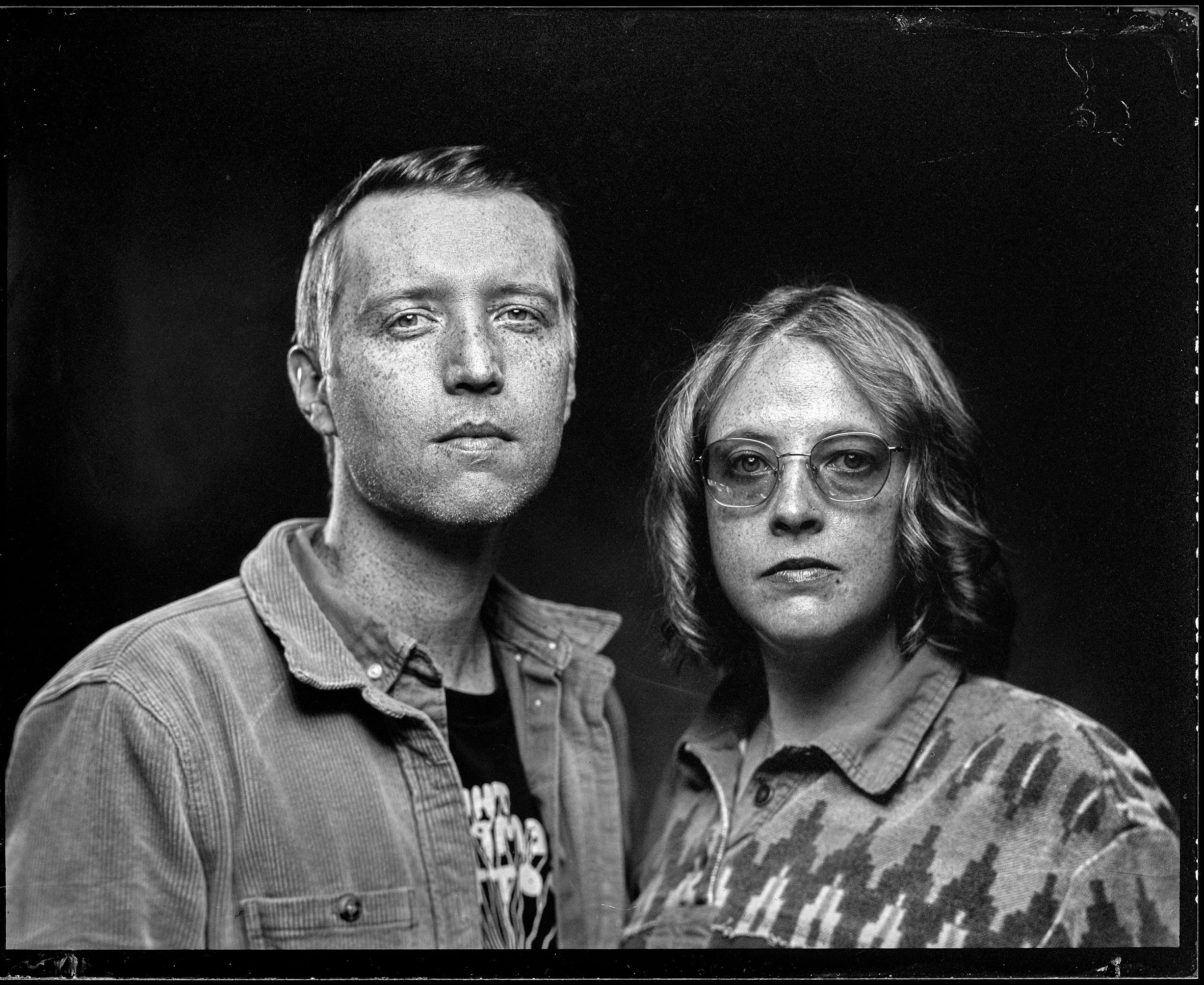
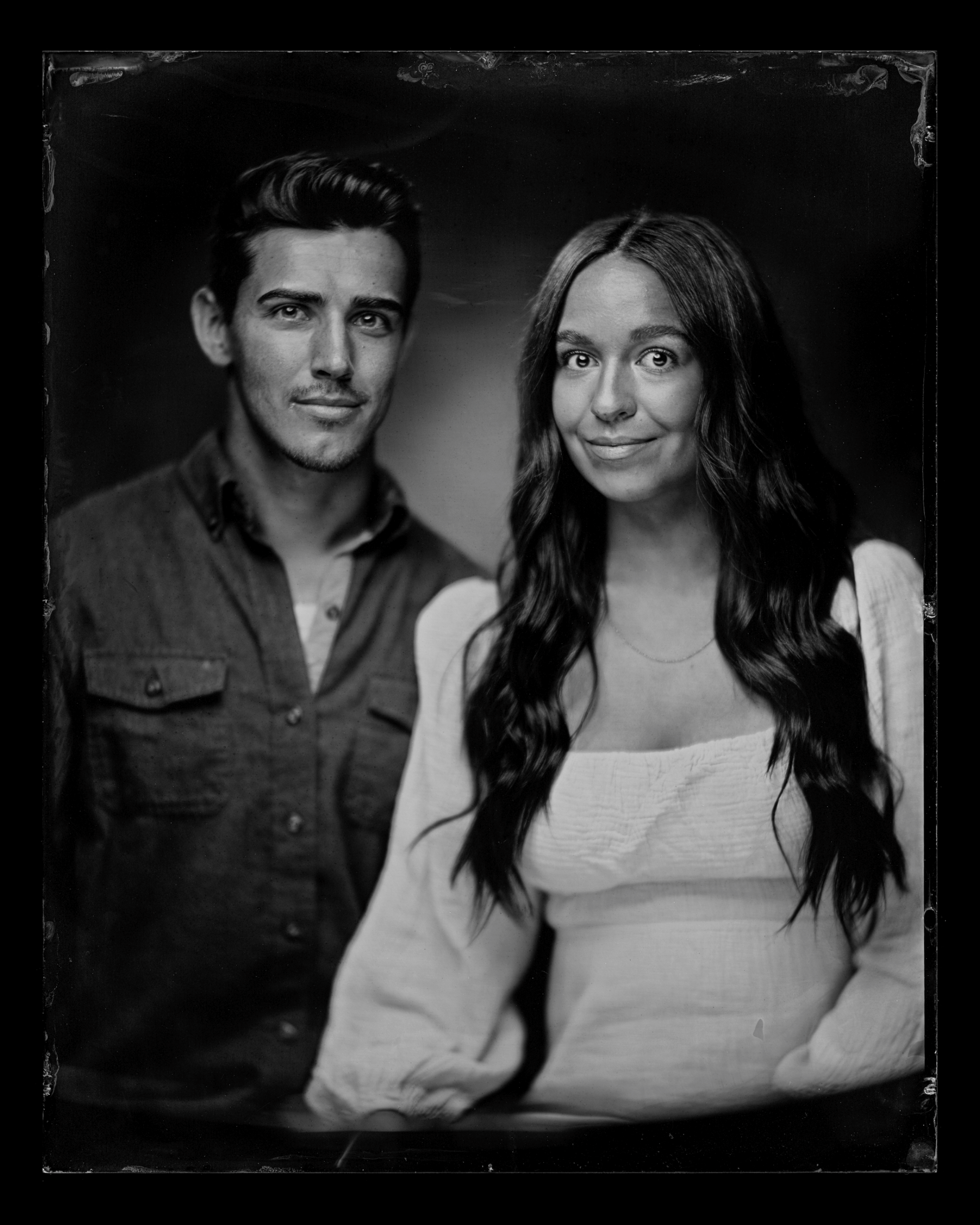
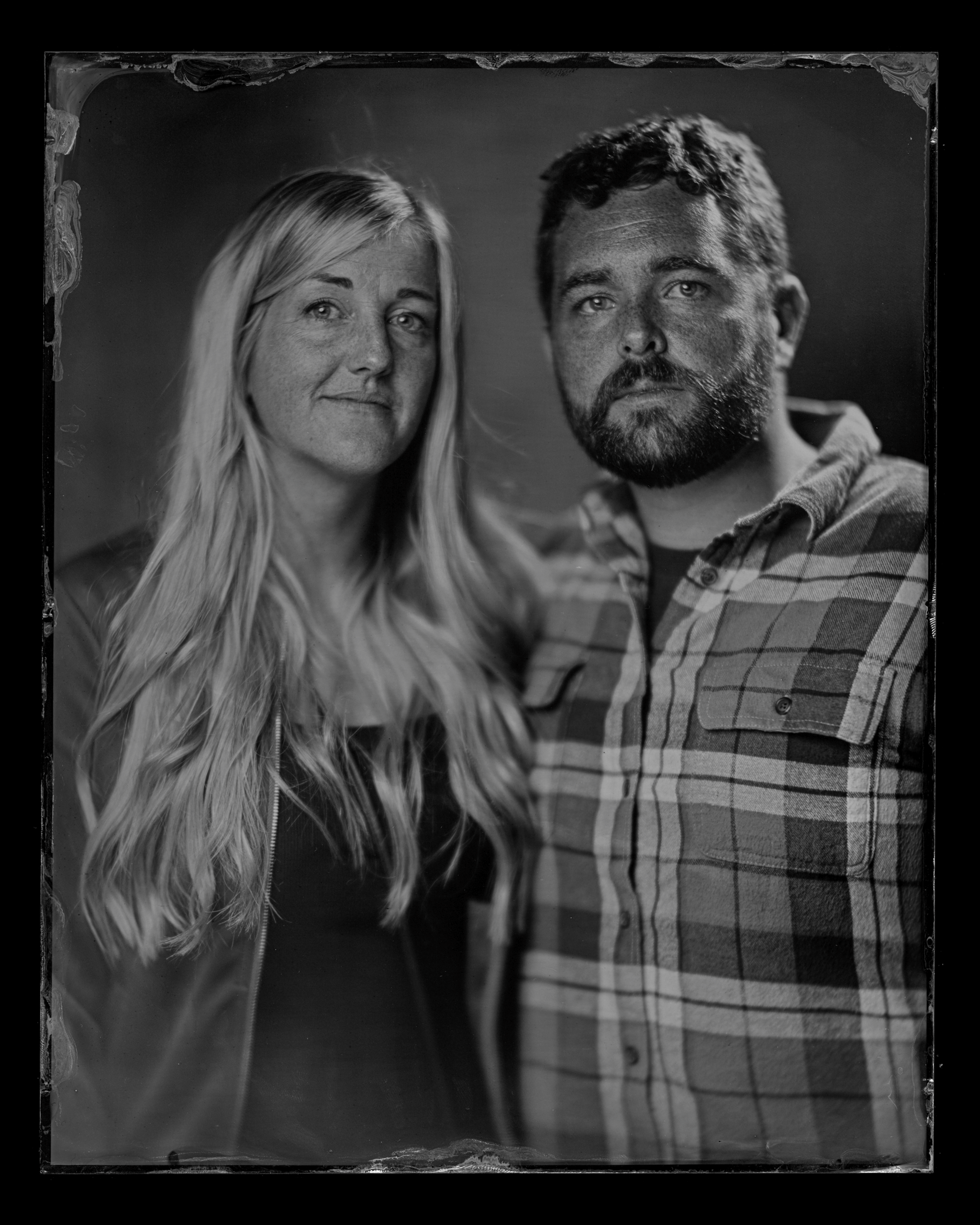
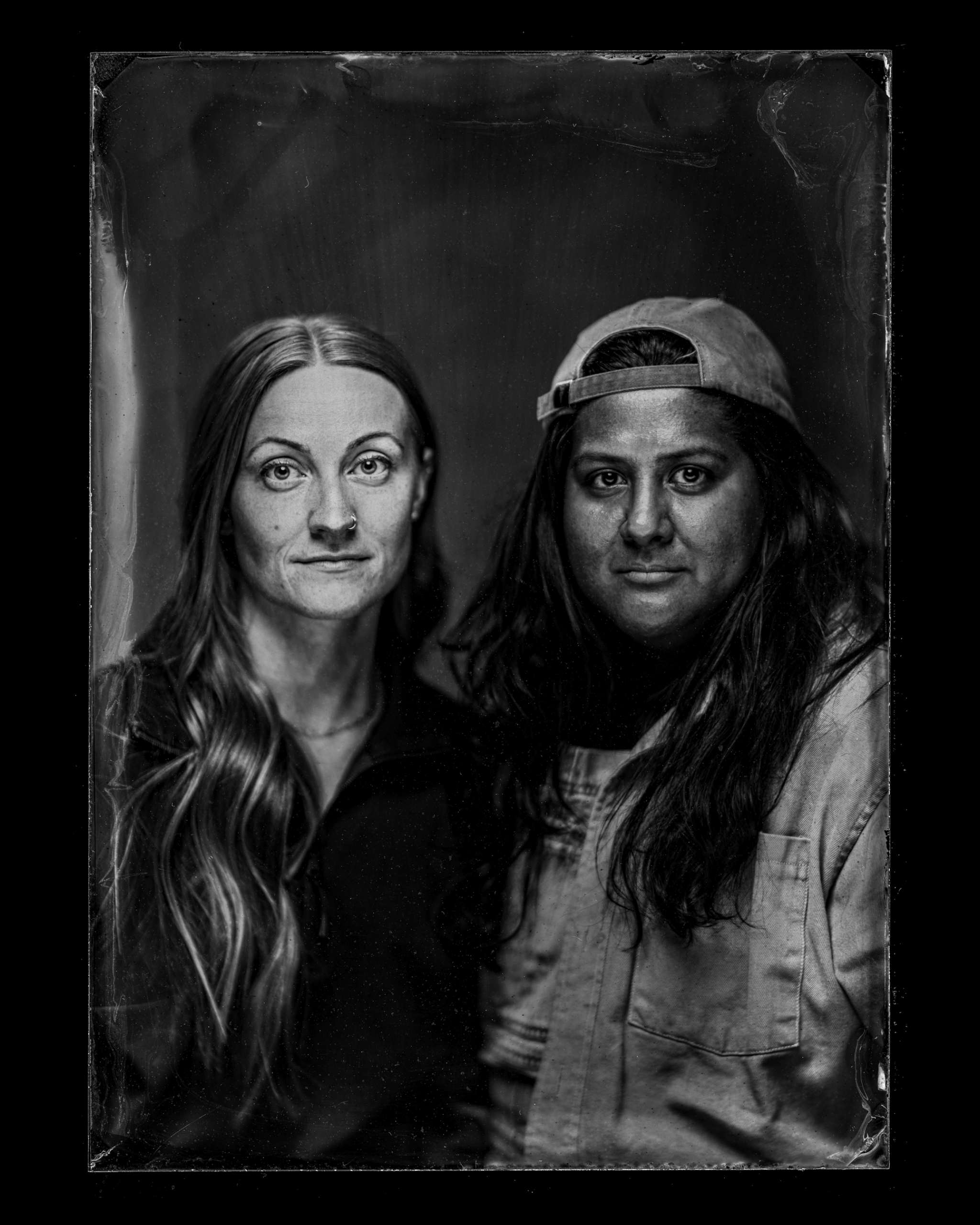
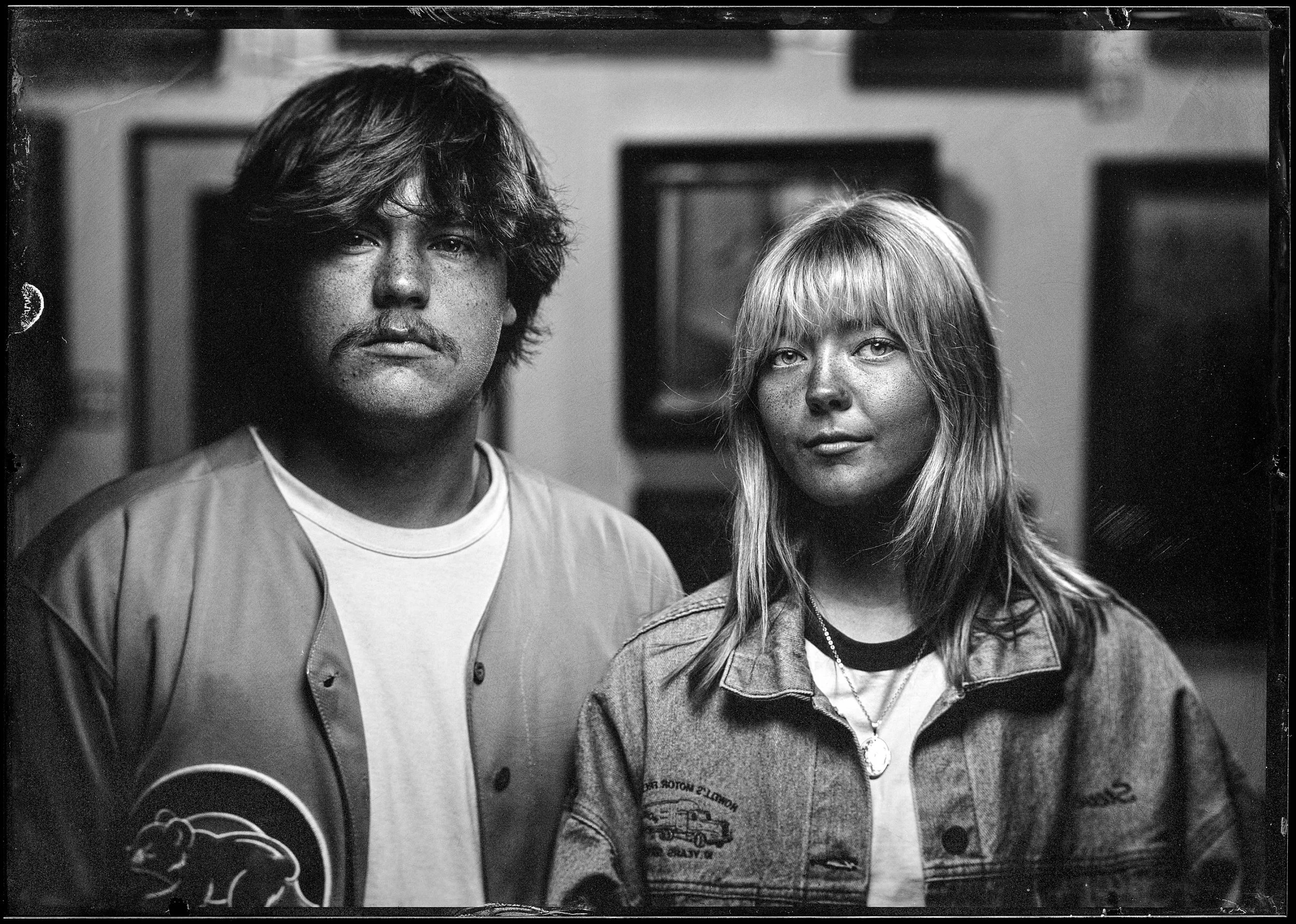
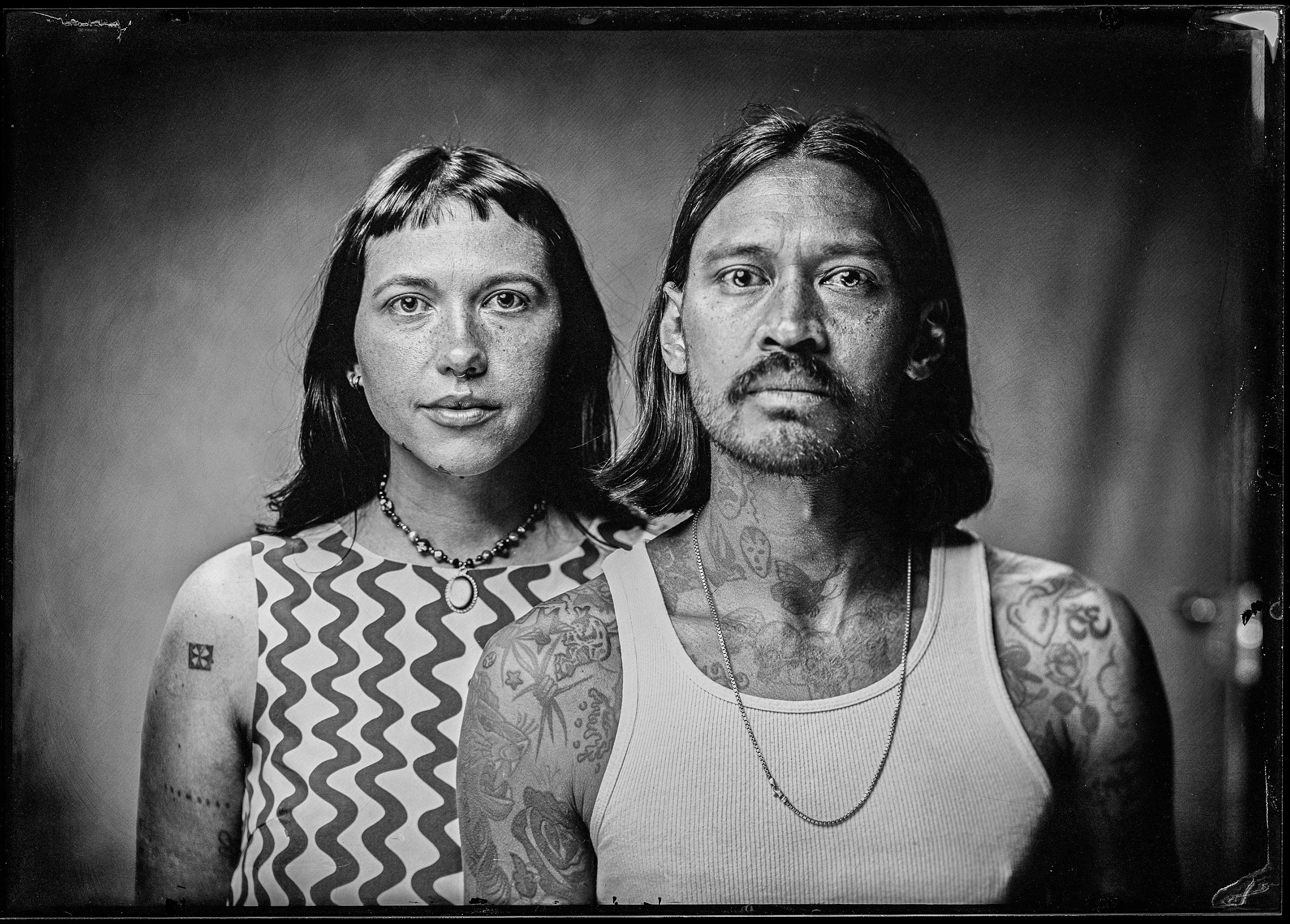
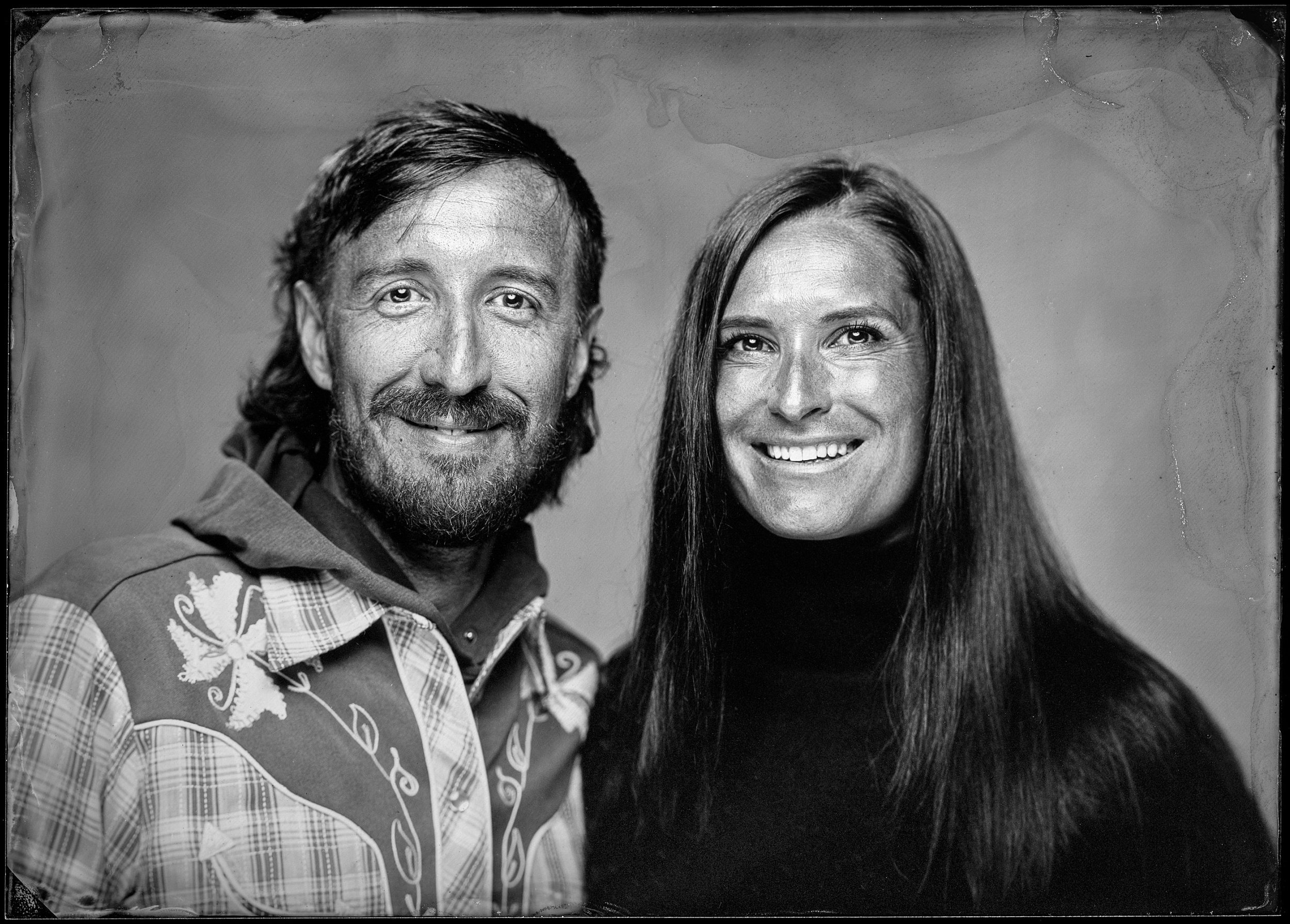
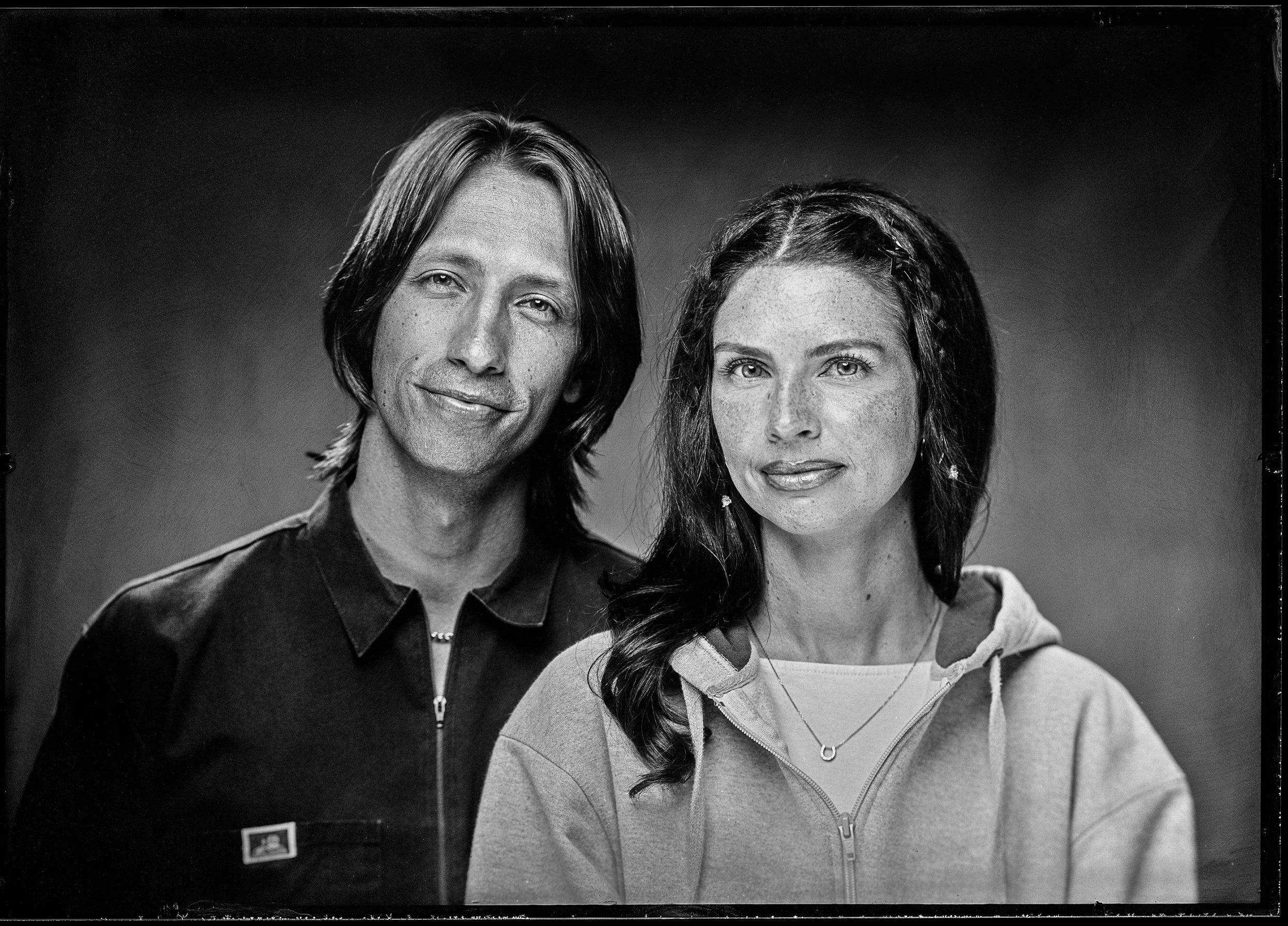
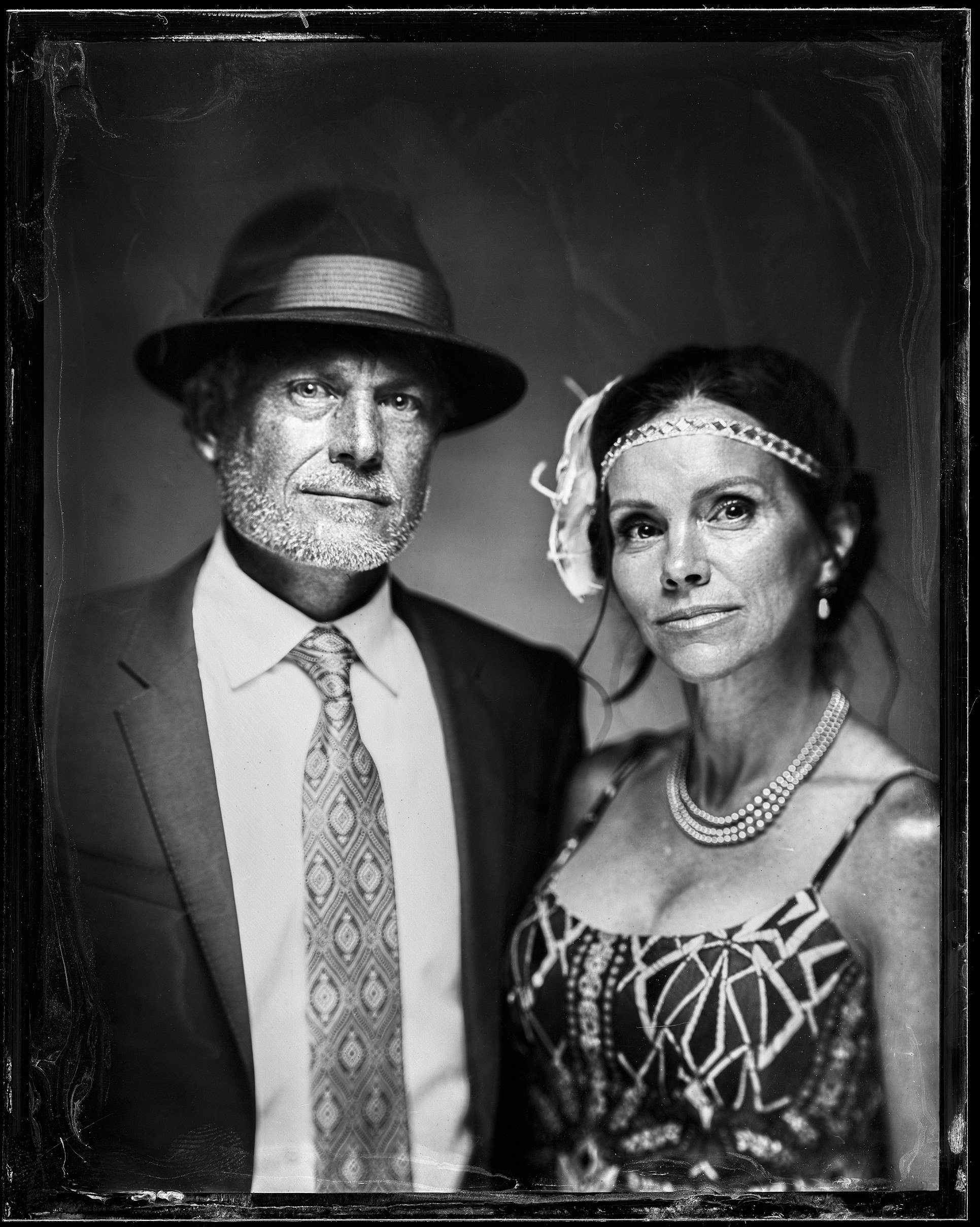
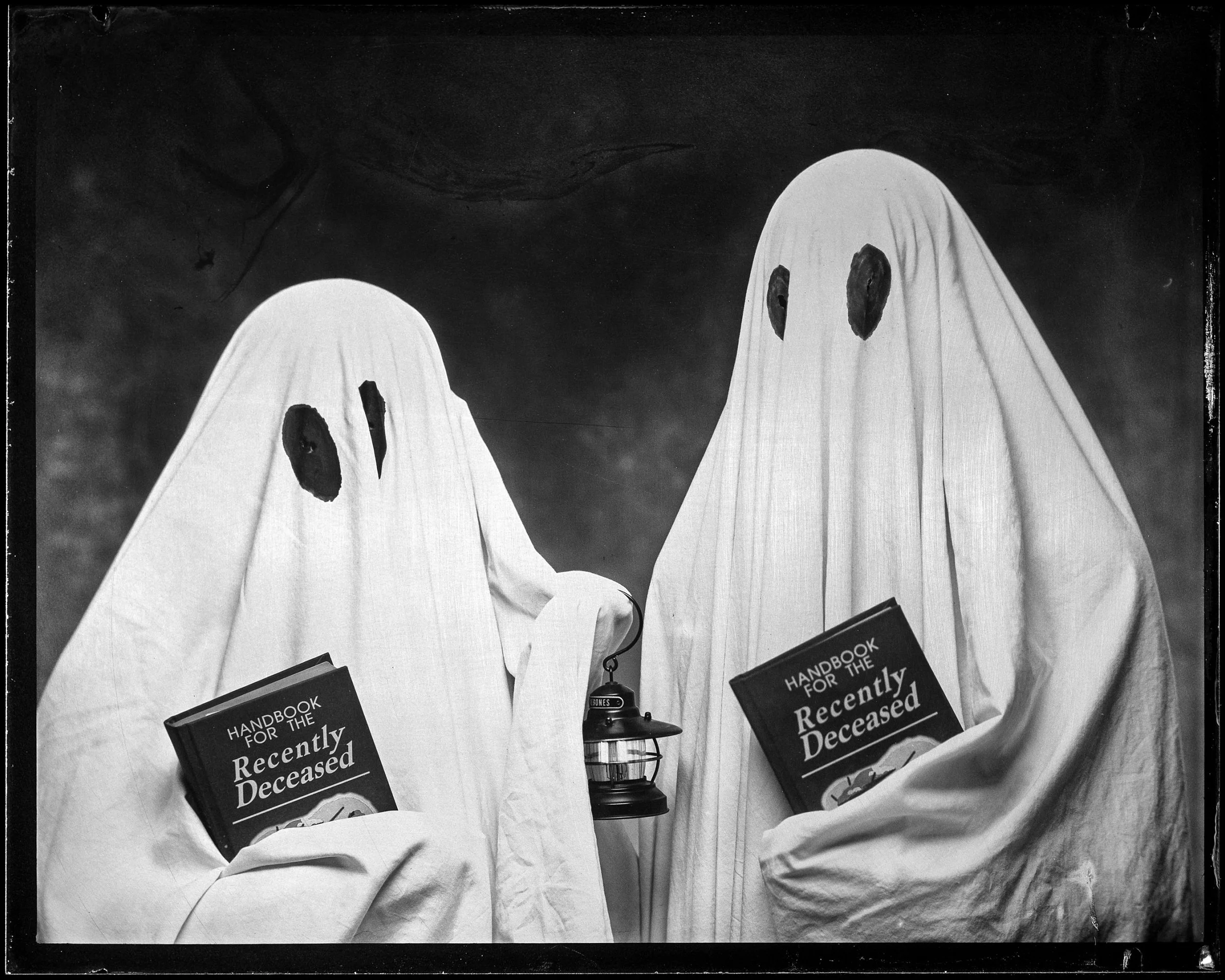
Two people, one plate, twenty minutes. Most couples come in for no occasion at all, which is usually when the best plates happen — nobody is performing a milestone. Tell me nothing about your relationship you do not want to, and I will photograph what is actually in front of me.
Wedding day, elopements + engagements
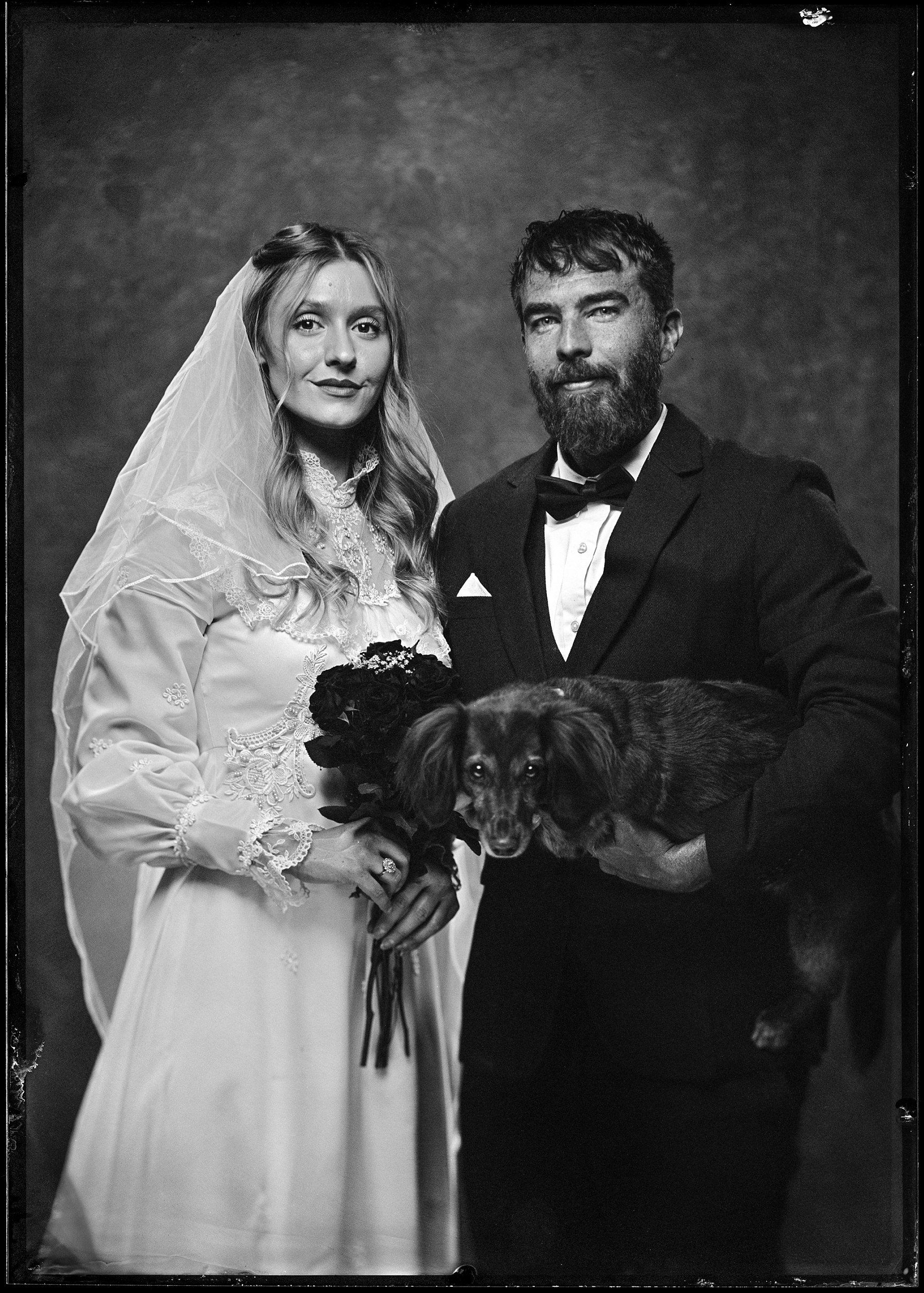
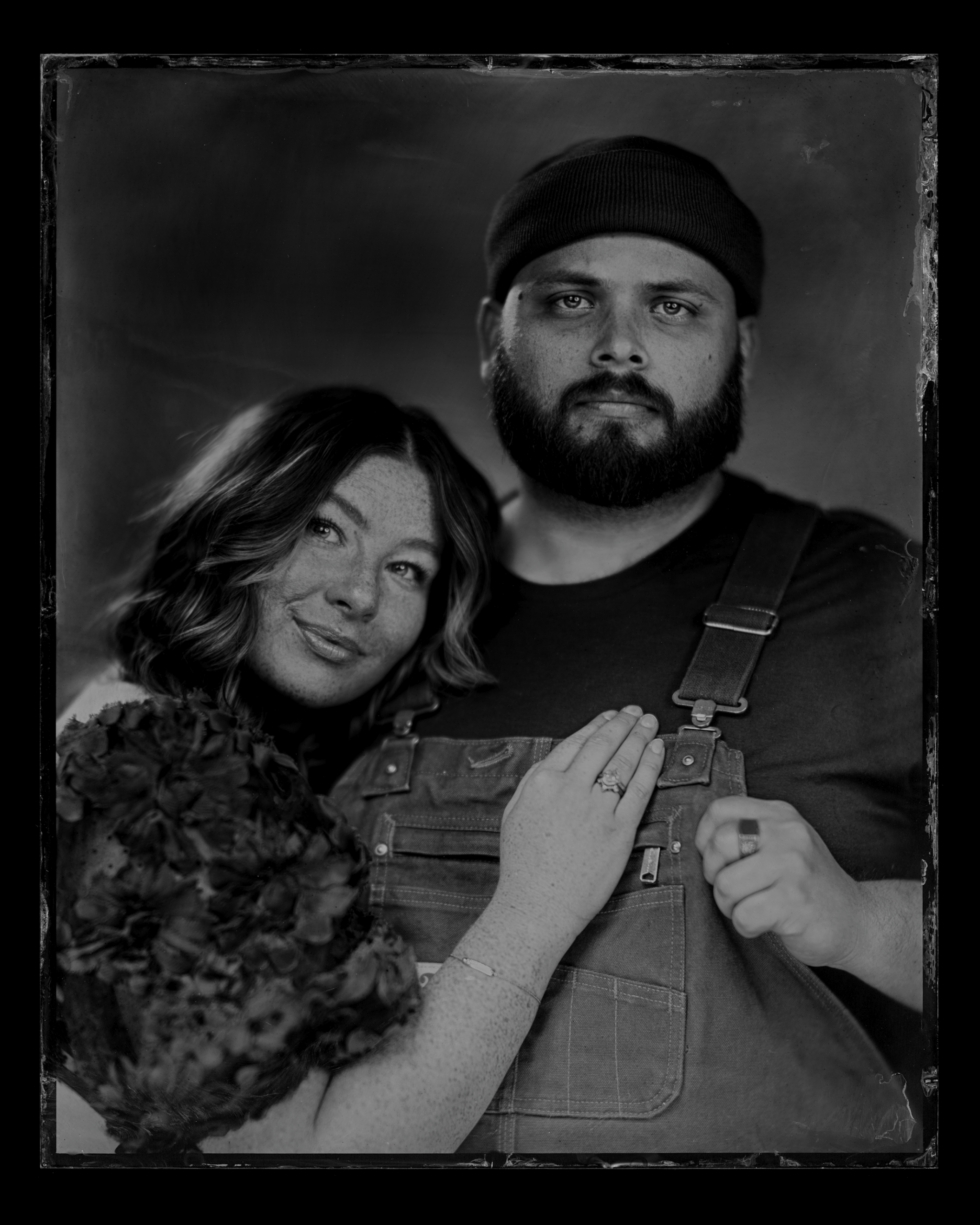
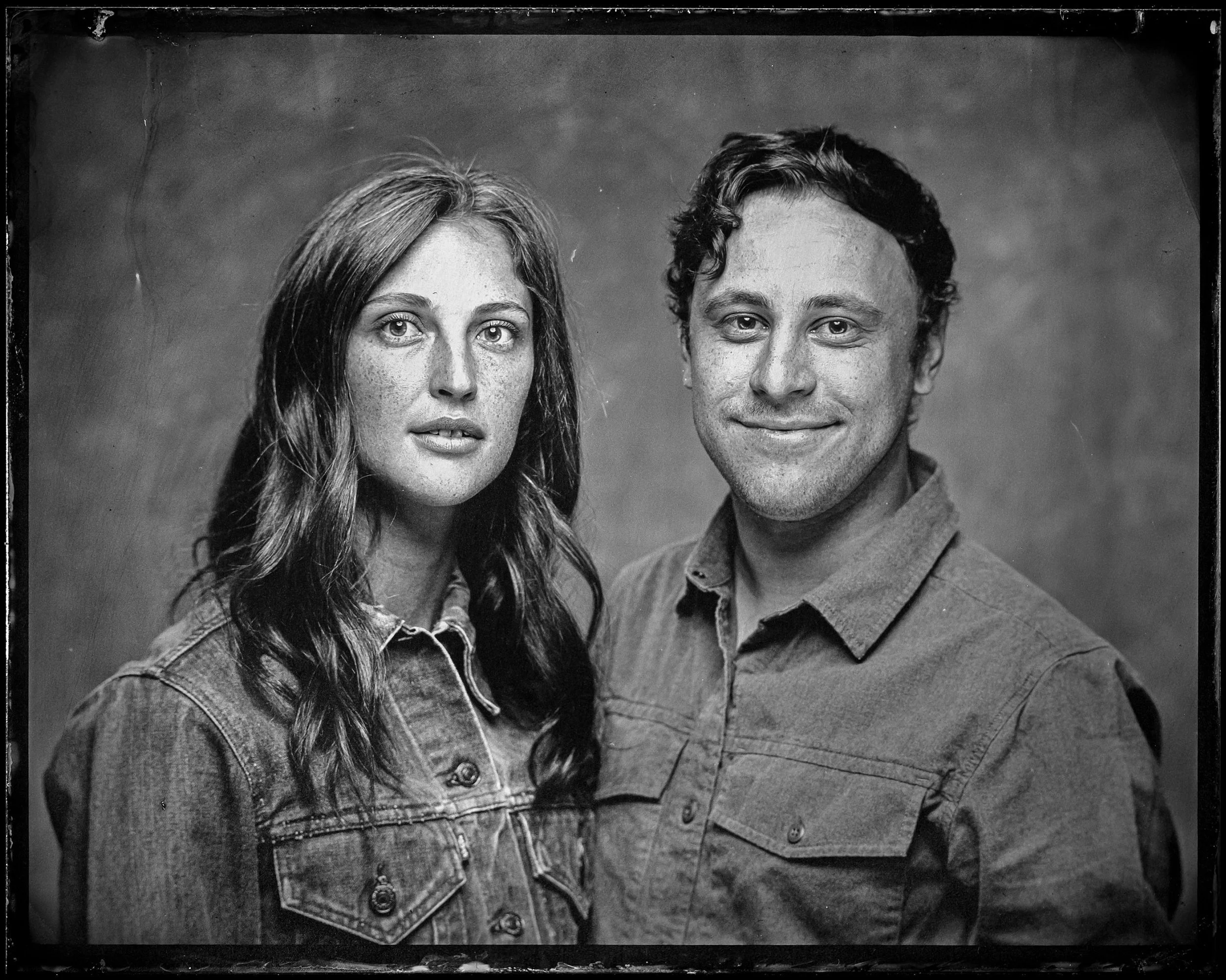
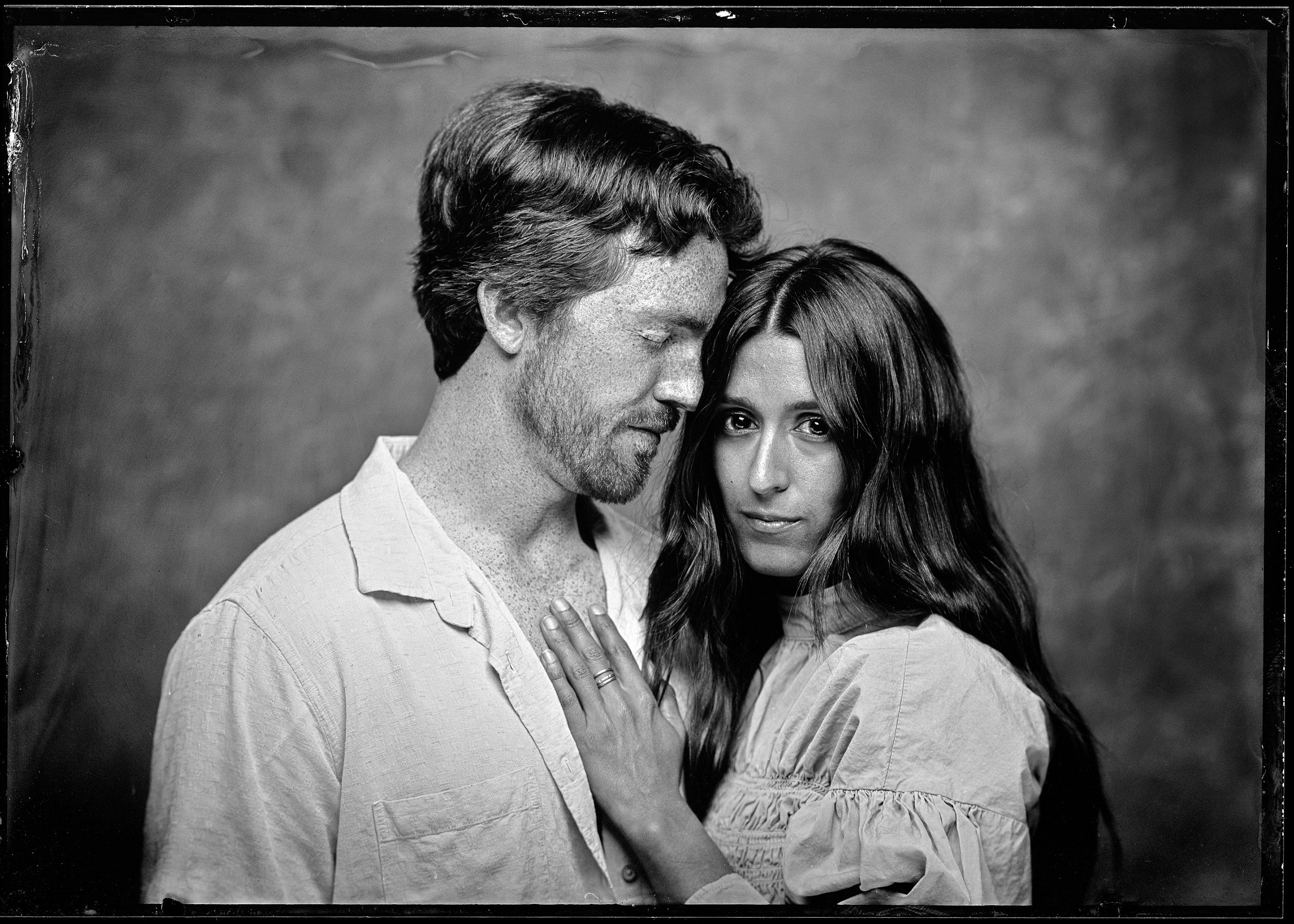
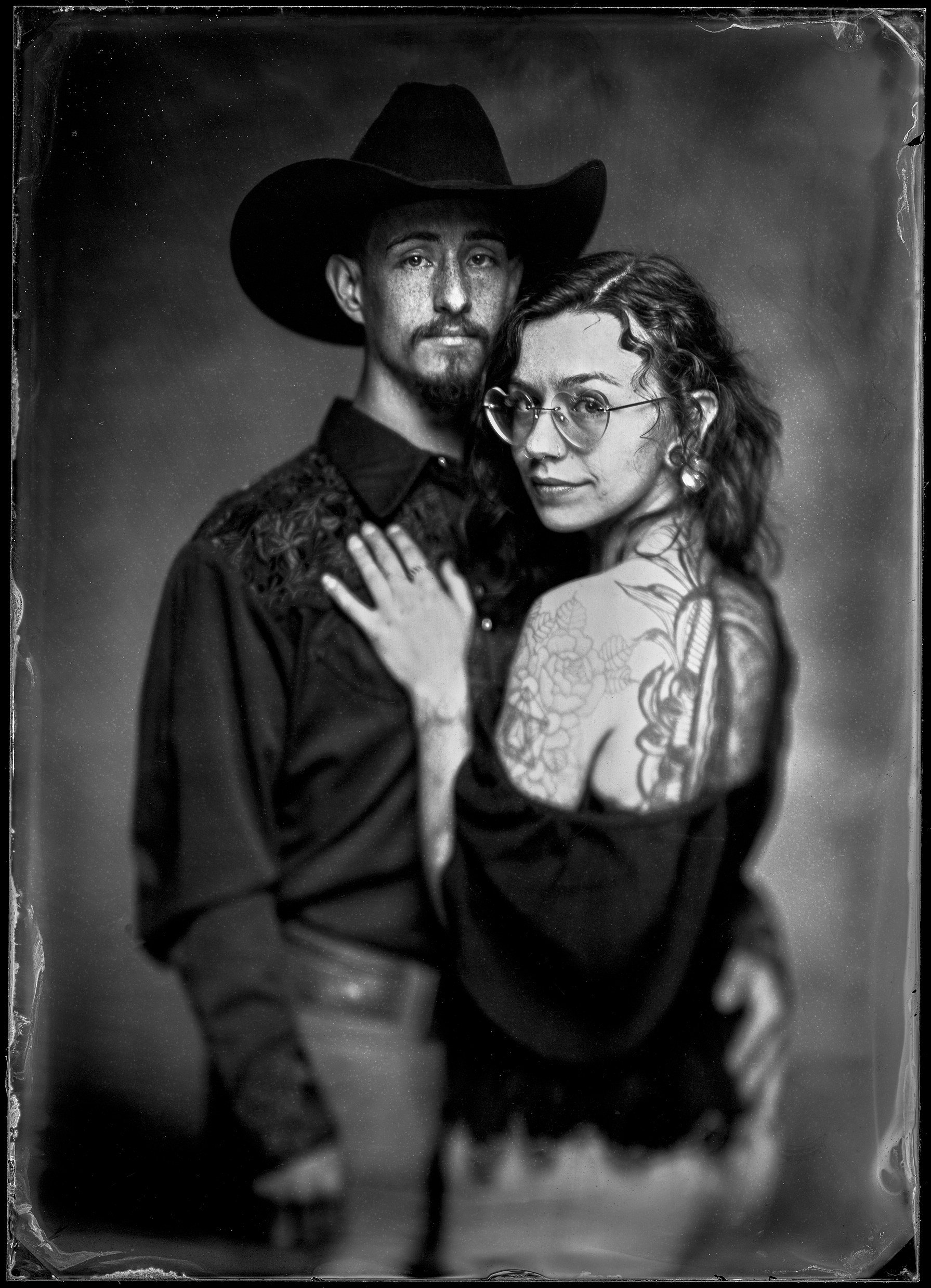
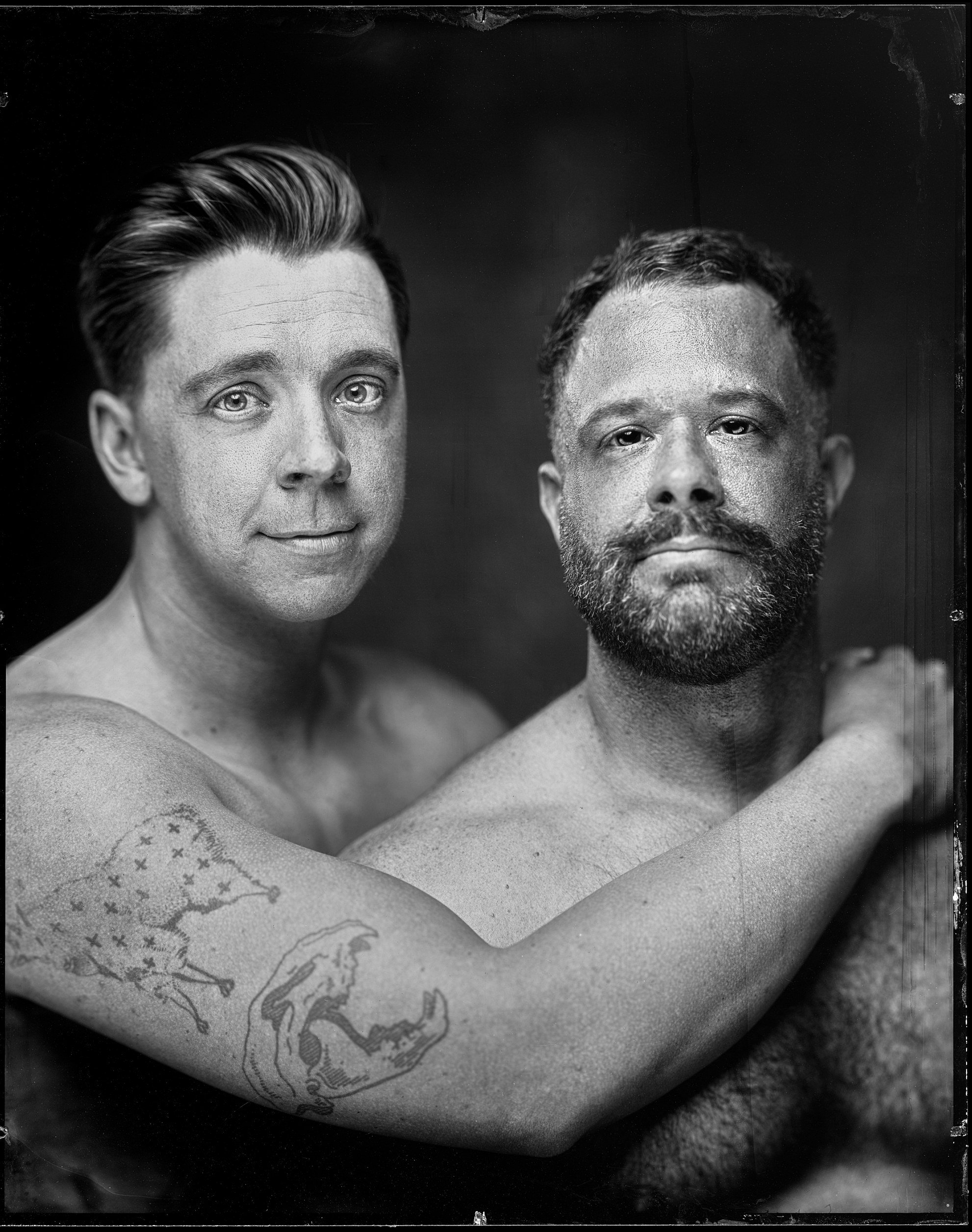
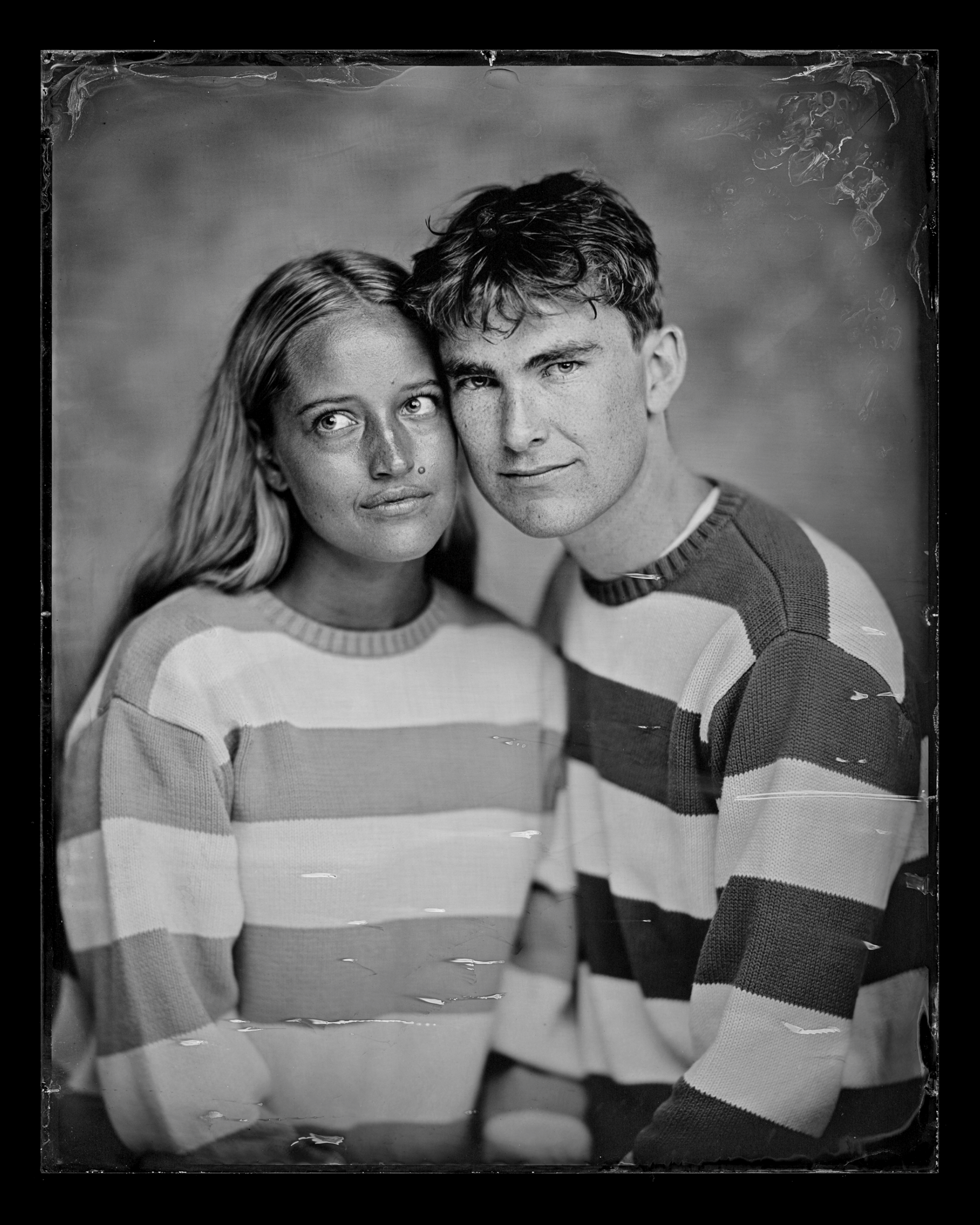
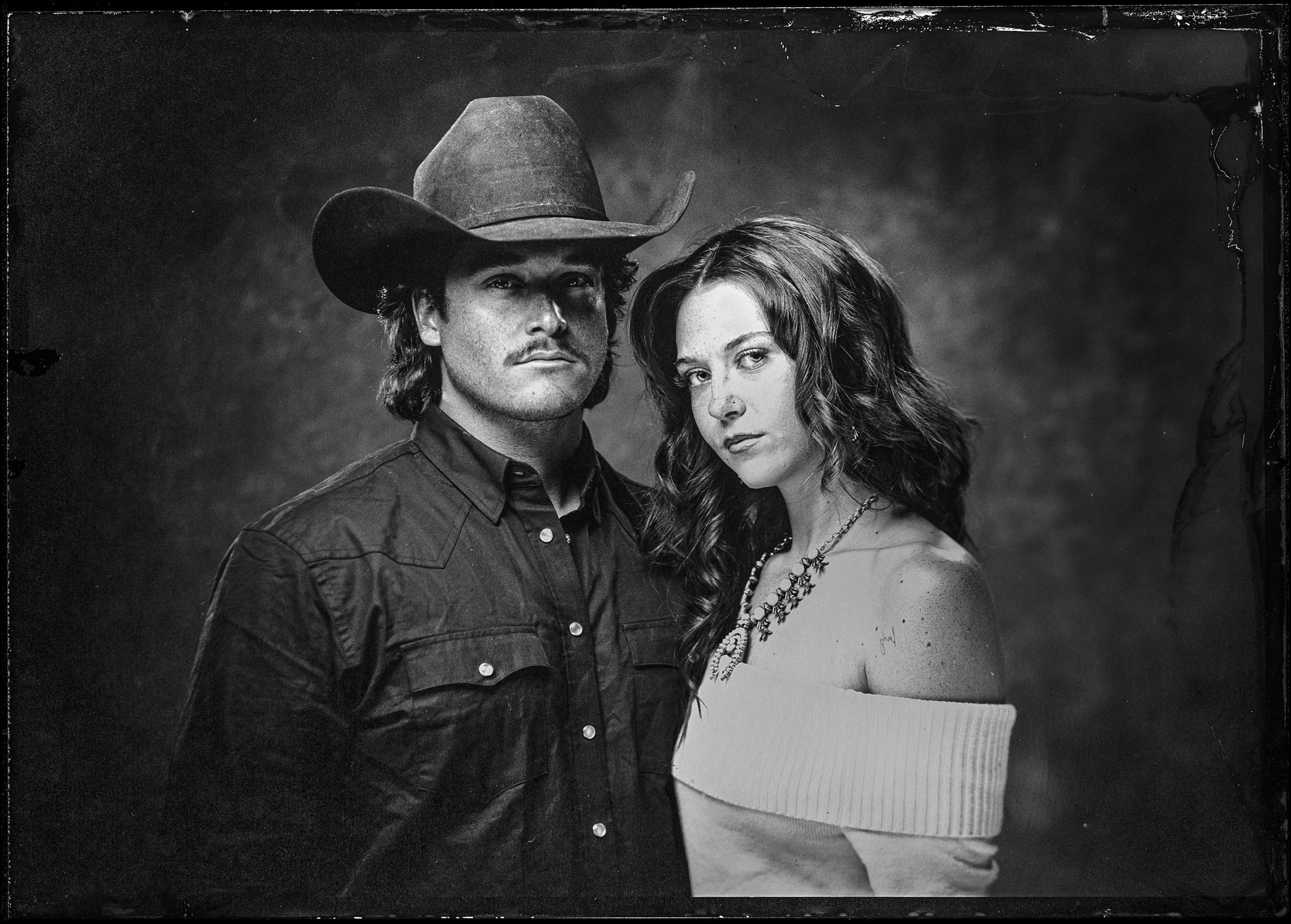
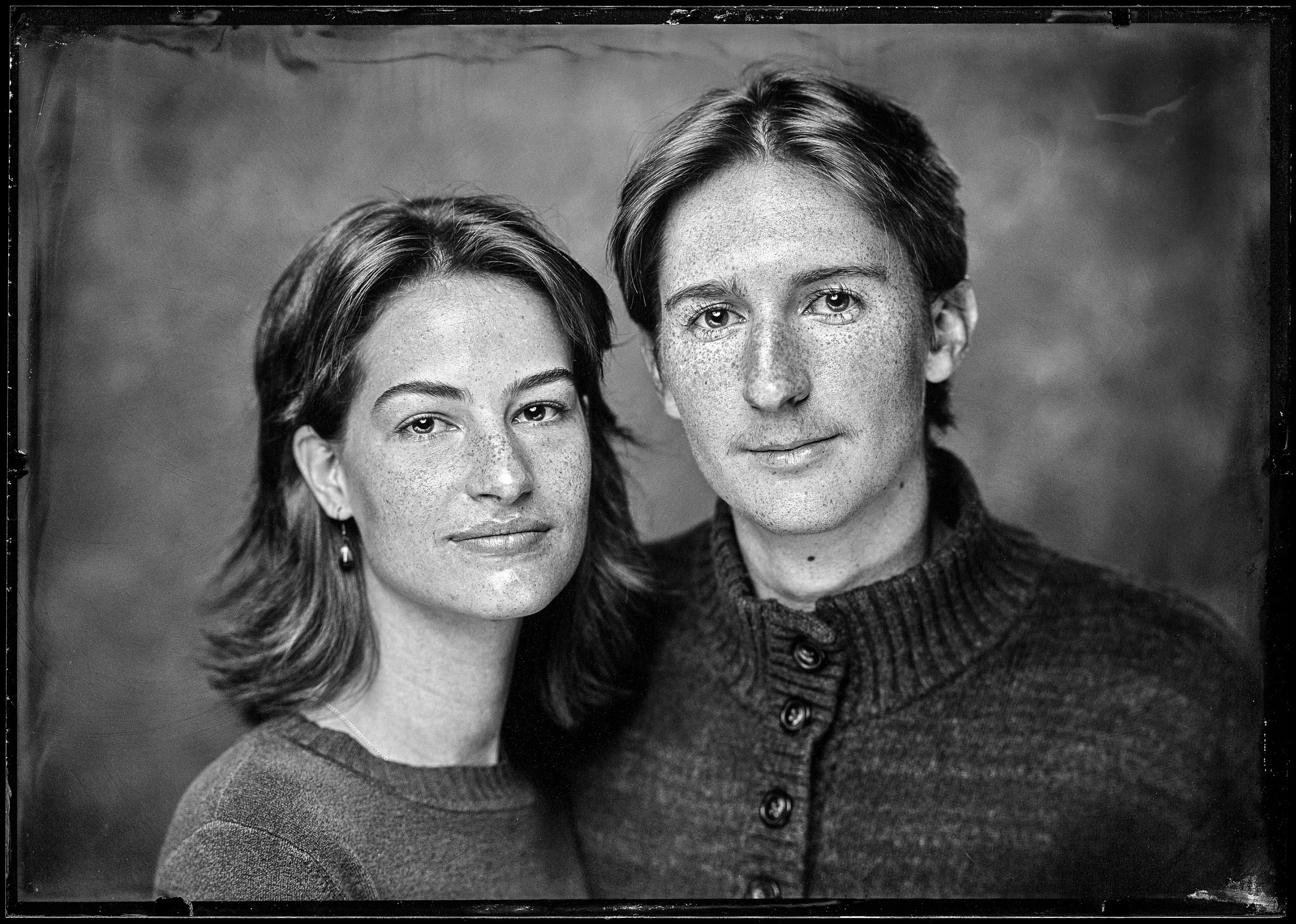
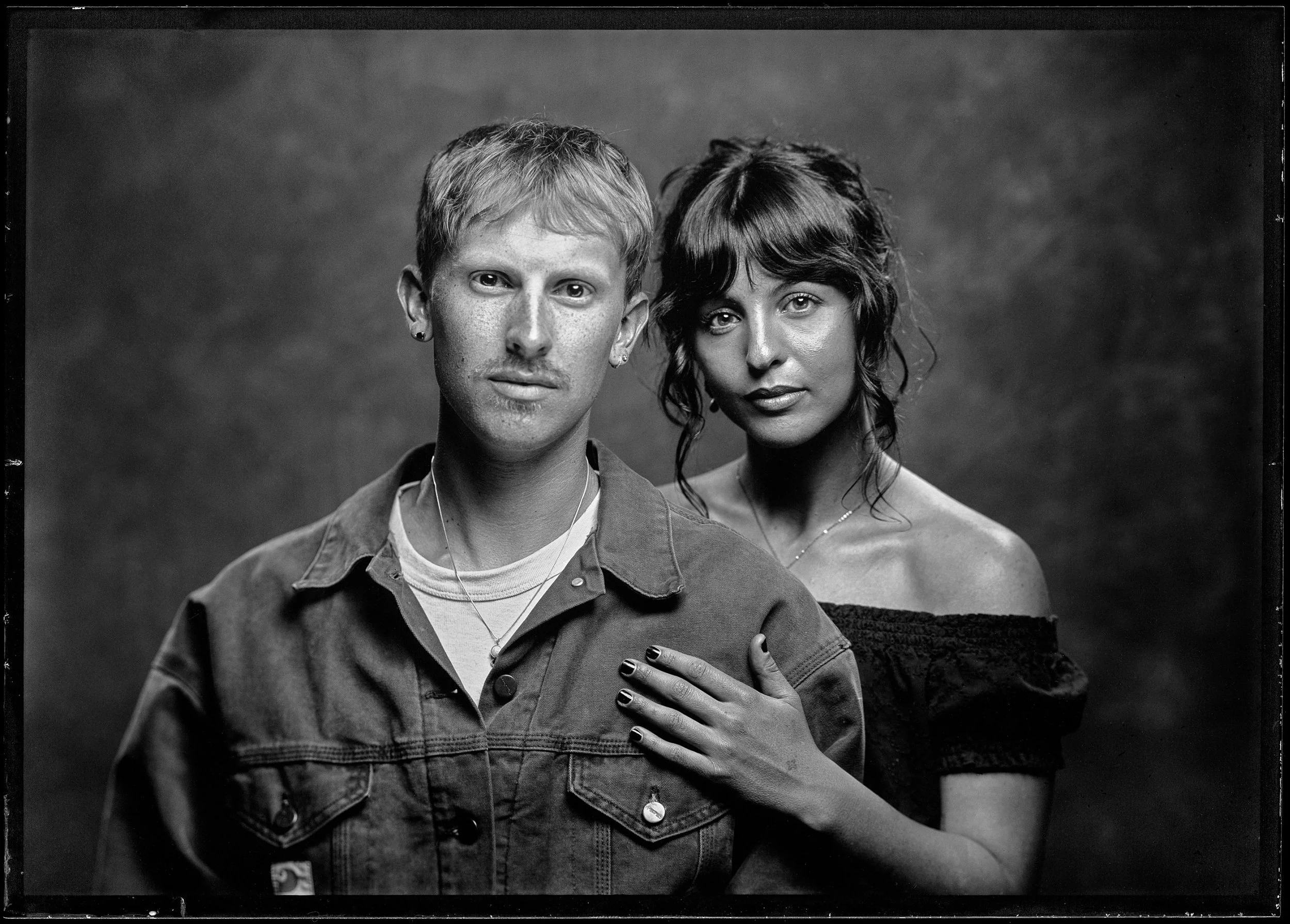
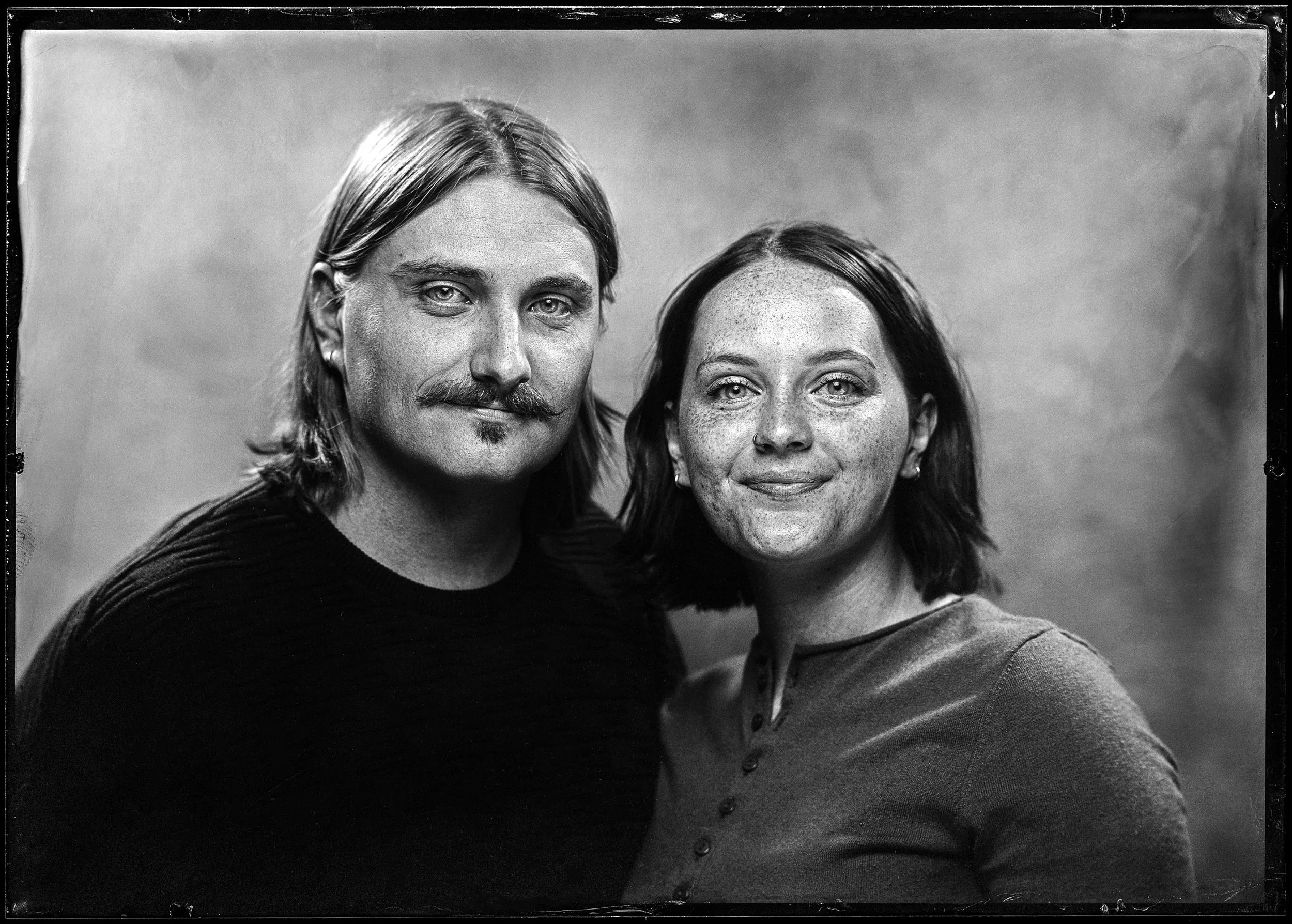
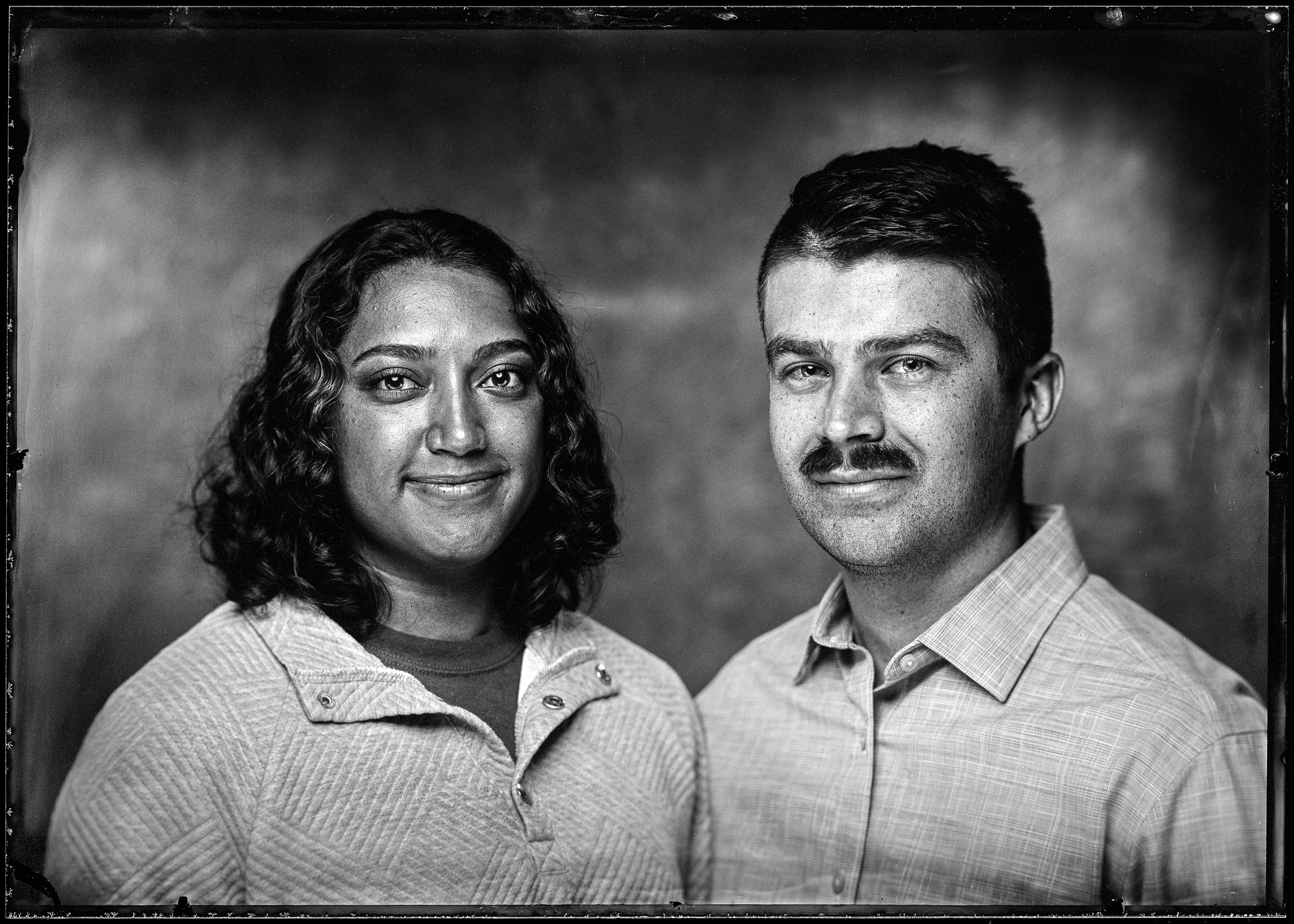
I can make plates on the day itself, at venues around Utah and beyond, but it takes planning — wet plate needs a darkroom on site and a great deal of light. Reach out early so we can work out whether your venue and timeline can support it.
Browse my portfolio
Testimonials
What you get
The physical plate, plus a digital scan sized for wherever you need to use it. The scan is what you send; the plate is what you keep. A tintype reads as a photograph rather than a filter at any size, and prints as well as it posts.
What to expect
Sessions run 1.5 to 3 hours depending on how many plates you want.
You watch the plate appear — the final stage of development happens in the studio, right in front of you. The darkroom itself stays closed: it is small, and the chemistry is not something to stand next to.
You keep the actual plate: silver on blackened metal, one of a kind, with no negative.
Every plate is scanned, and the process is filmed. Digital files and video are available as an add-on.
Plates are varnished with a traditional lavender-and-sandarac varnish and are archivally stable for well over a century.