
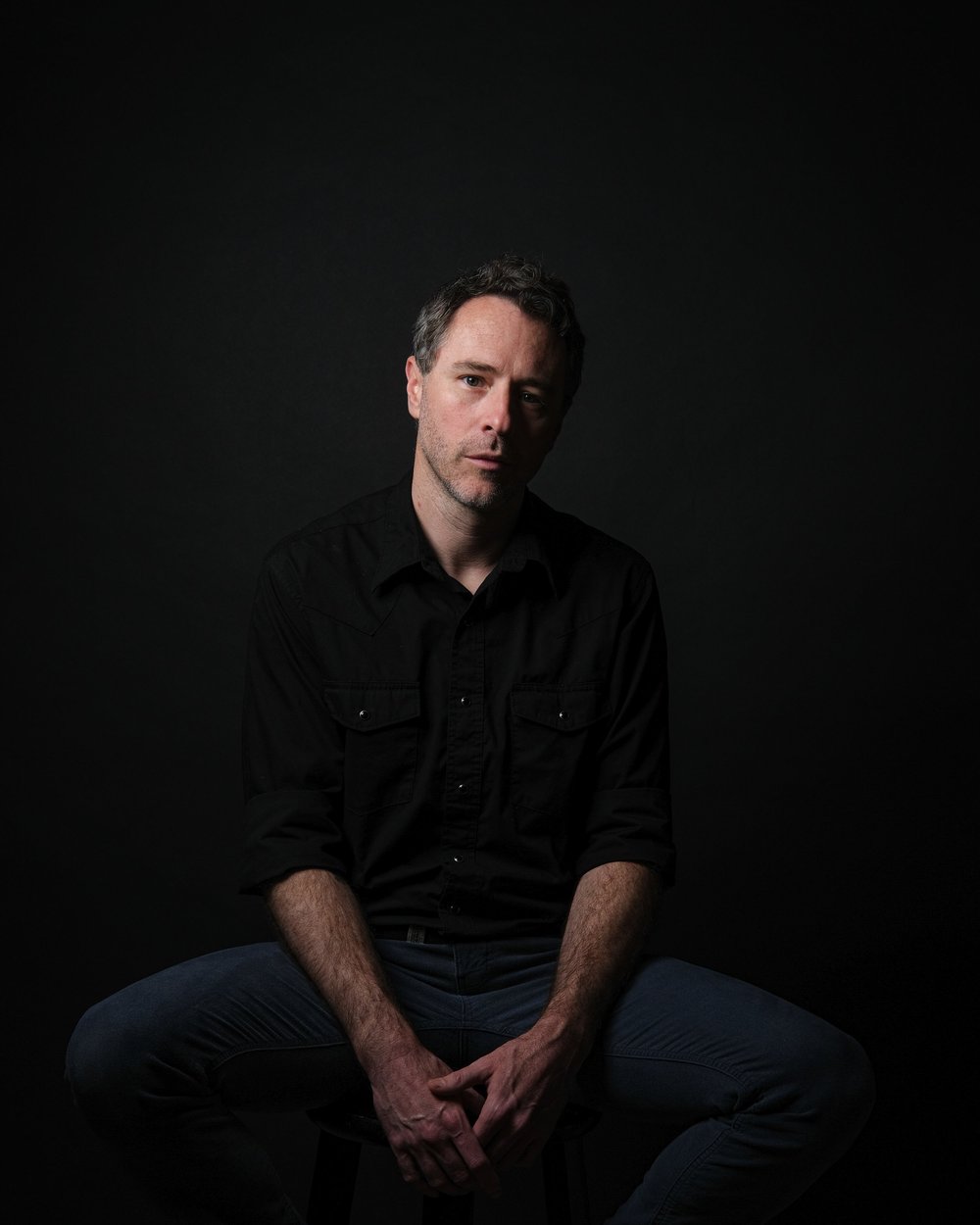
A portrait of me by Carlos Guzman
I’m Brett Briggs. I make tintype portraits in Salt Lake City, Utah.
One plate, poured and exposed and developed by hand while you sit in front of me. No file, no retouching, no second chance. Nothing between us but the time it takes.
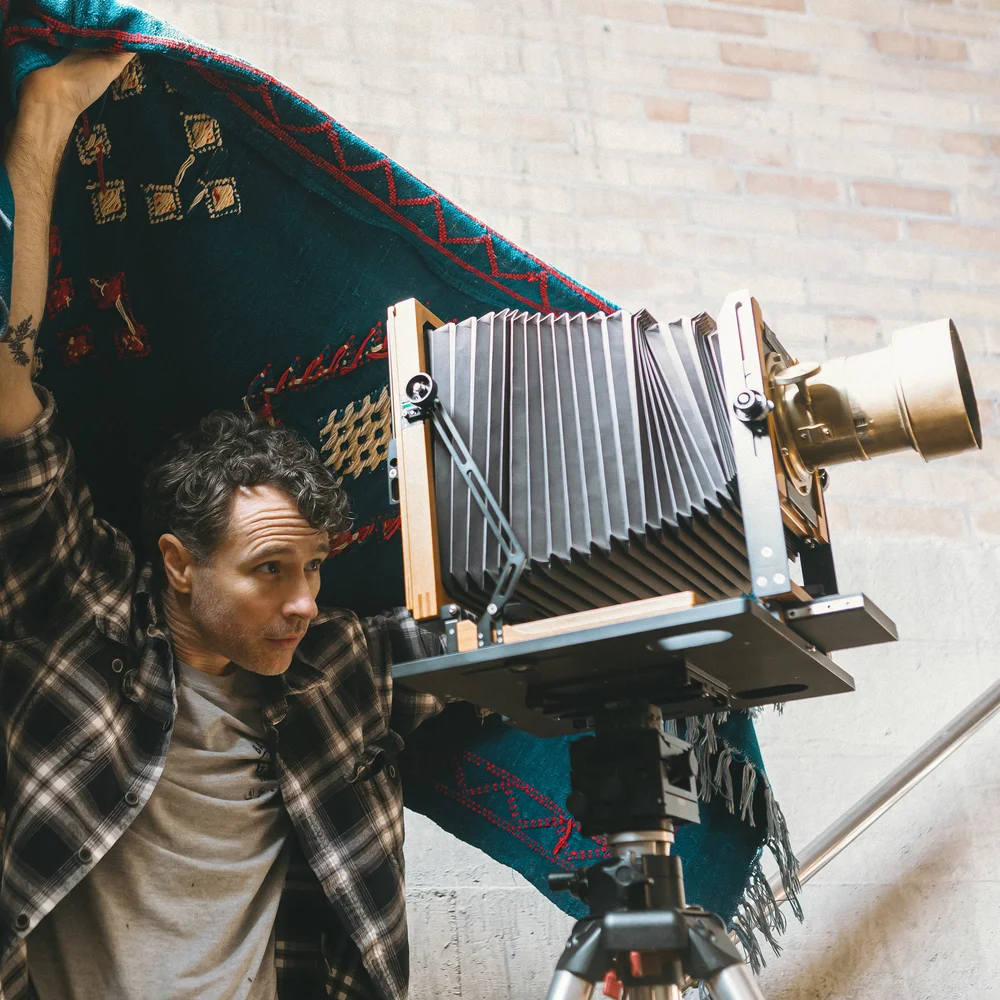
Me under the dark cloth, behind the big camera. Photograph by Lindsey Stewart McDermott.
How I got Here
I fell for large format portraits in 2005, and I've been practicing wet plate seriously since 2016, the year large format Polaroid was discontinued and the alternative stopped being a hobby.
I kept the plates. The first is a young man in a polka-dotted shirt from 2016, and they run in order from there to now — My Journey: ten years of plates.
Before that I took the long way round. I studied photojournalism, then spent years writing and photographing for magazines in the outdoor industry. That work is still online, in the film archive and the digital archive. As print dried up I followed the money into advertising and worked as a creative director, helping businesses build their brand identities; that portfolio is here. I taught and mentored in the same field for a while. Then I left all of it to run a river guiding business, which lasted until covid.
The whole time, a complicated hobby kept quietly getting more attention than the career did. In 2022 I started marketing the portrait work and selling gift certificates. It hasn't been smooth, and it hasn't made me rich, but I haven't looked back once. And it means I don't have to work on the days I have my daughter.
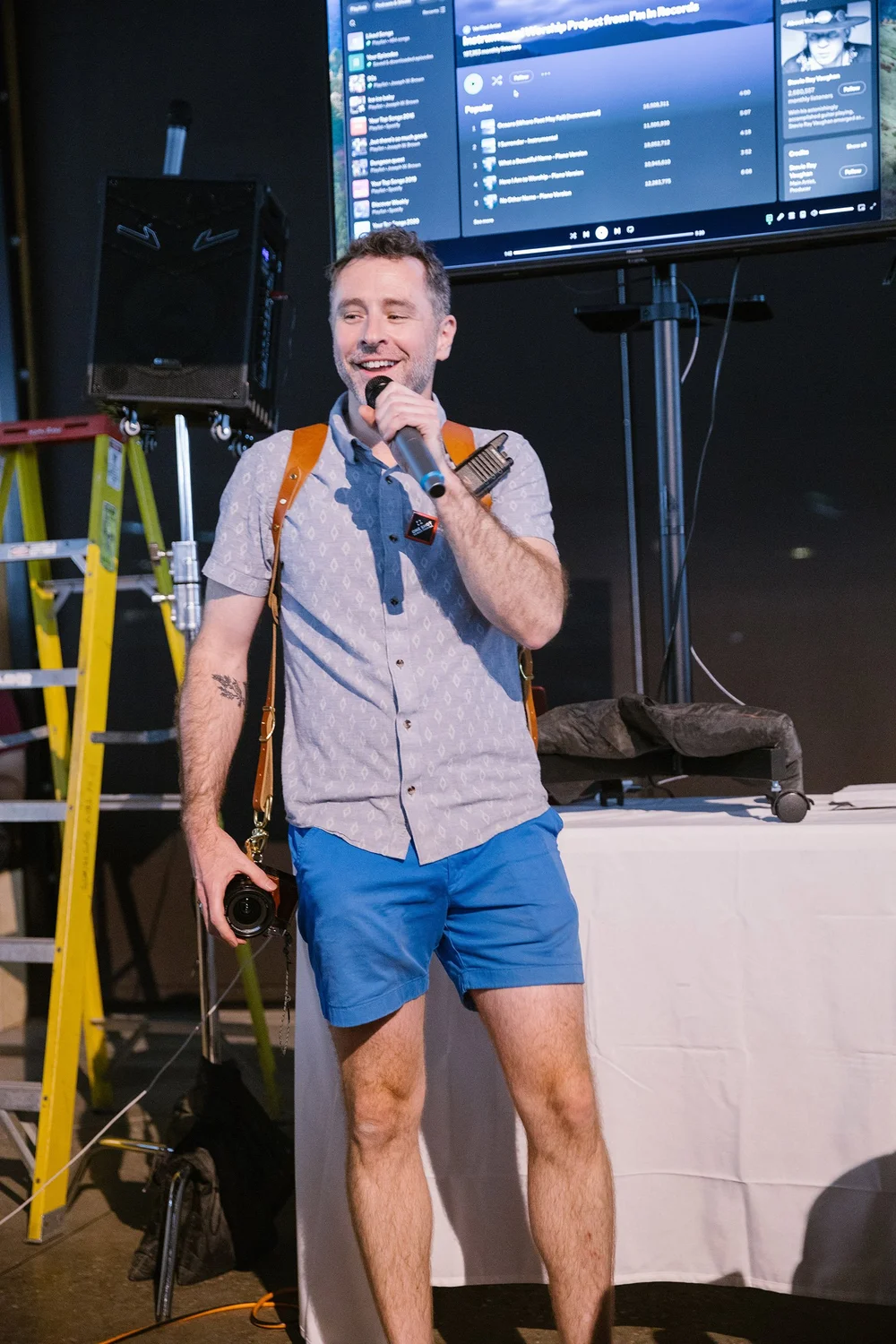
Speaking at One Shot To Rule Them All. Photograph by Victoria Hills.
How I work
My approach is a contemporary one. I'm interested in wet plate as a living medium, not as a re-enactment of a particular decade.
I'm not a chemist. I'm not a gear head. I think the human part is the most important part of the process. Making, shooting and developing a plate in front of someone is a situation that demands respect. If I could get the same reverence out of a digital camera or a phone, I would.
The medium requires stillness, patience and a certain vulnerability from everyone involved. That's the part I actually want. It gives me permission to slow down and pay attention: to shape the light, build the pose, direct an expression, find the composition. All of it is an attempt to get someone's whole self onto one piece of metal. I seldom manage it. The pursuit is what keeps me going.
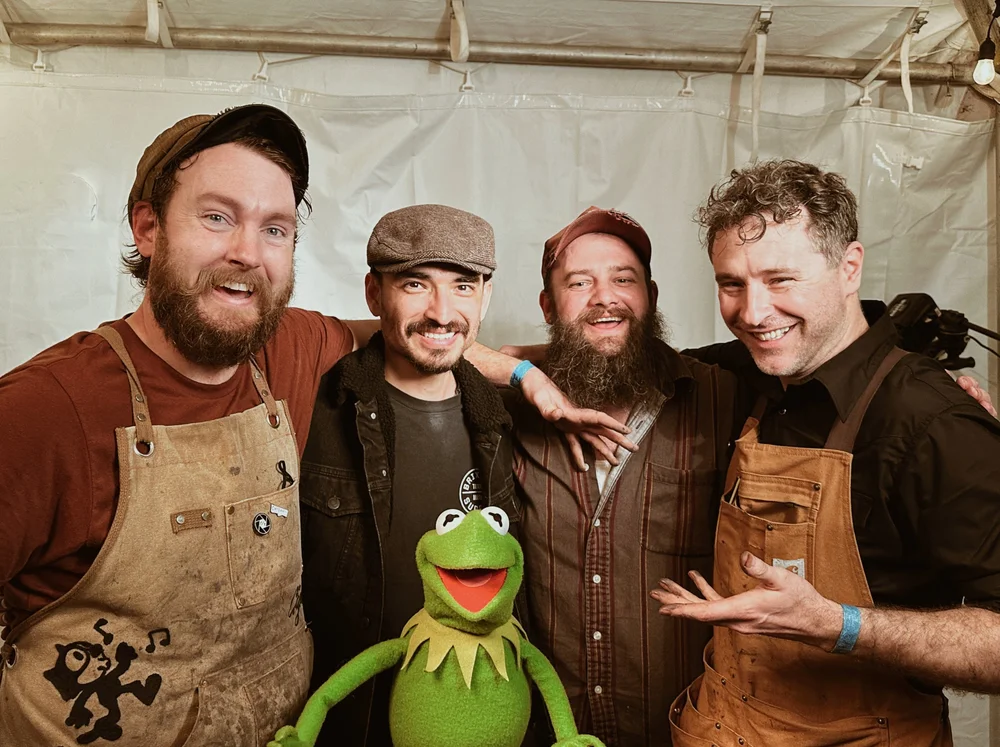
Making a portrait of Kermit, with Willie Nelson. Photograph by Joseph W Brown.
Still Learning
I'm constantly pushing and tweaking, and the fastest way I've found to grow is to work alongside other people: events, pop-ups, gallery shows, and at least one afternoon making portraits inside a derelict prison.
If you sit for me, here's what you get: I will pay close attention, push you a little, and do what I can to make sure you leave with more than you came with. We're going to have a serious amount of fun doing it — the kind that occasionally involves a ruined plate, a deep breath, and trying it again.