
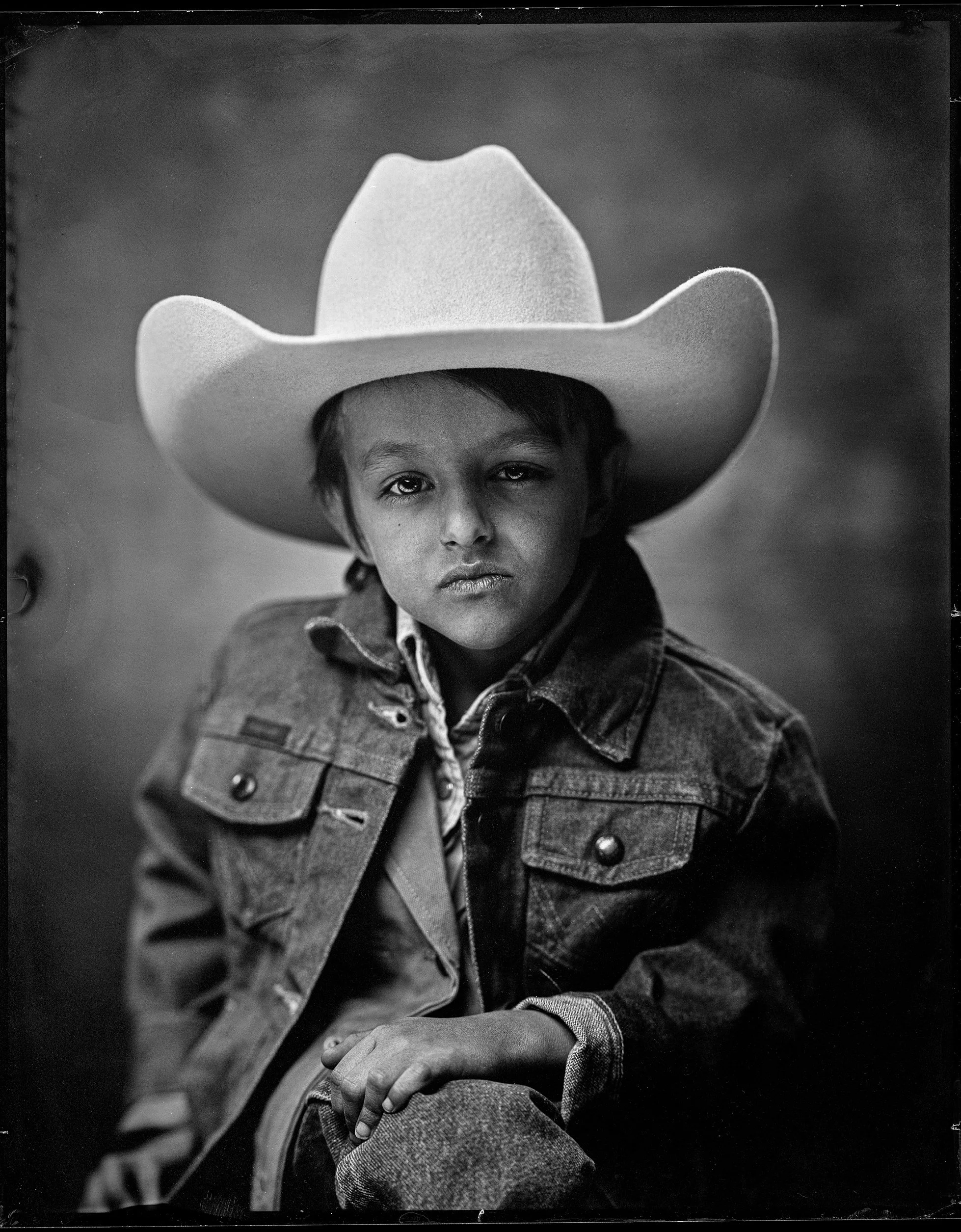
The same, except the pose has to work around what children and animals will actually agree to.
Tintype Portraits for Families, Children + Pets
Most of the ten thousand photographs you have of your children exist as files. These exist as objects.
A tintype is made on a sheet of blackened metal, by hand, in about twenty minutes. Properly varnished it will still be here in a hundred and fifty years — which makes it less a photograph than an heirloom that happens to be one. You get the plate itself; scans and a short film of the process are available alongside it.
I photograph families of every shape, including the queer ones, the blended ones, the chosen ones and the four-legged members. Exposures are short now — close to instantaneous with strobes — so this is not the several-second ordeal it was in the 1860s. Children do not need to be statues.
Family
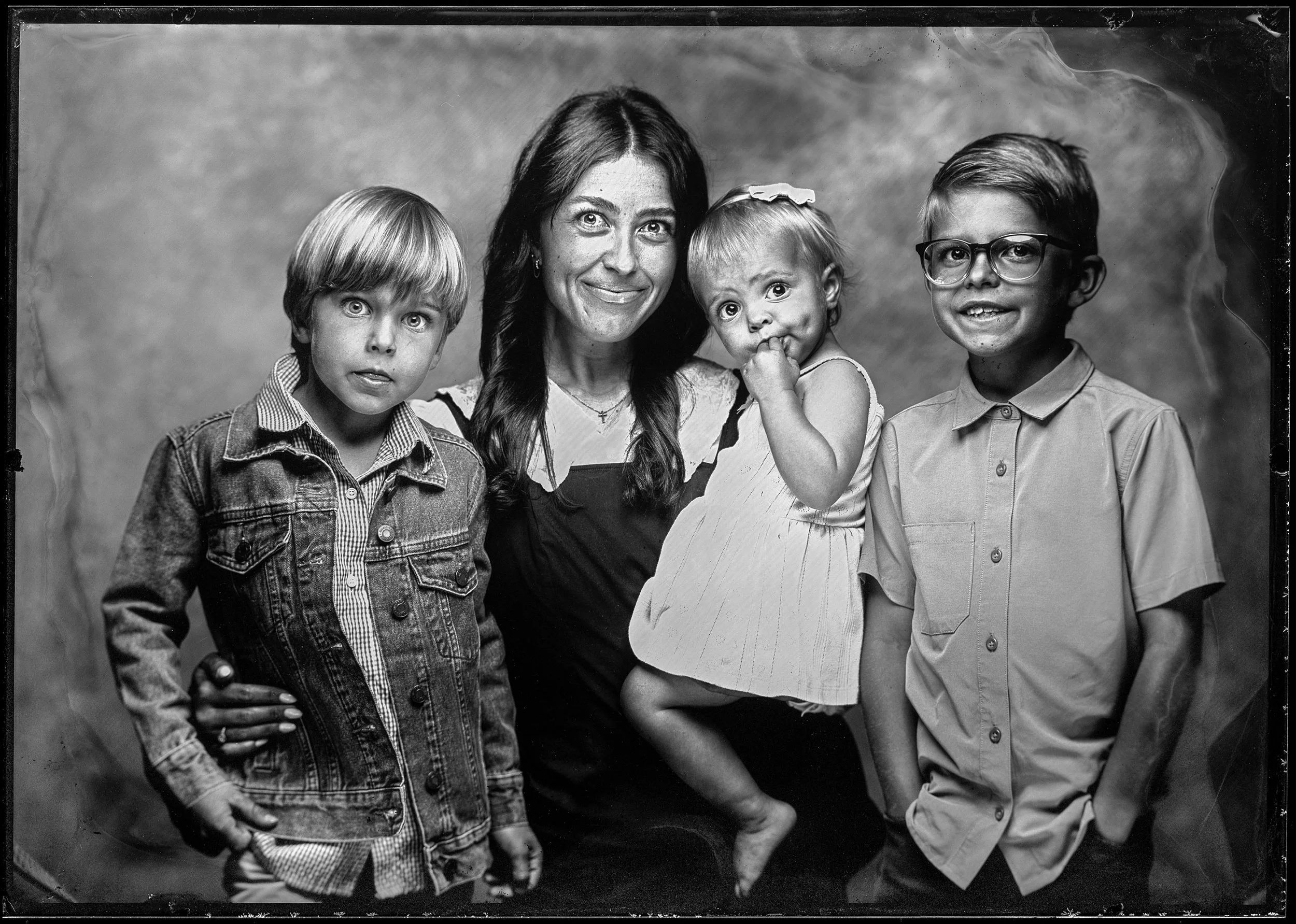
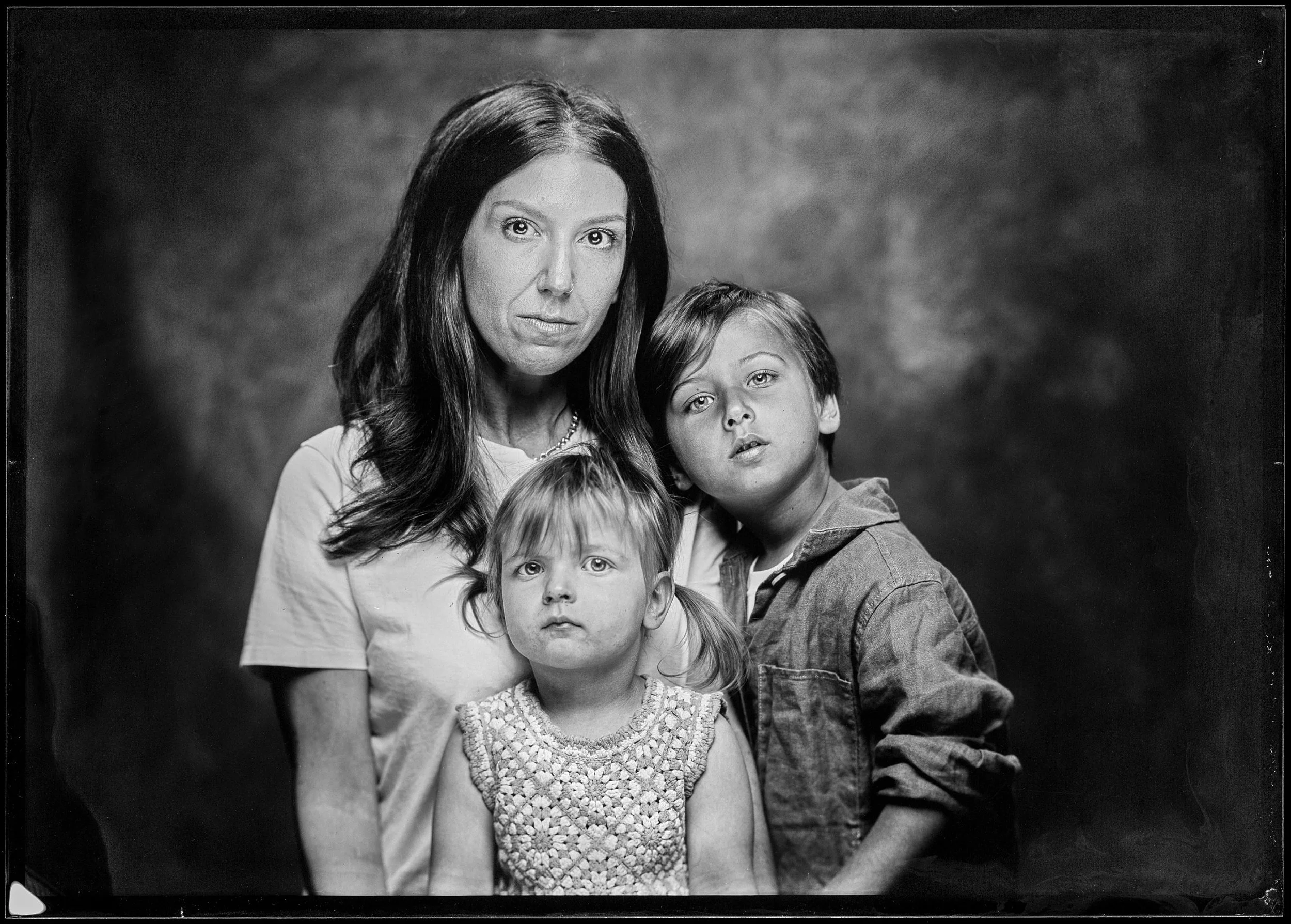
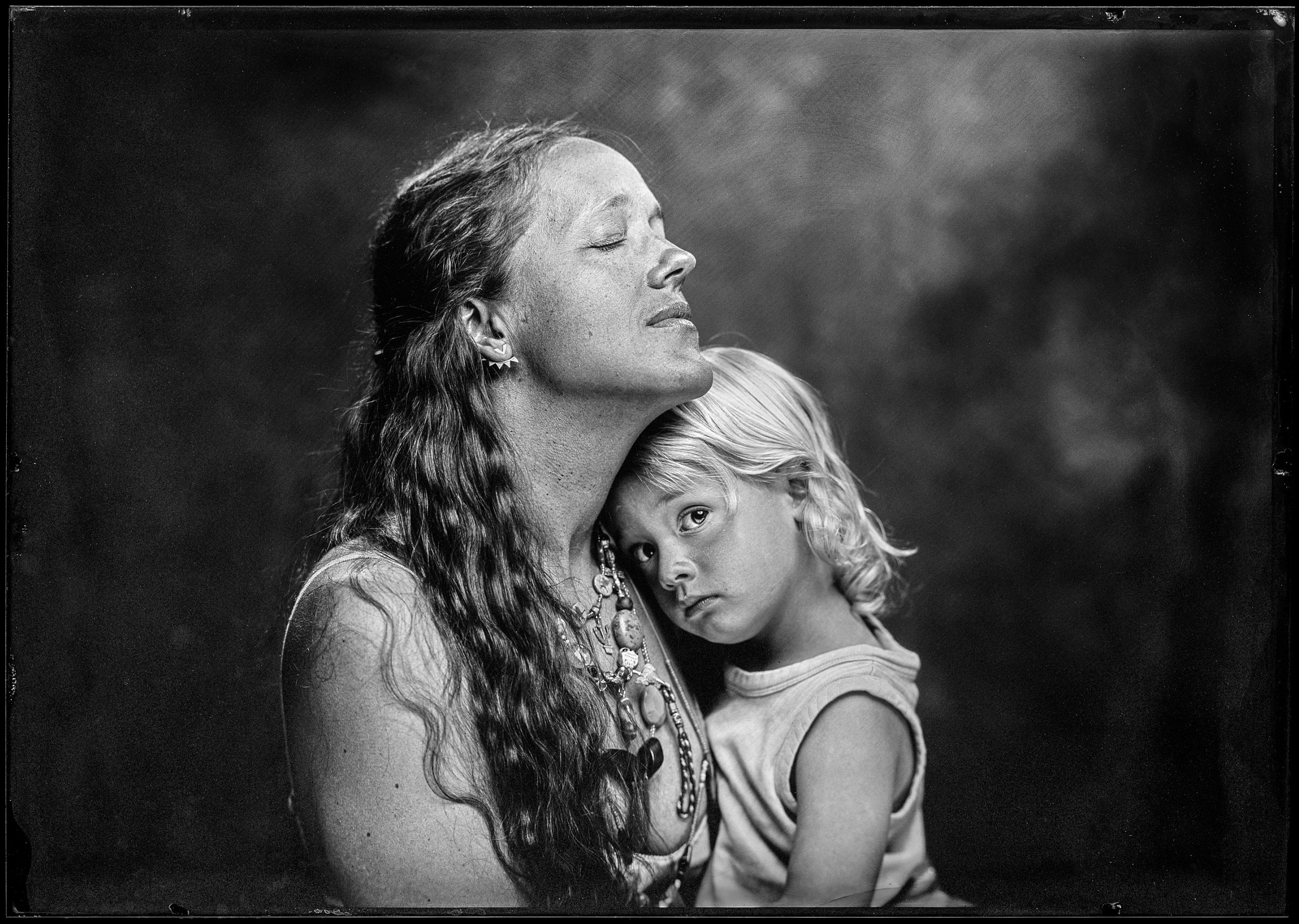
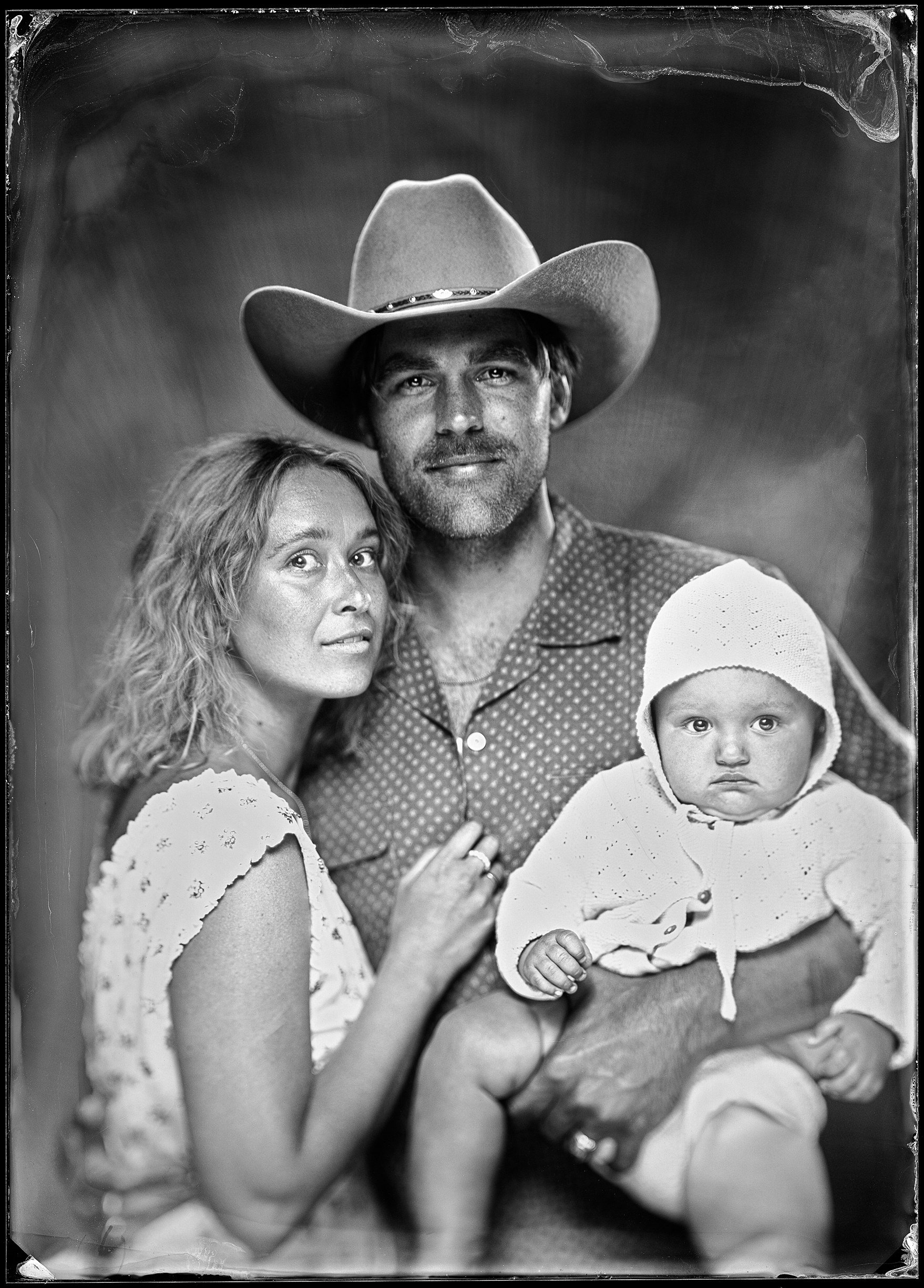
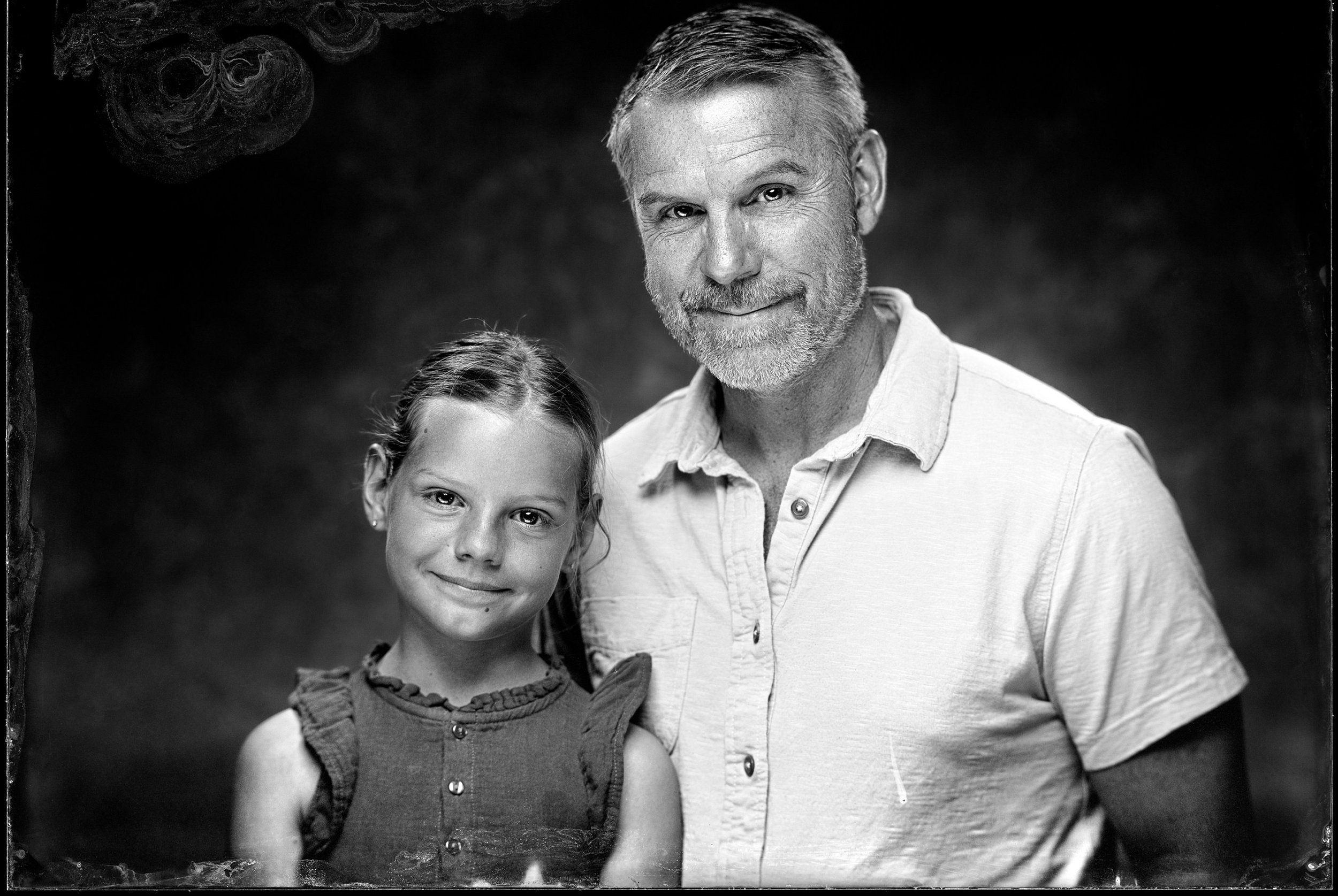
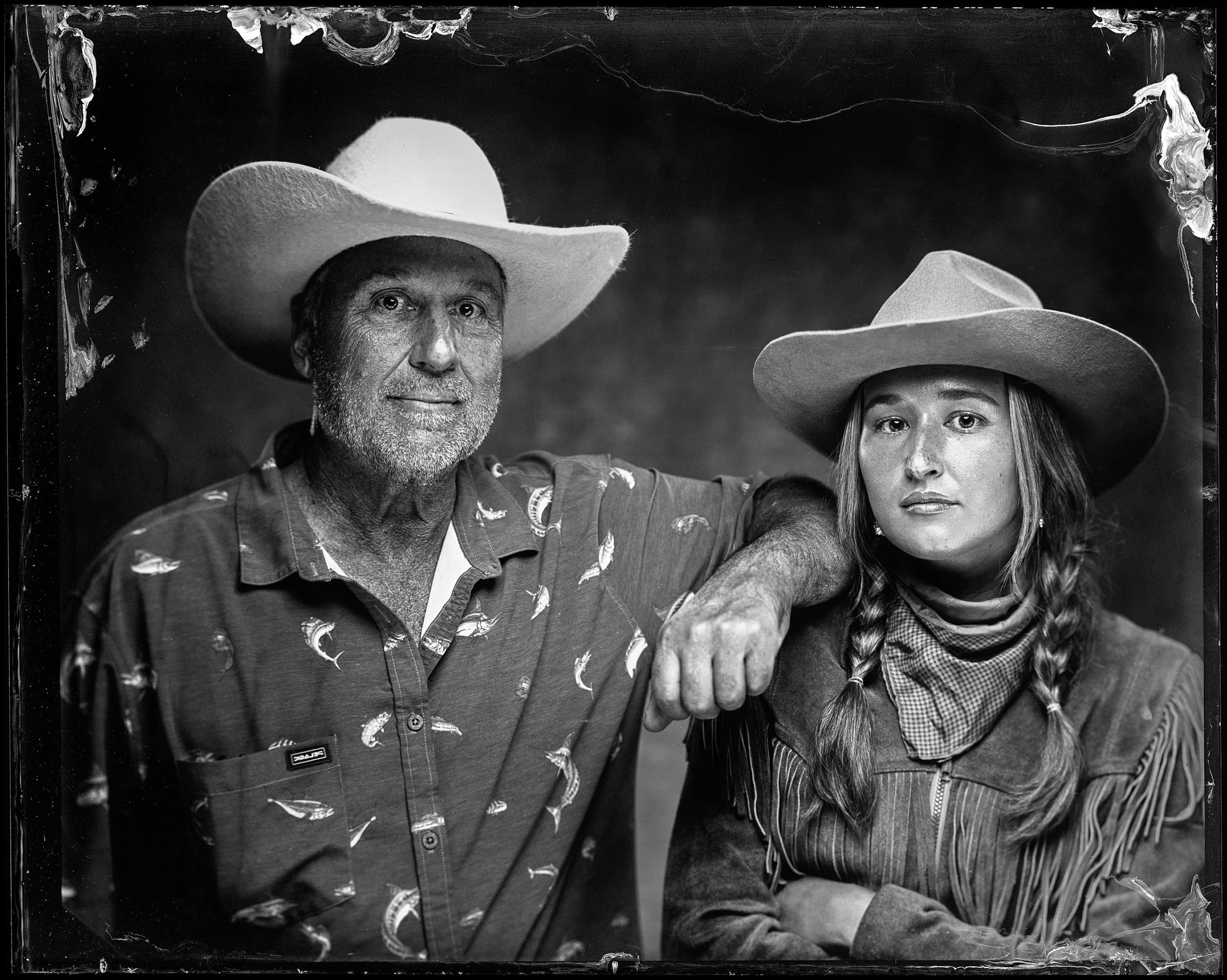
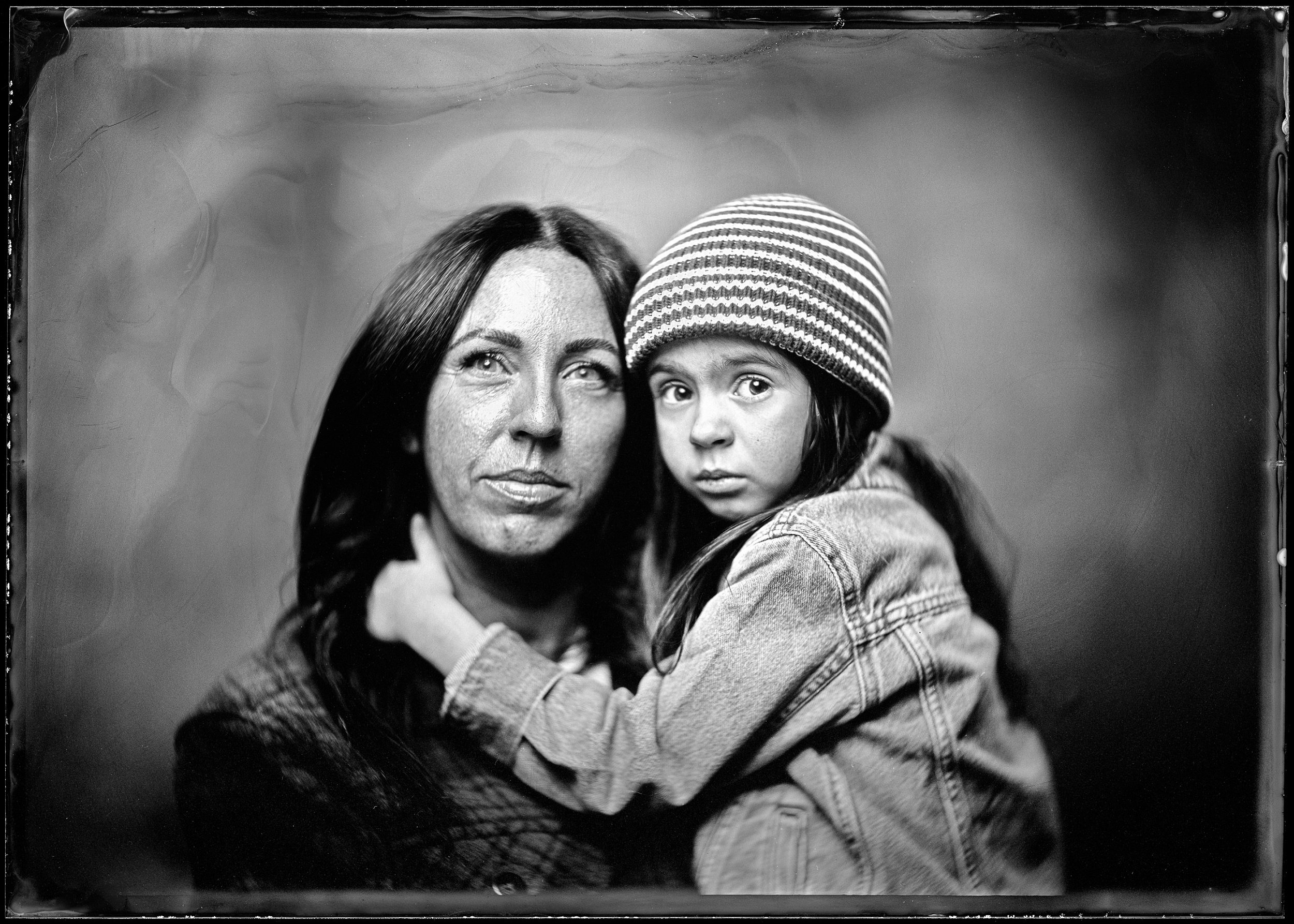
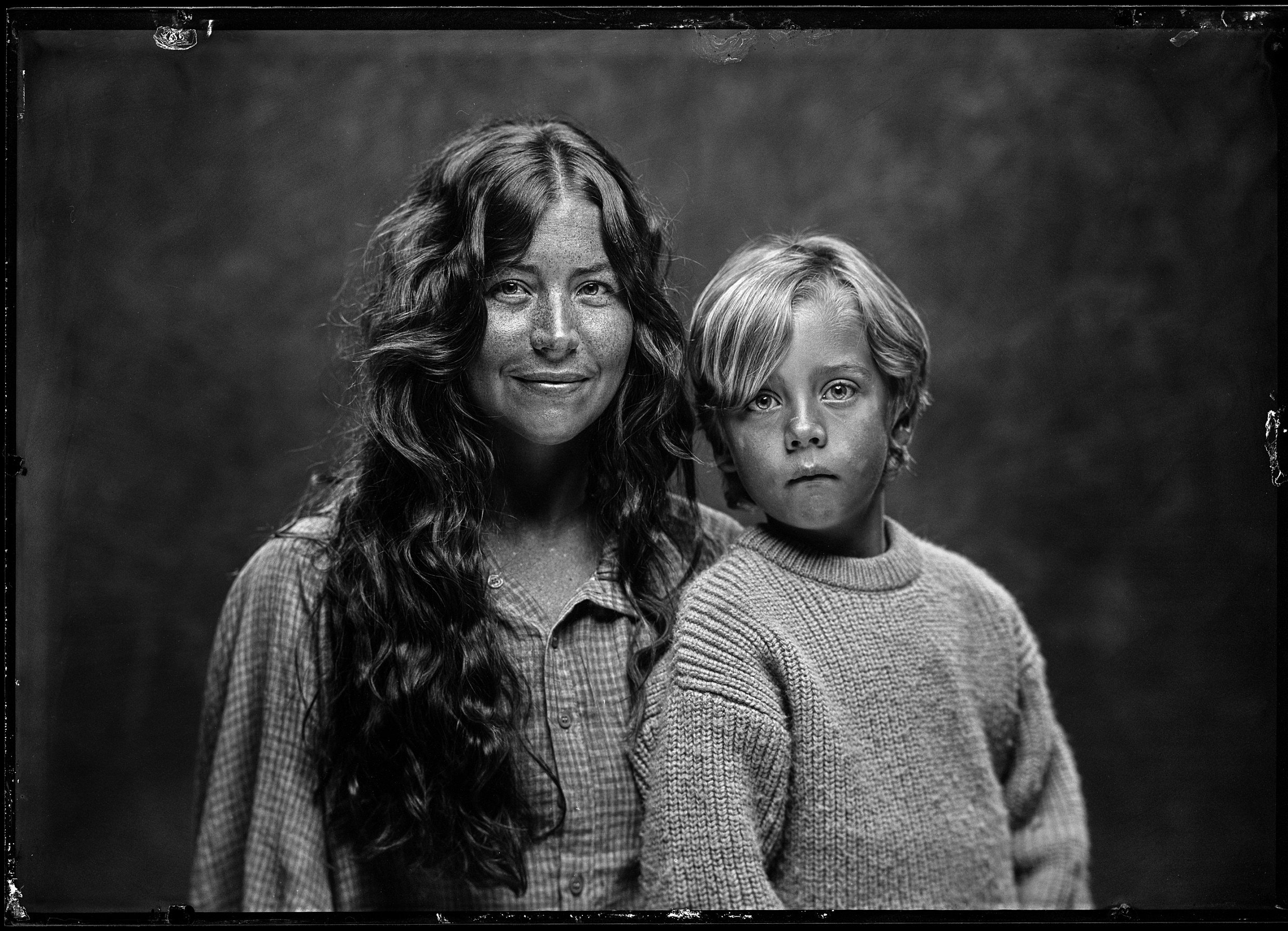
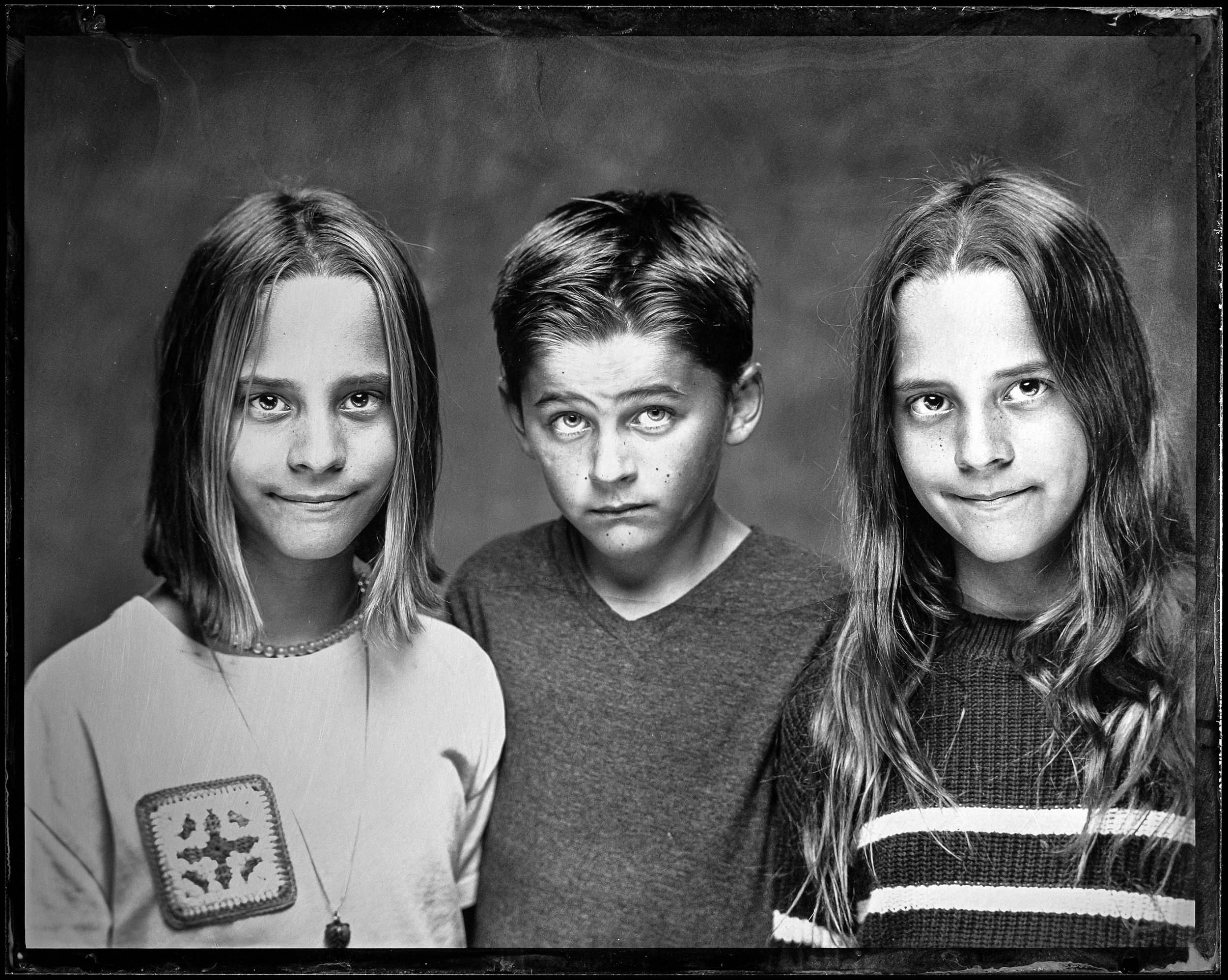
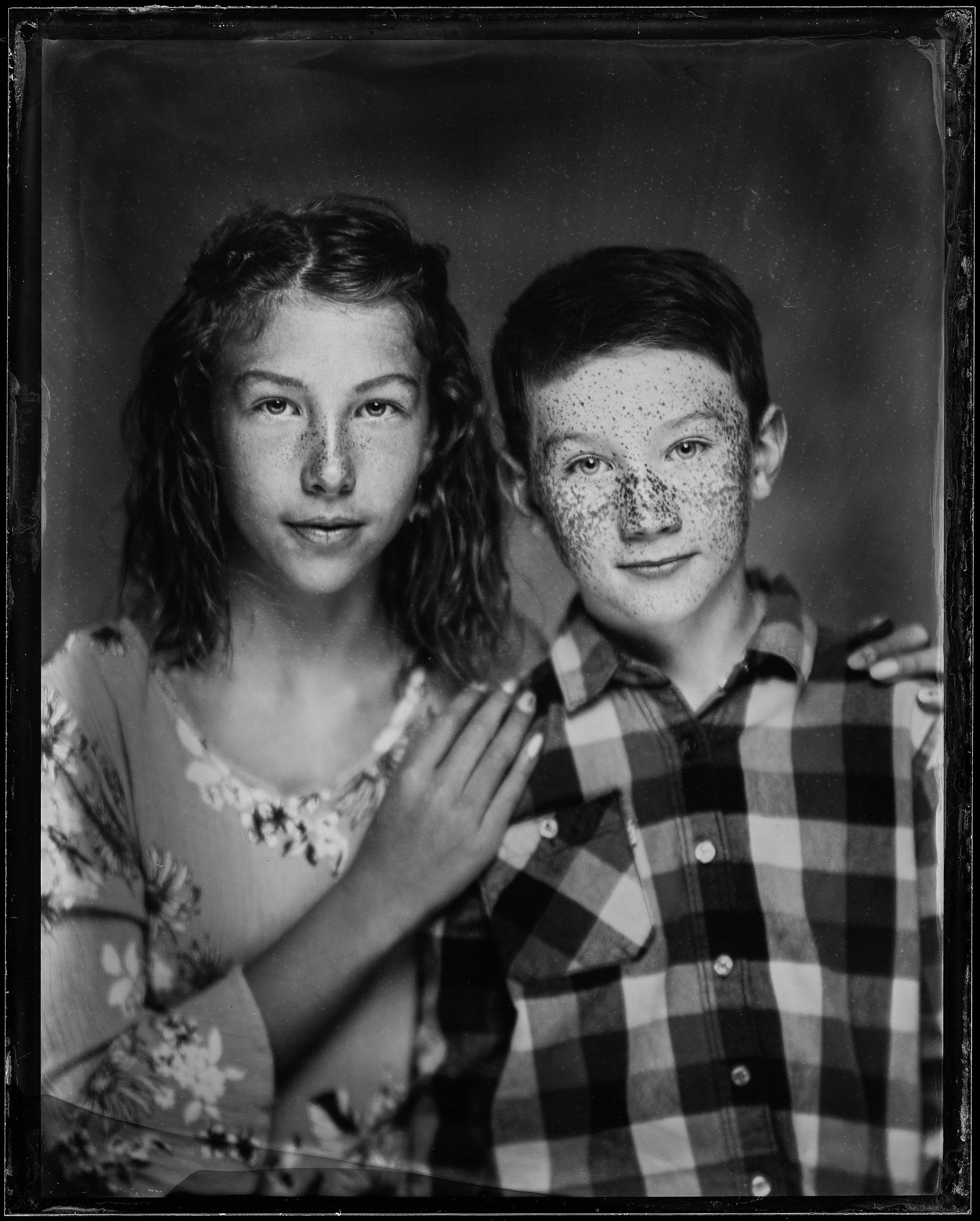
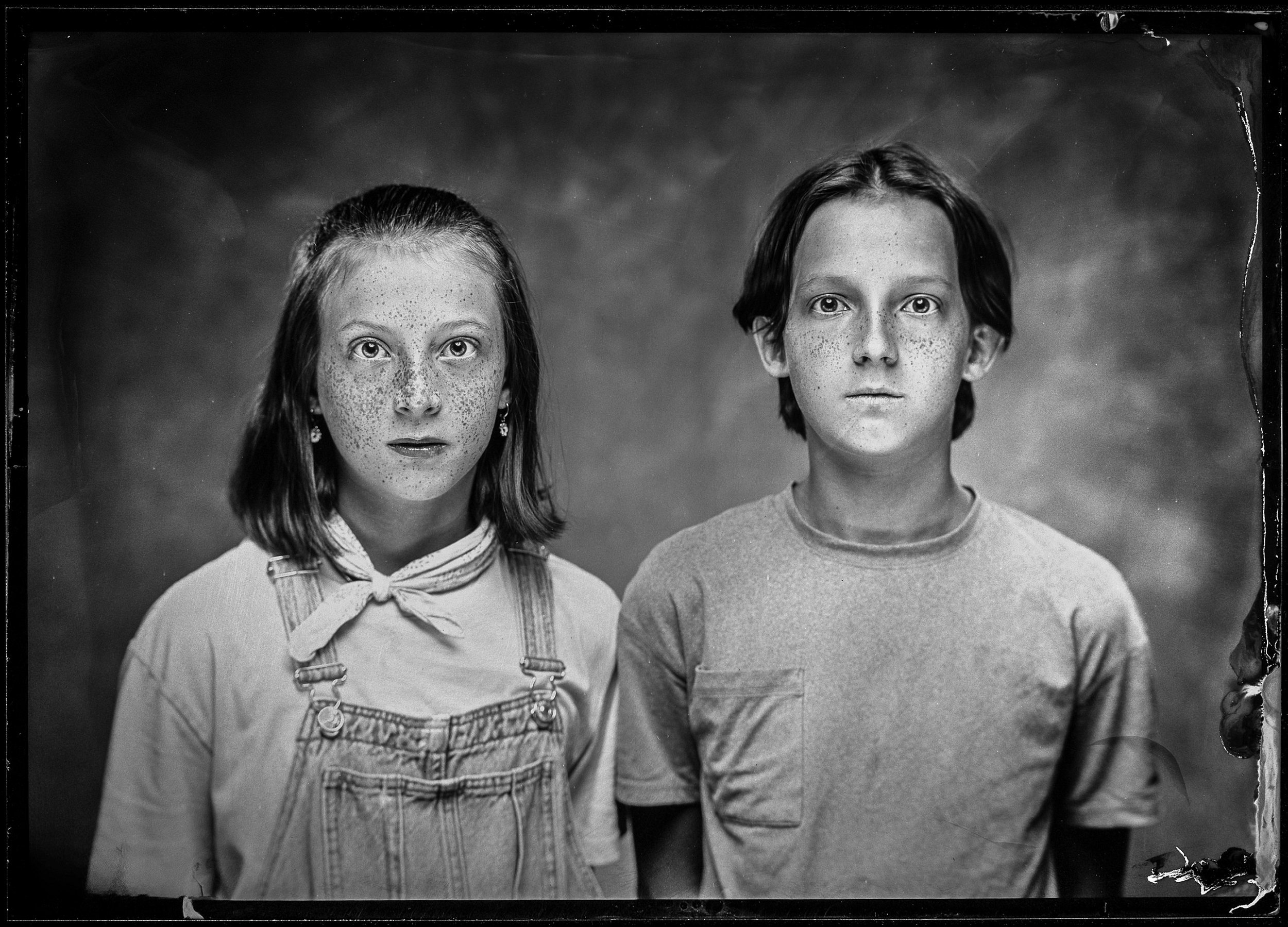
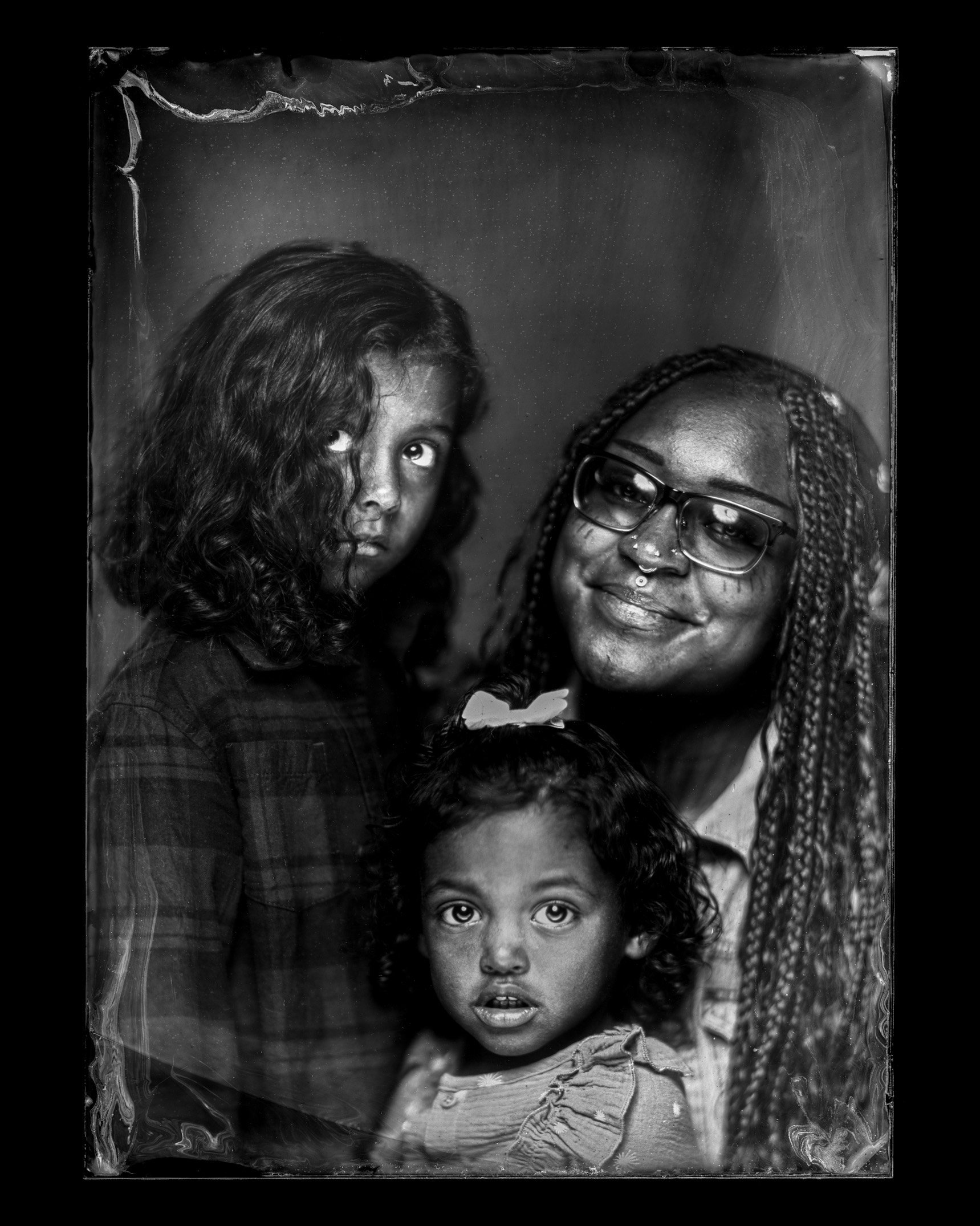
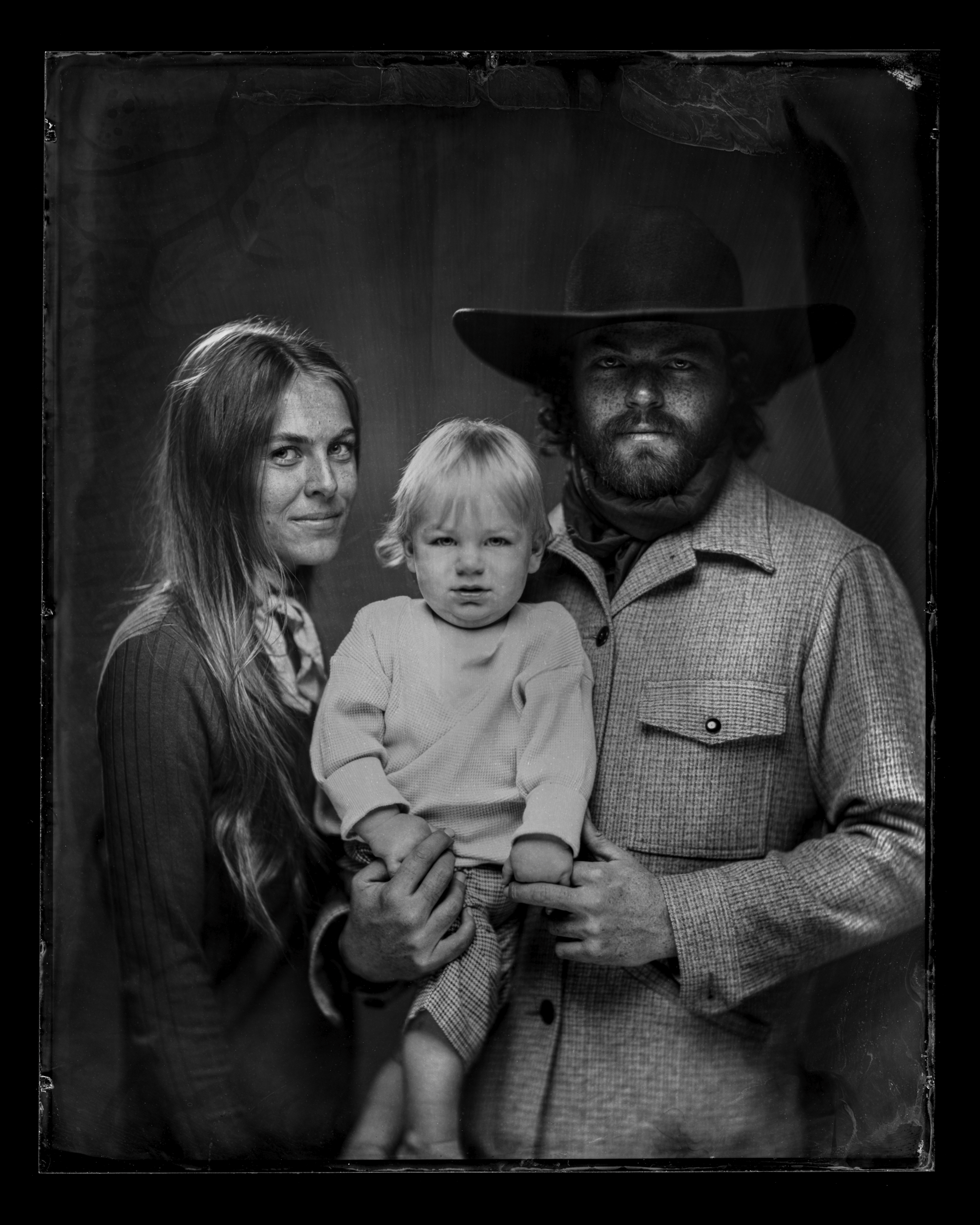
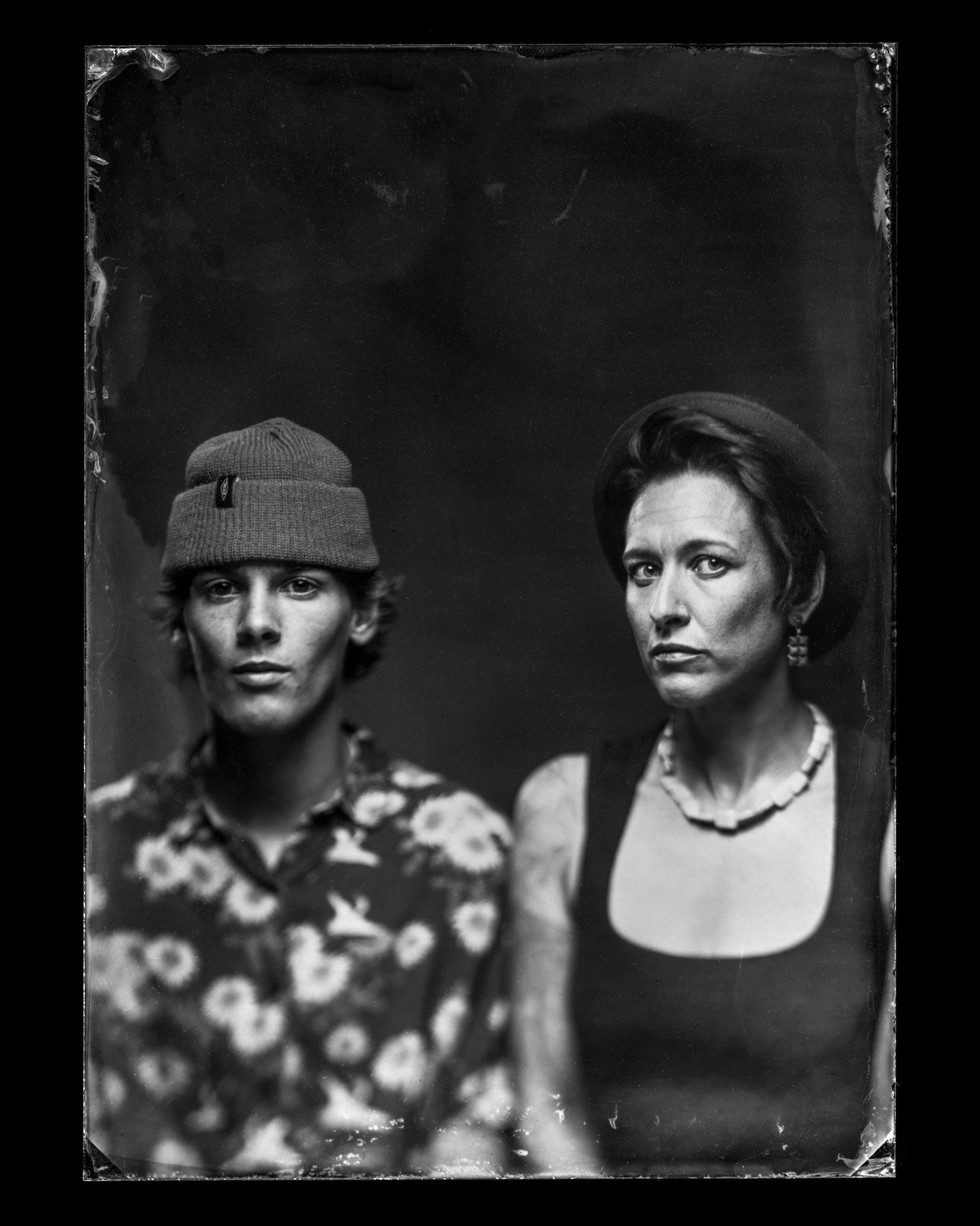
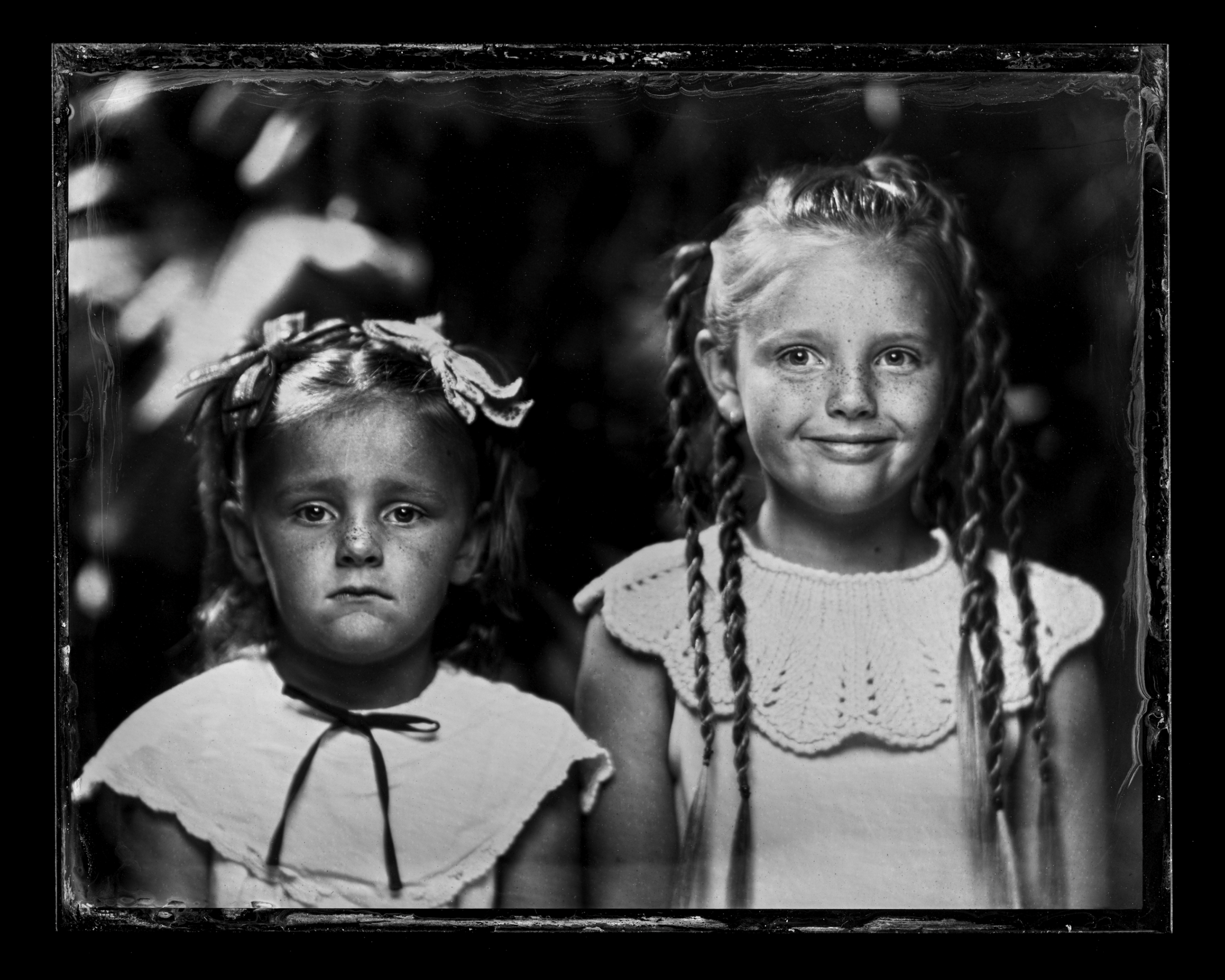
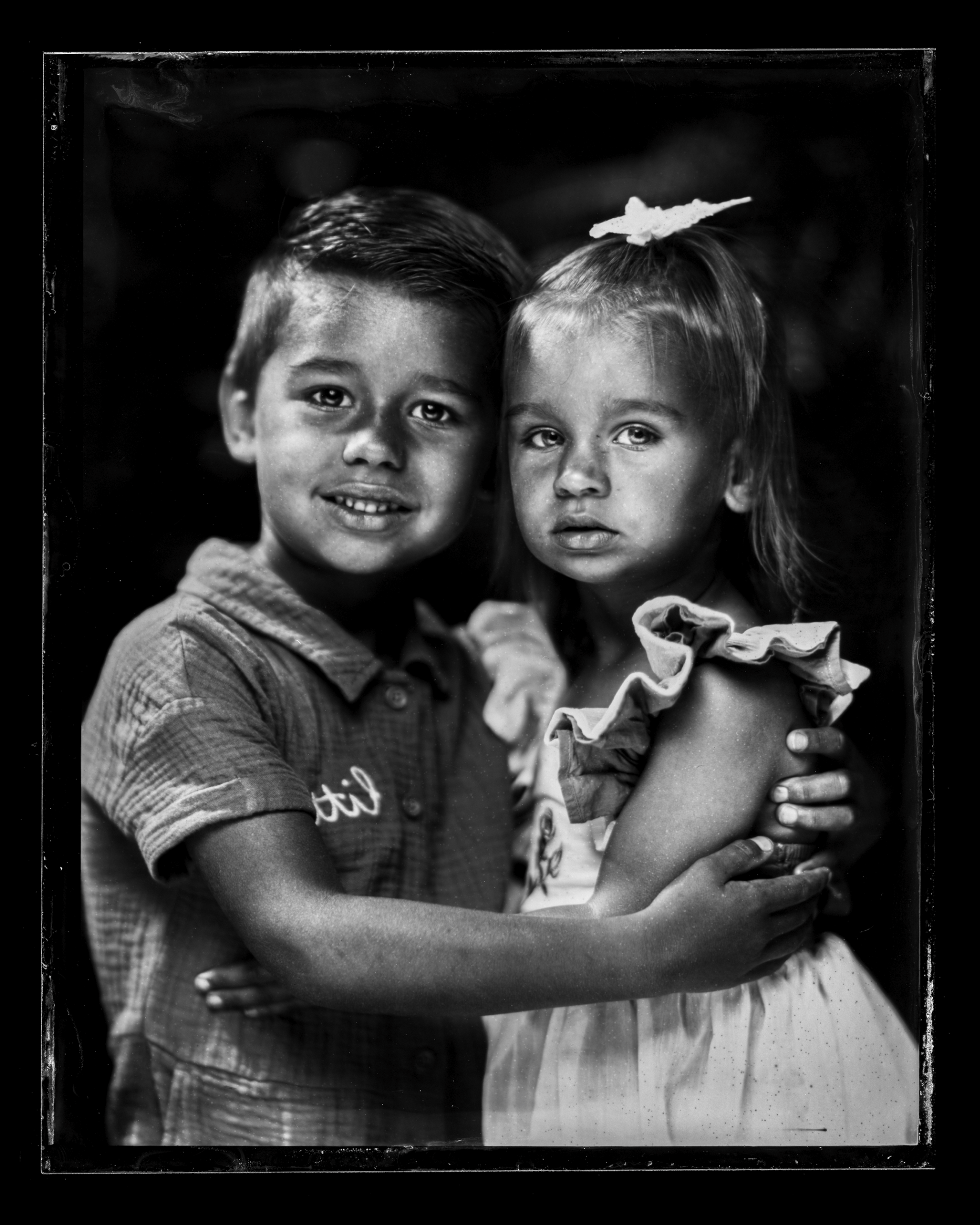
Grandparents, parents and children on one plate is one of the strongest things this process does. Plan for a longer session if you want several combinations of people. Bring snacks and something to entertain whoever is waiting their turn.
Children
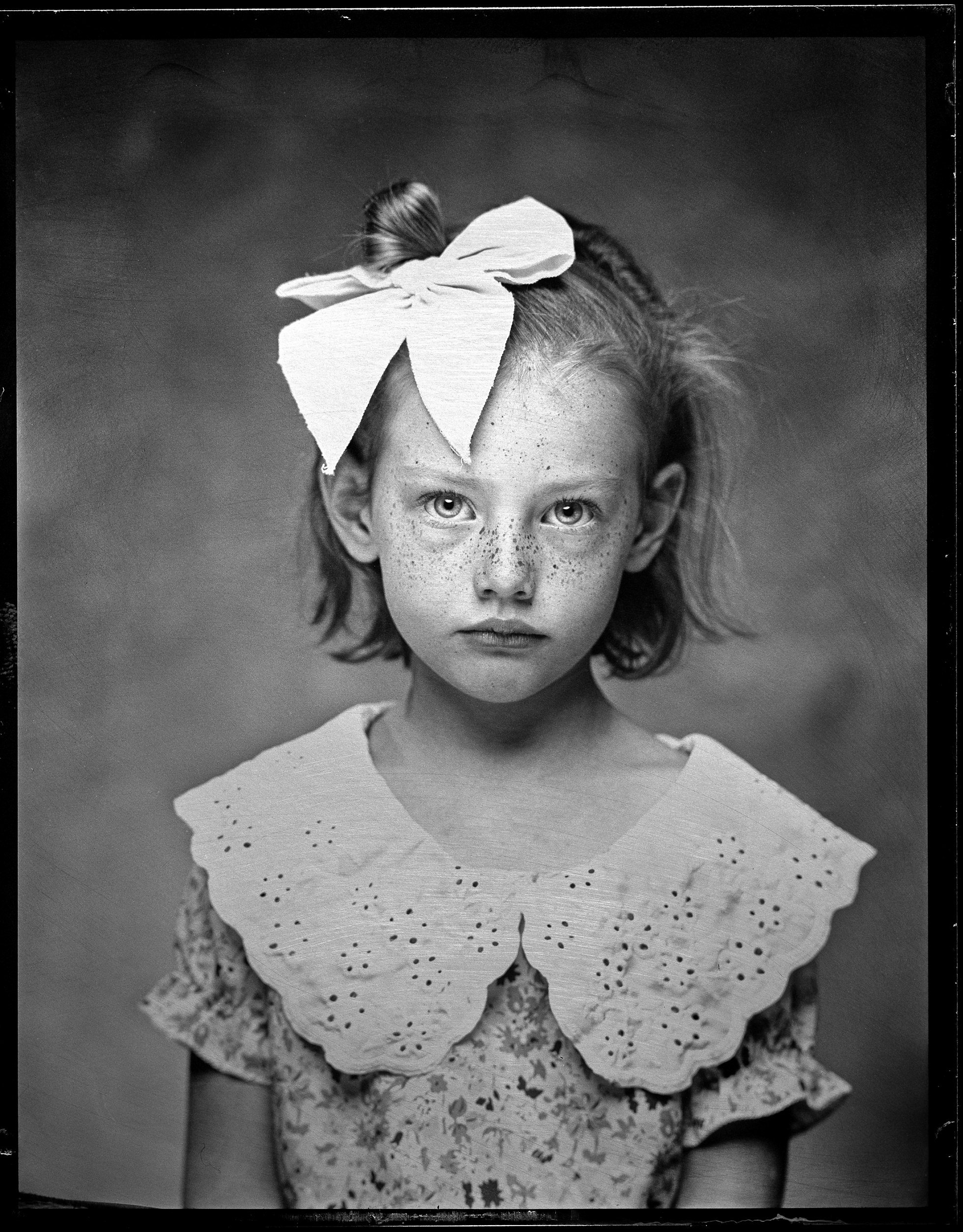
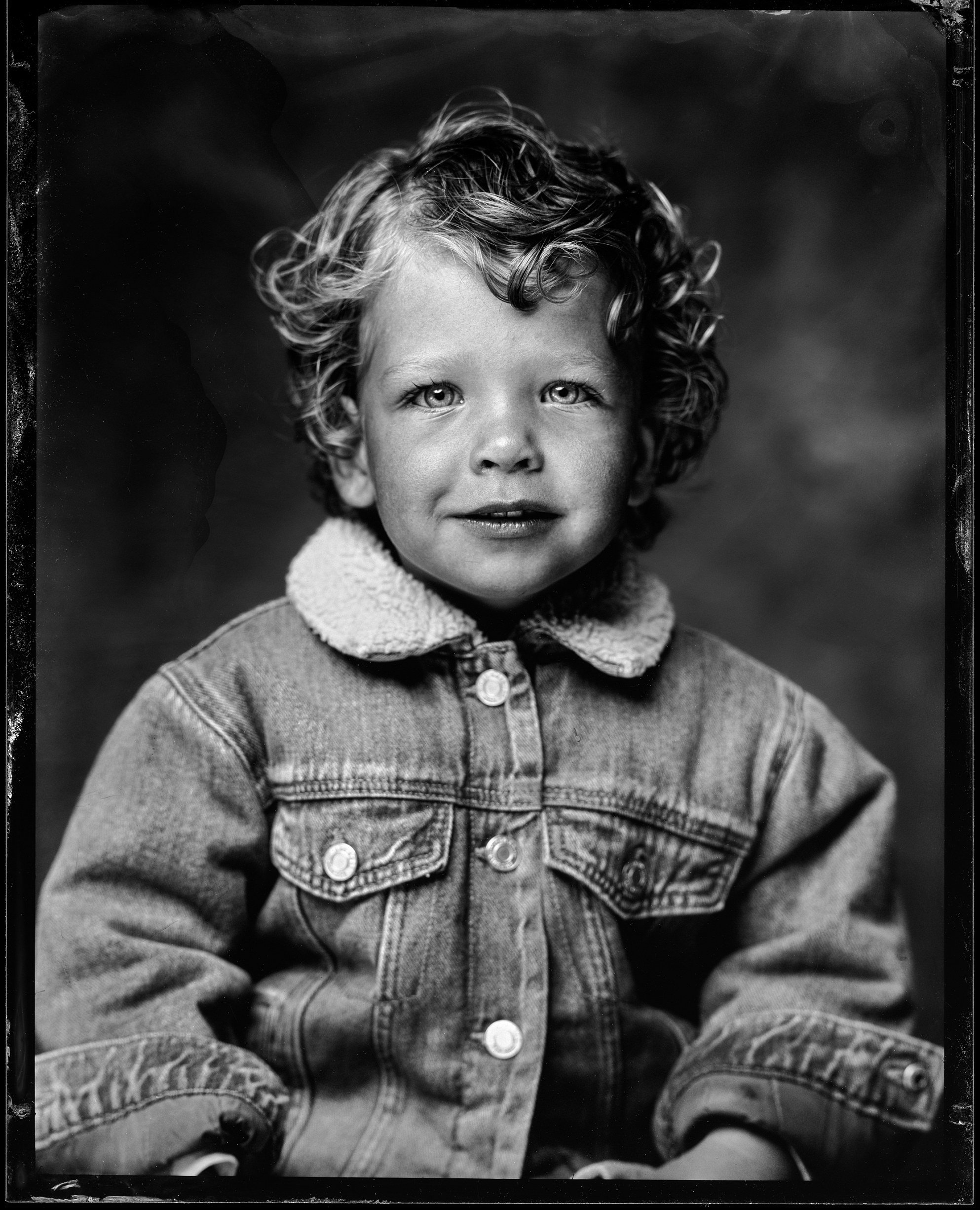
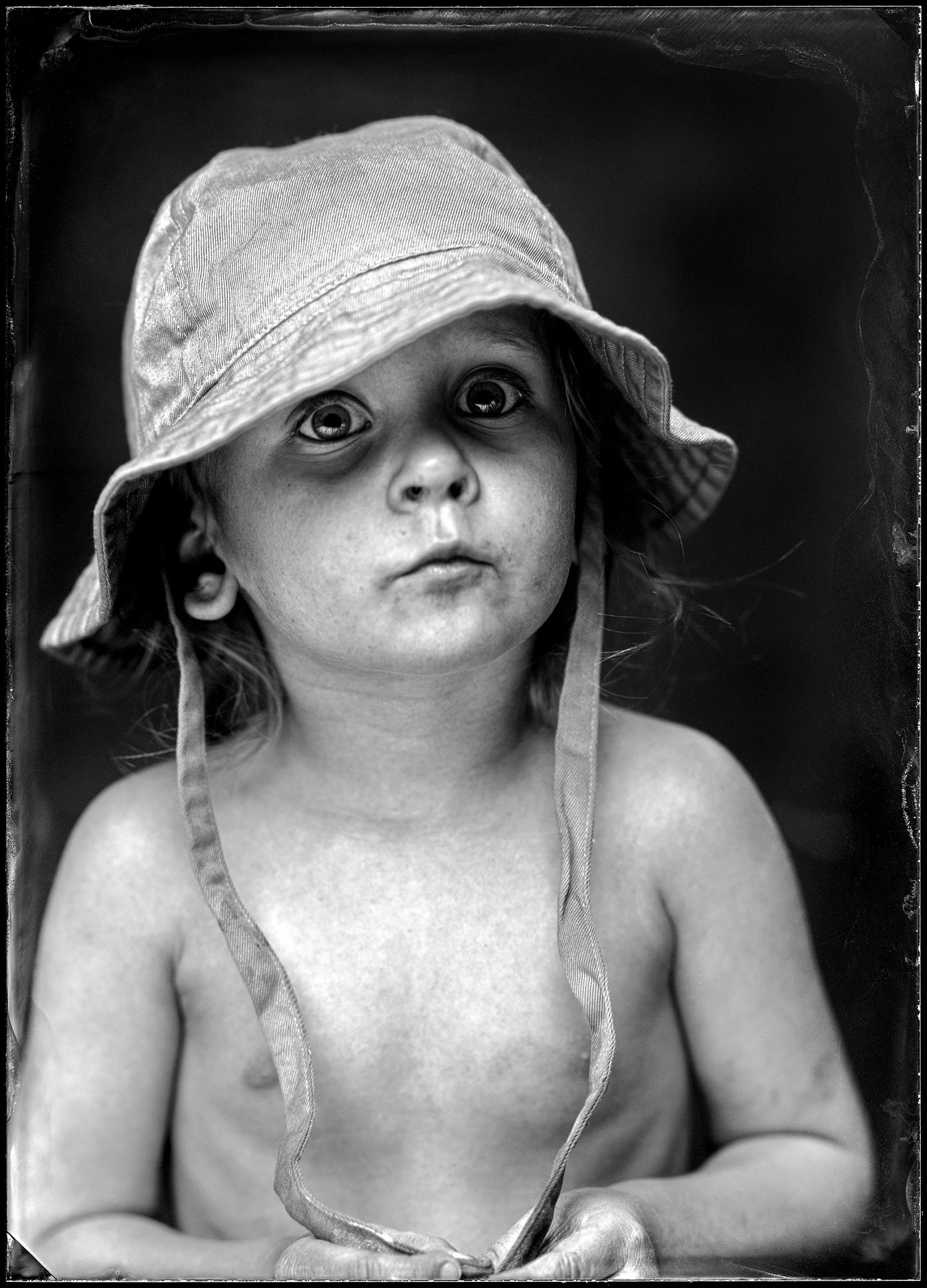
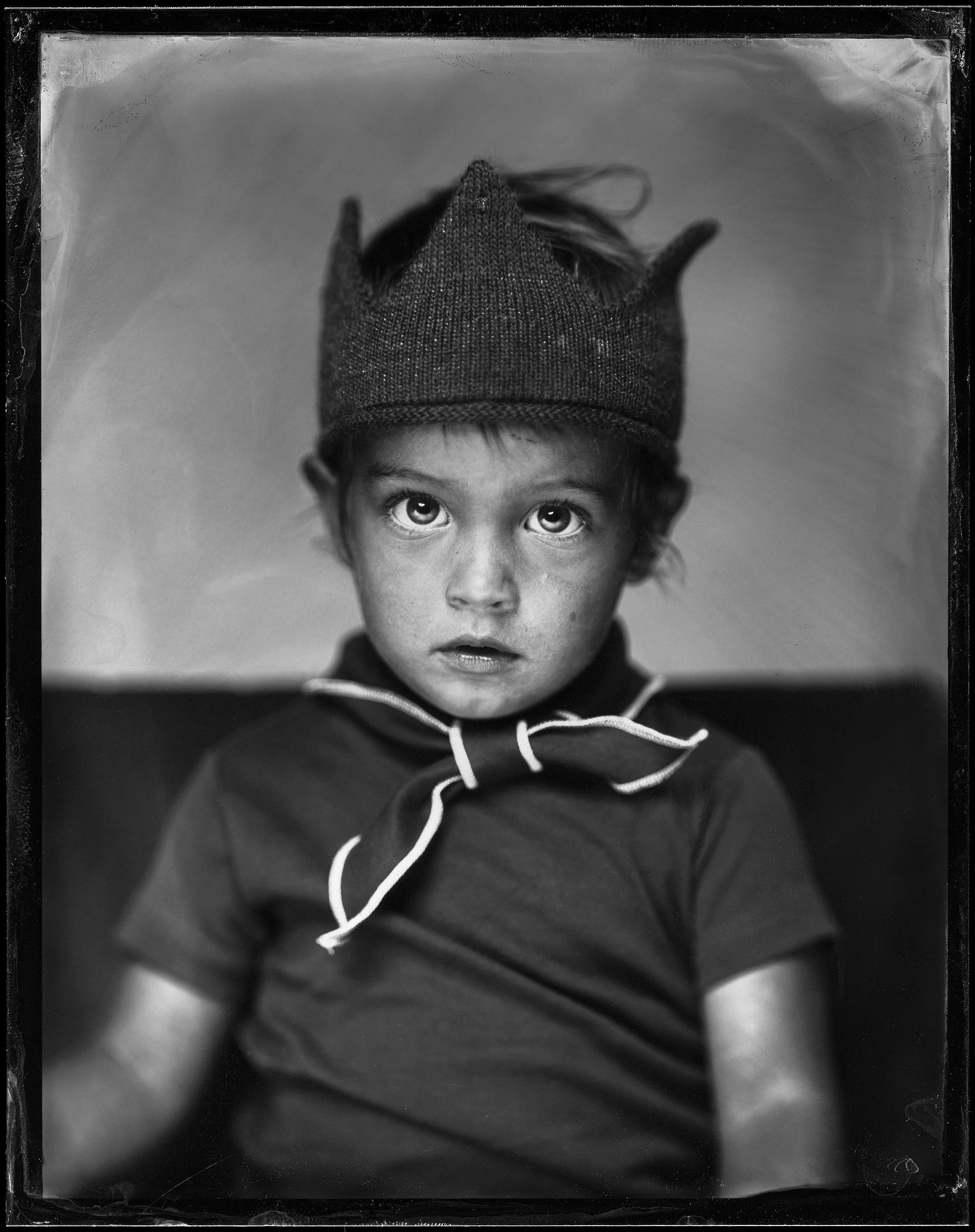
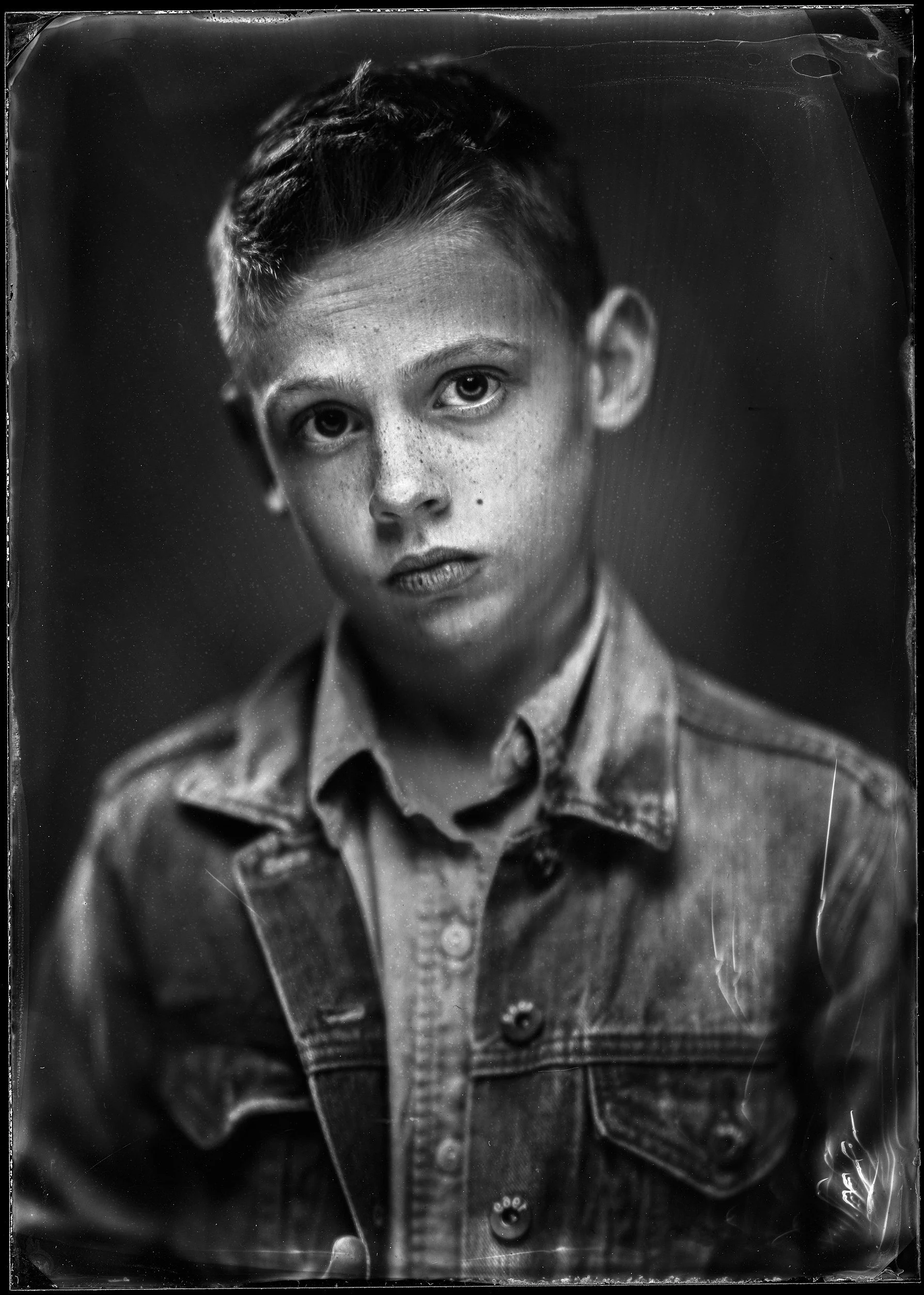
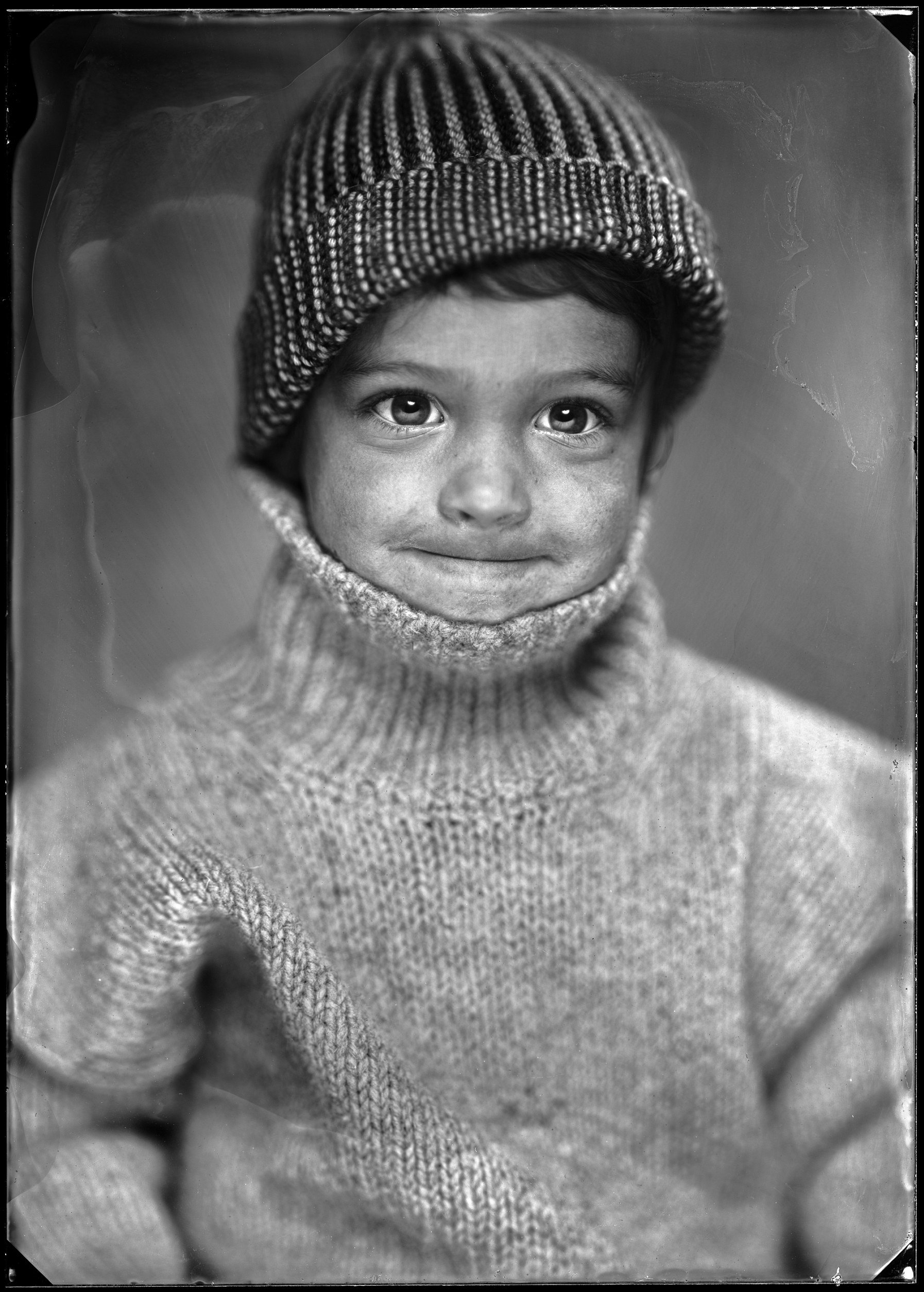
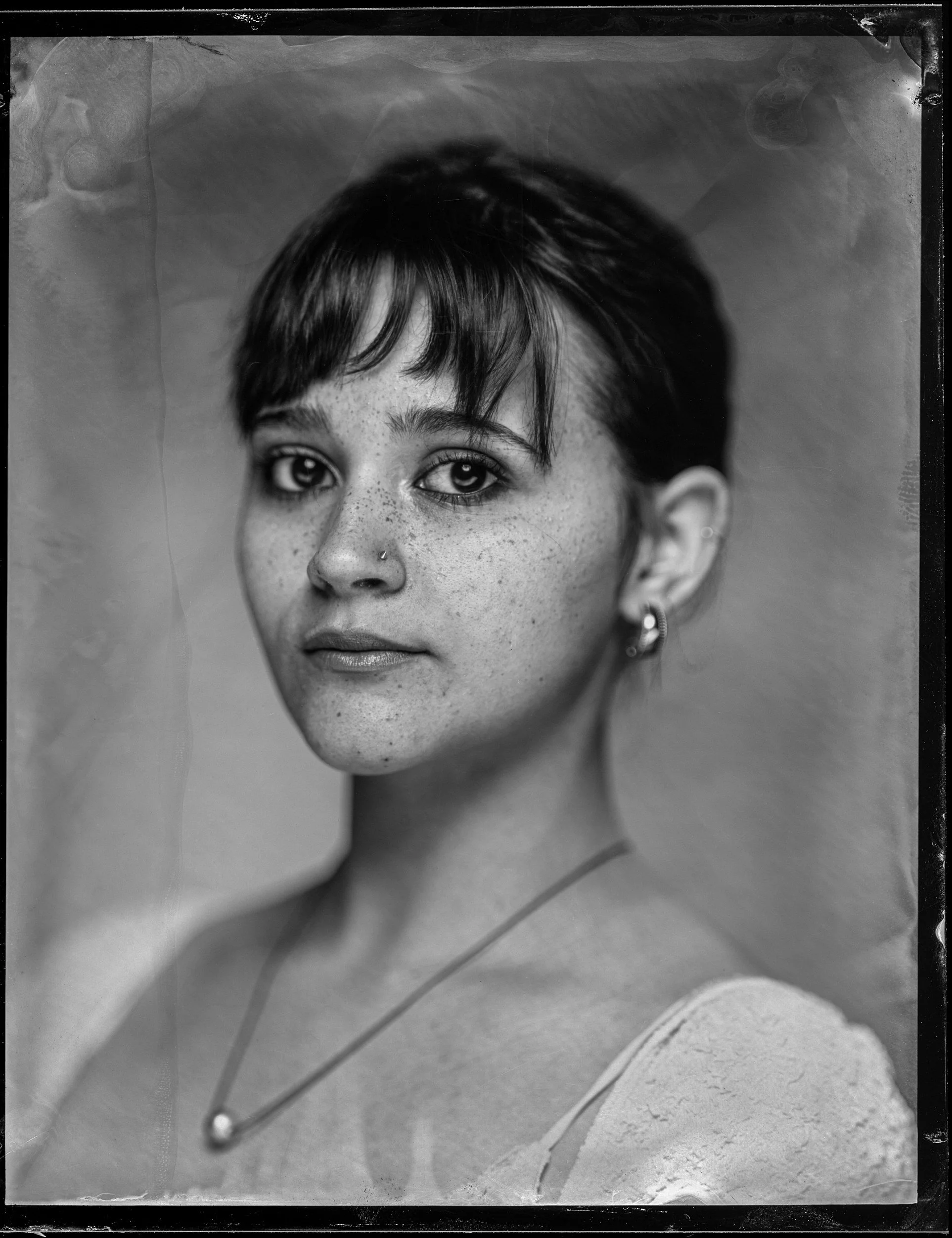
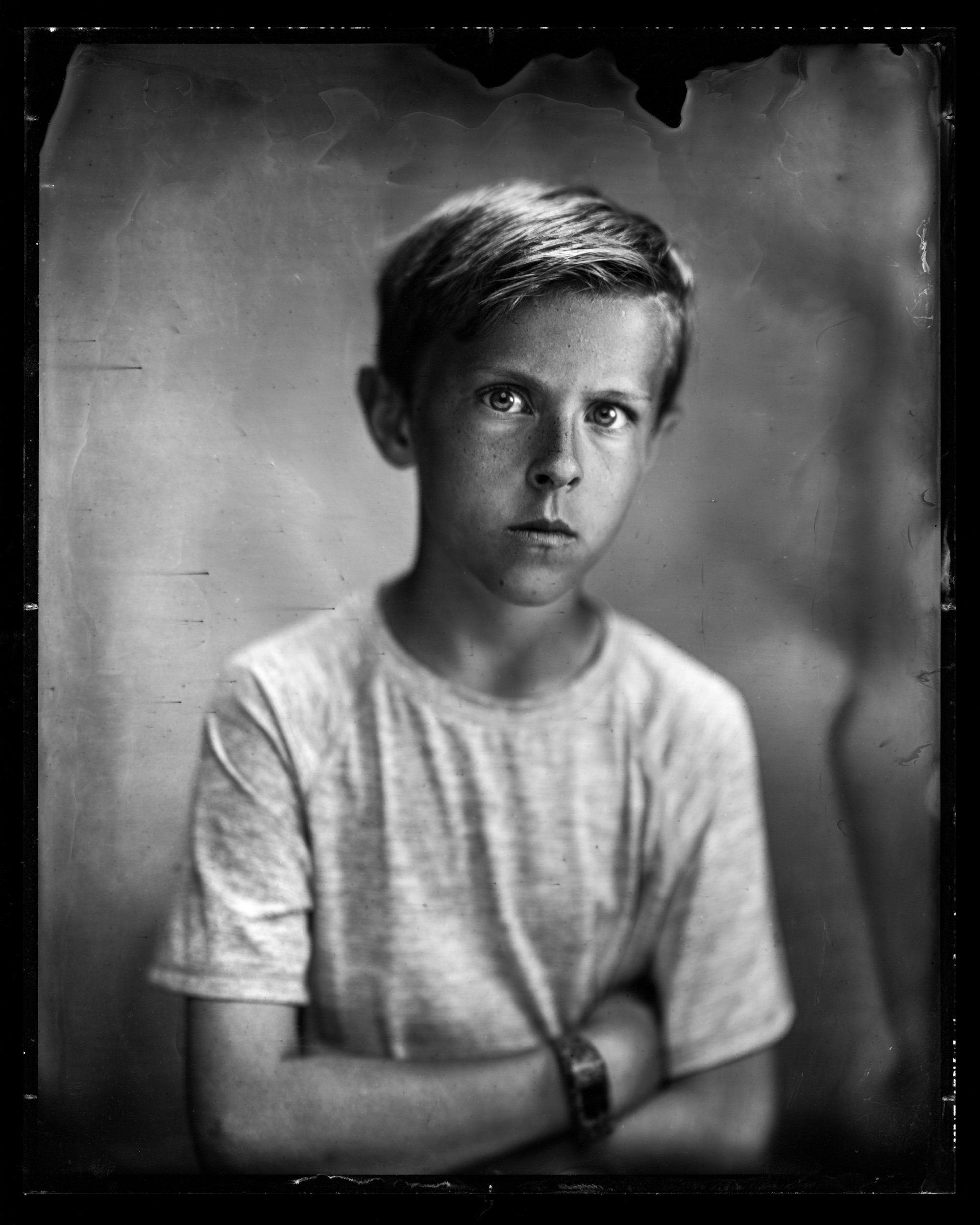
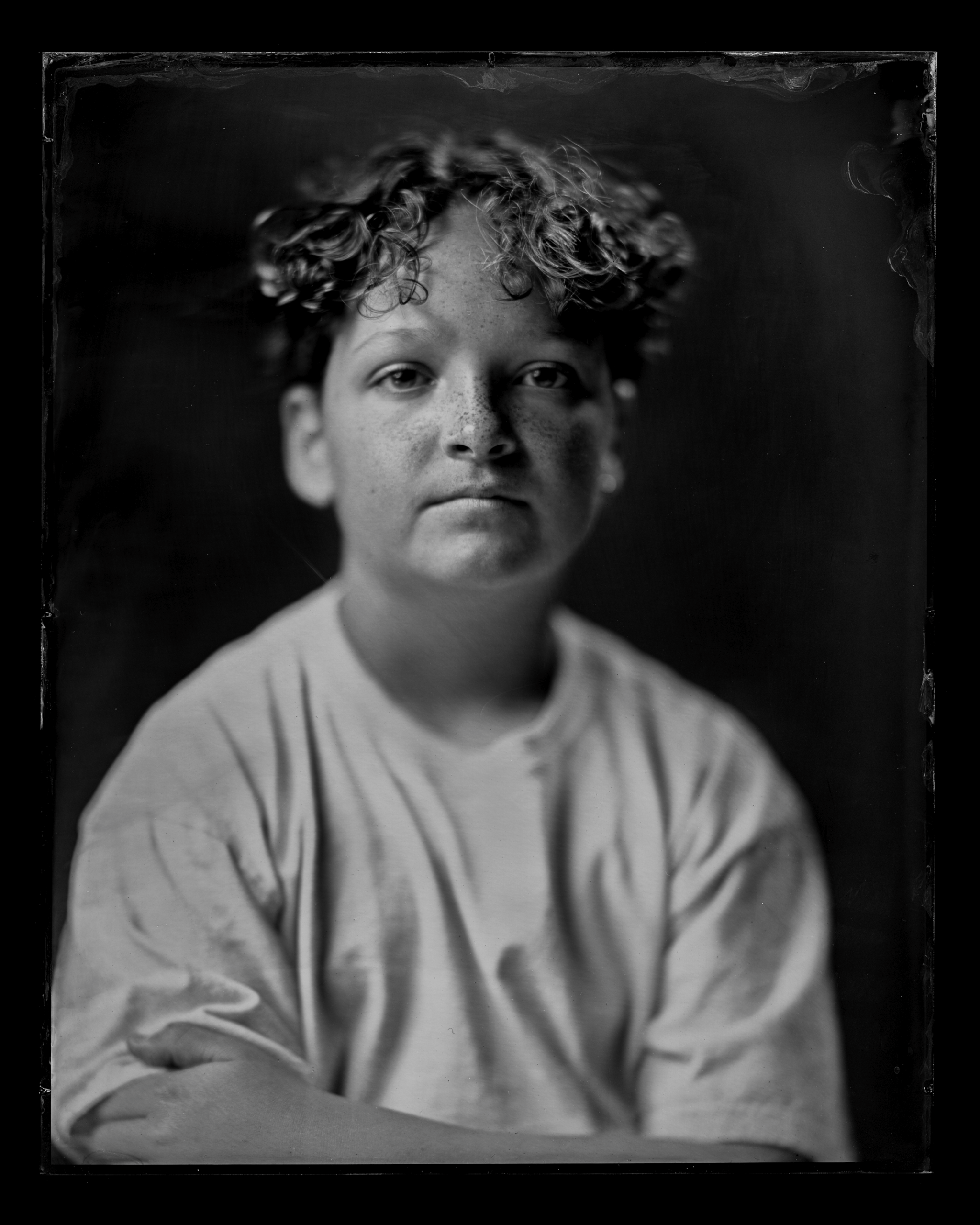
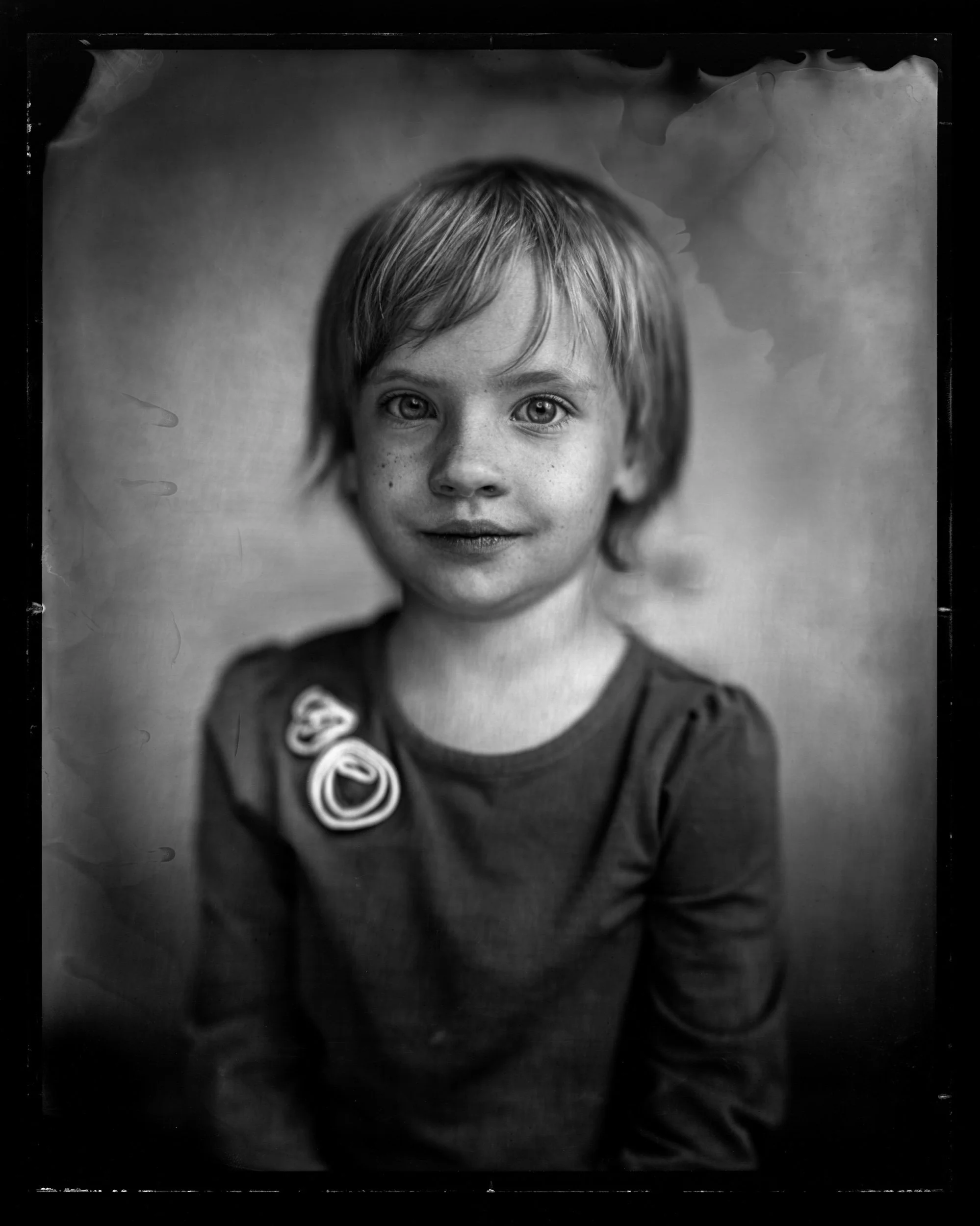
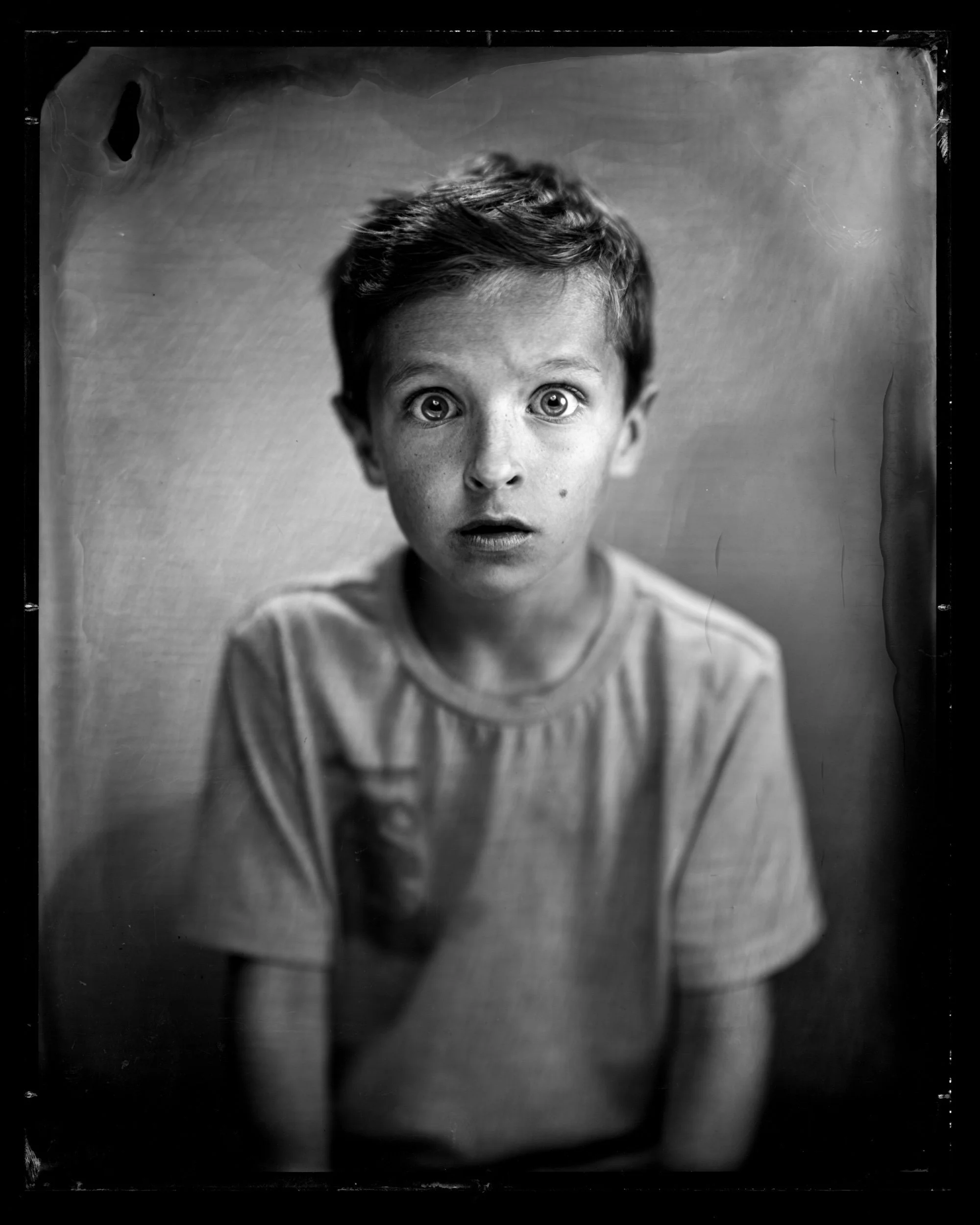
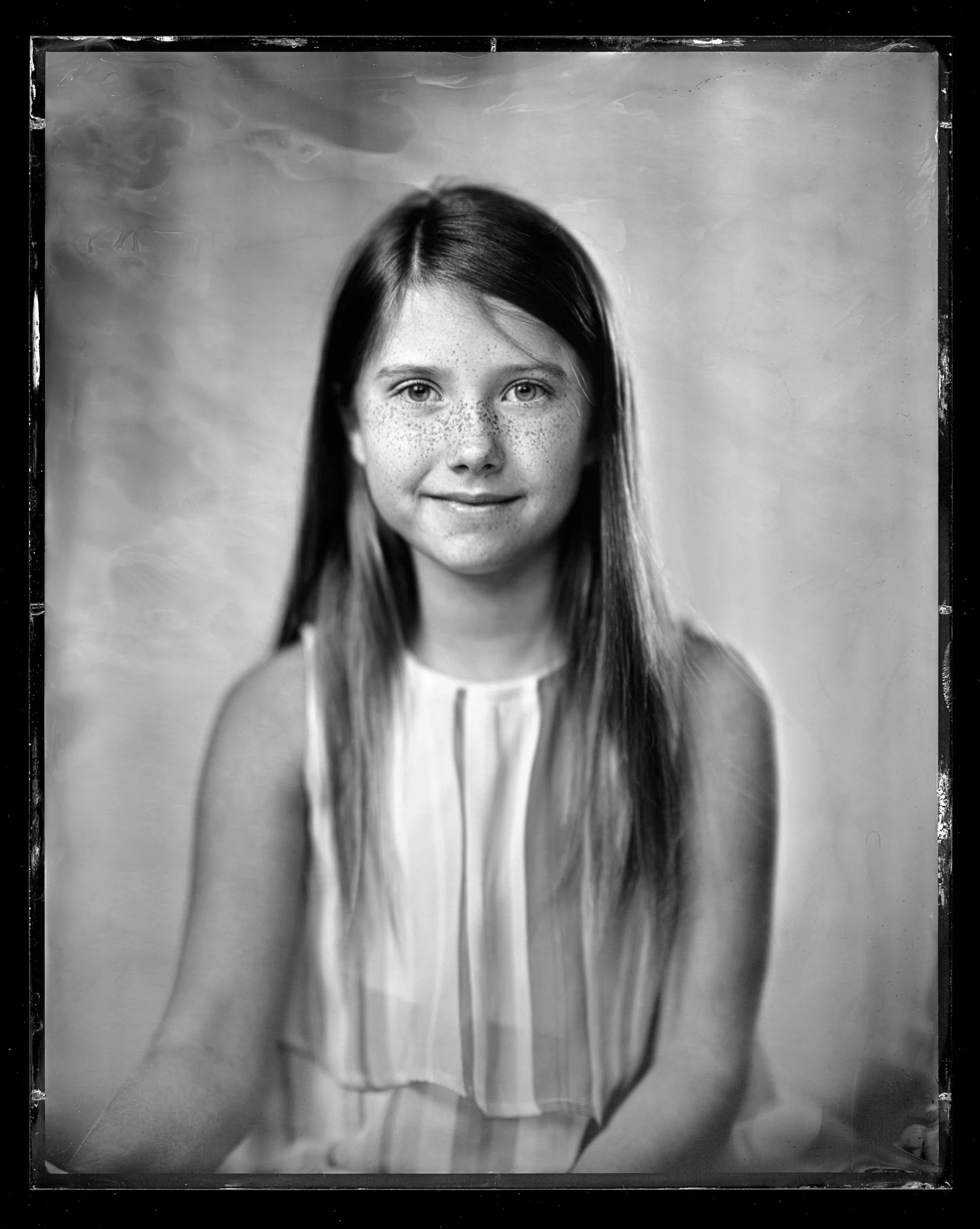
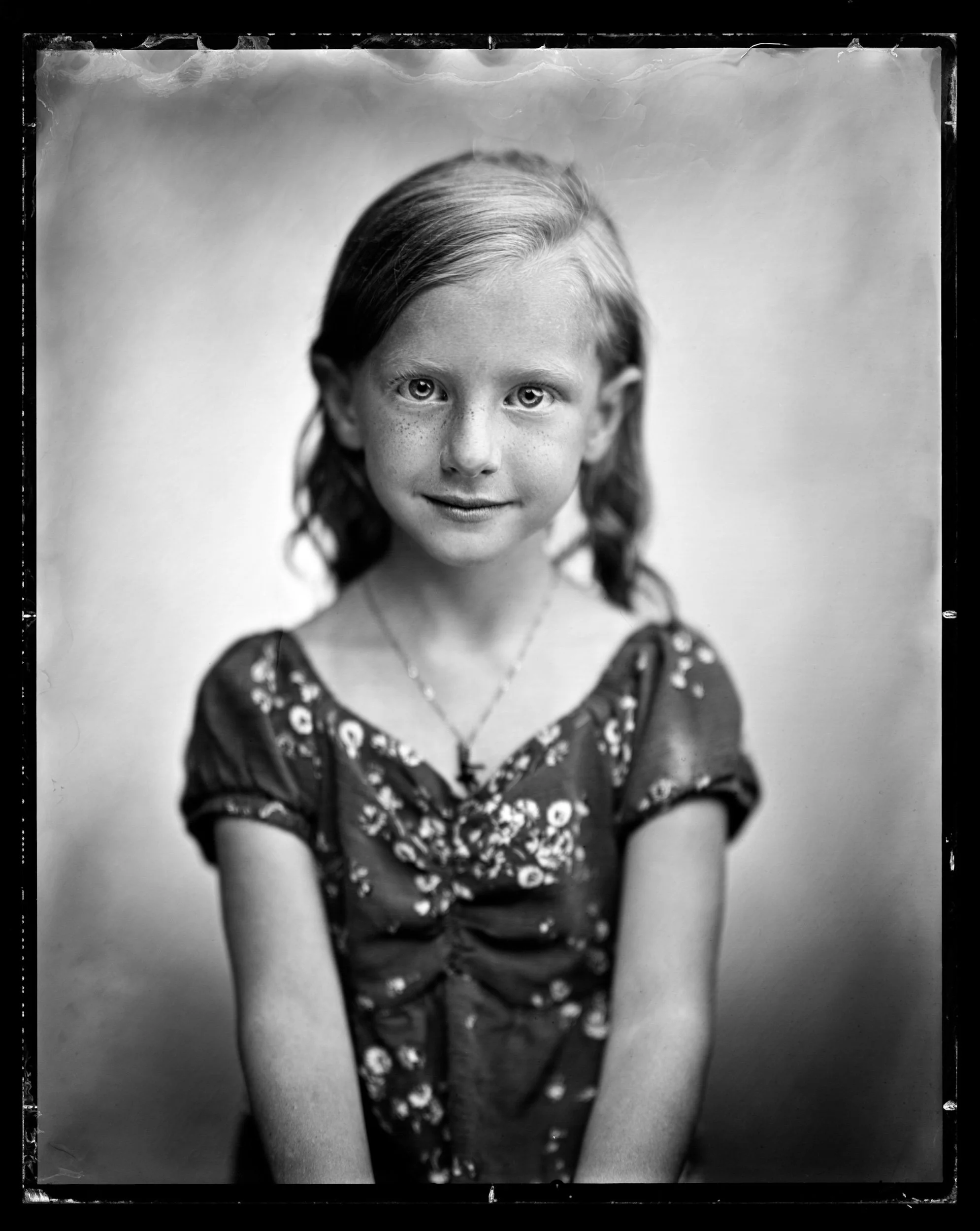
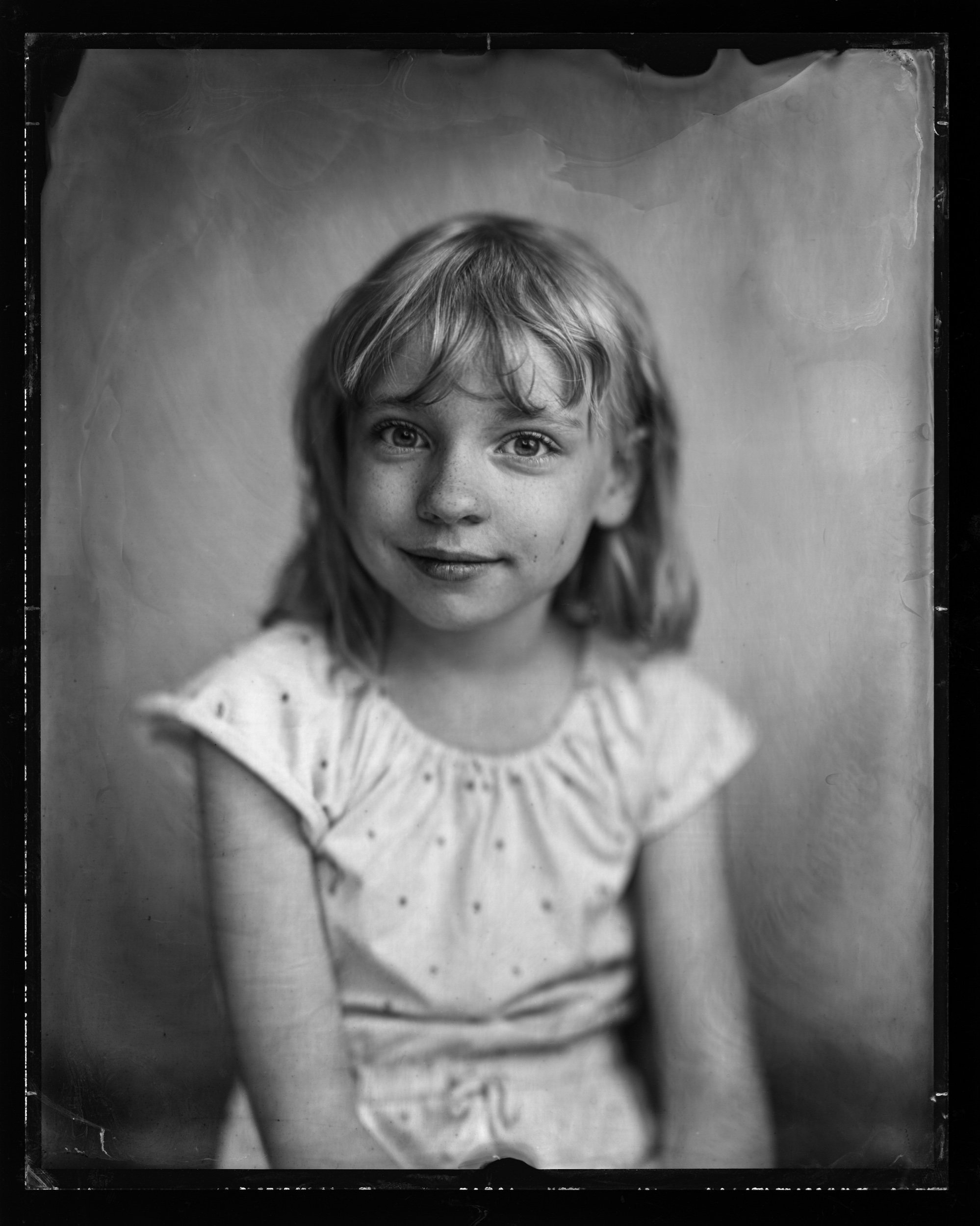
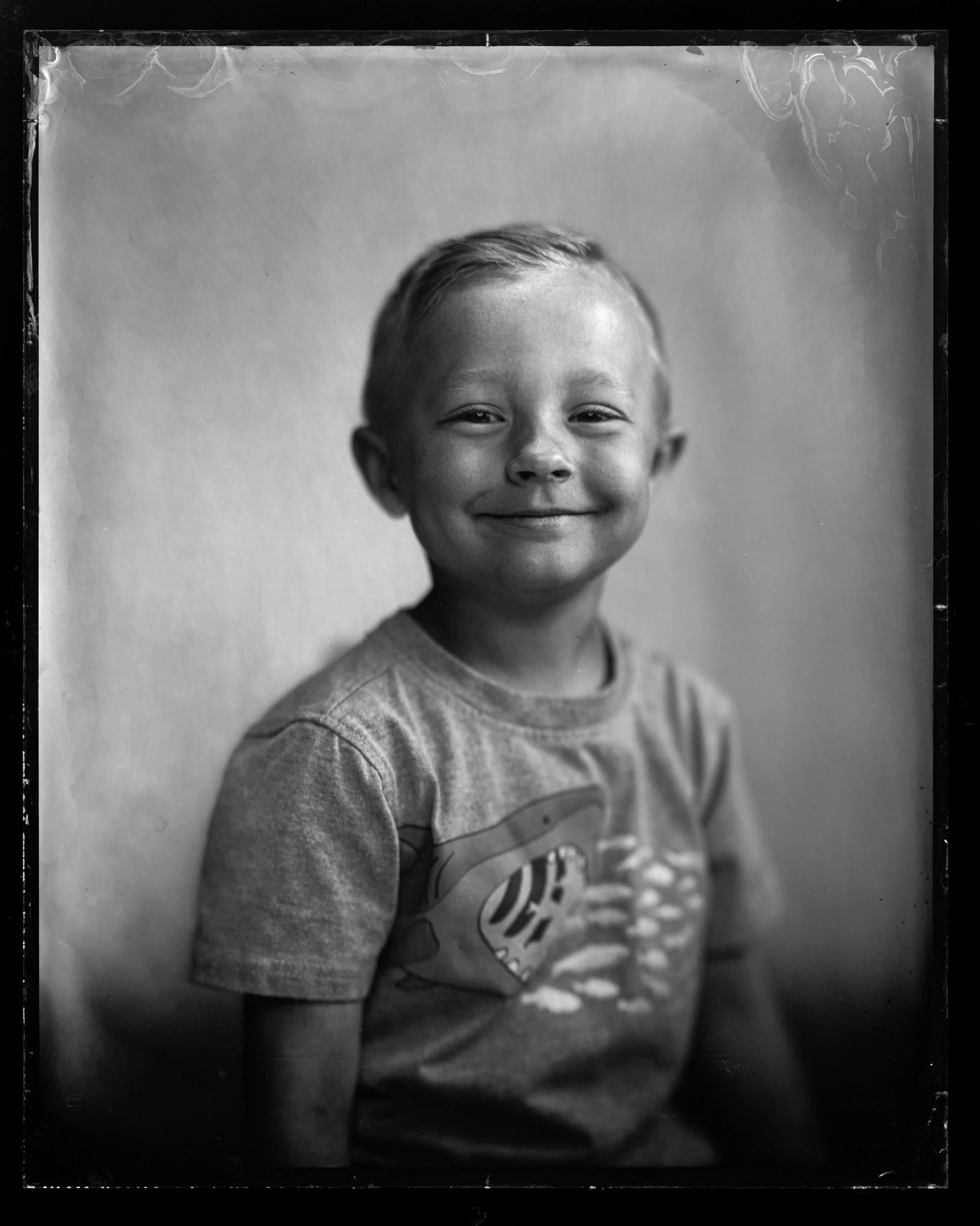
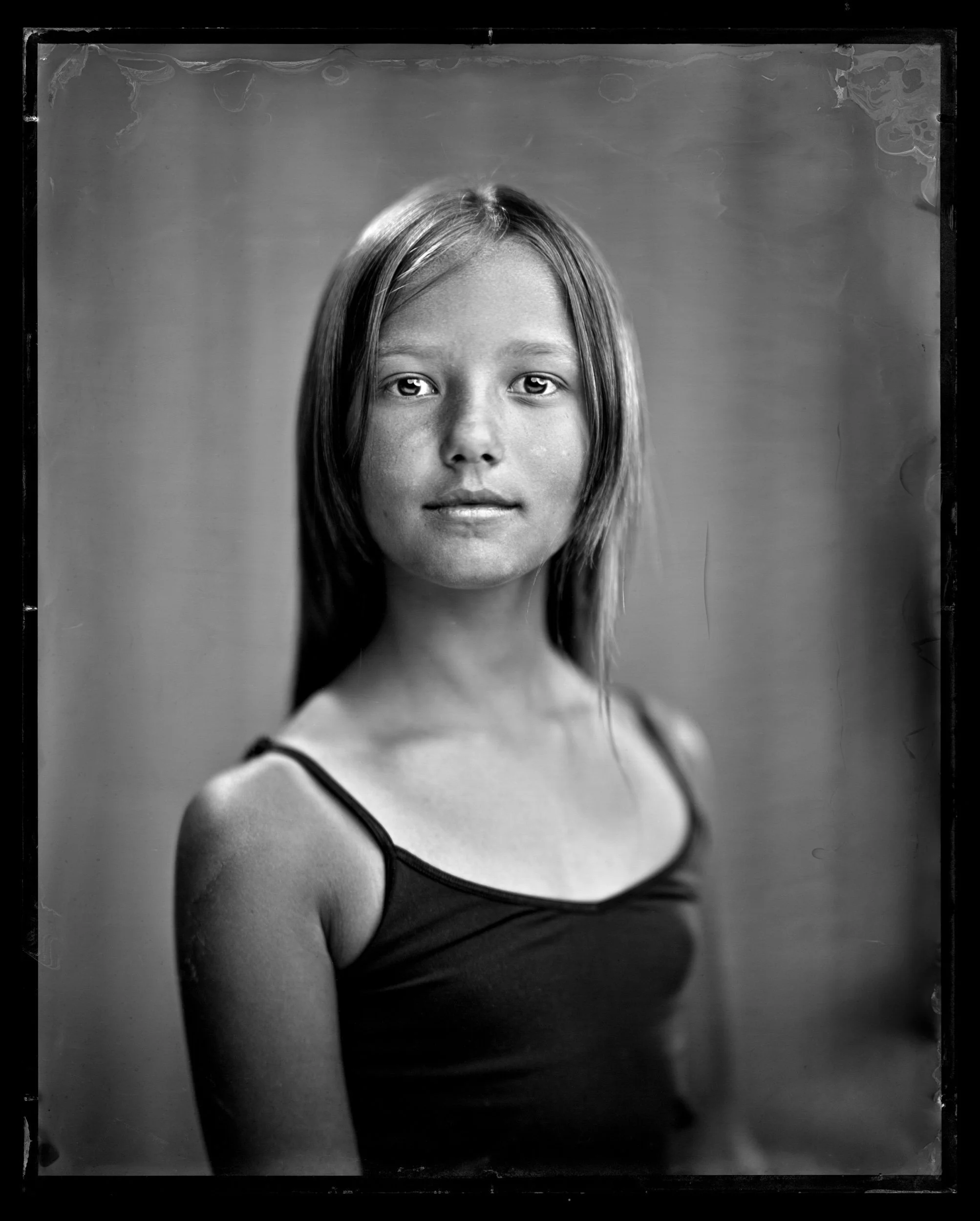
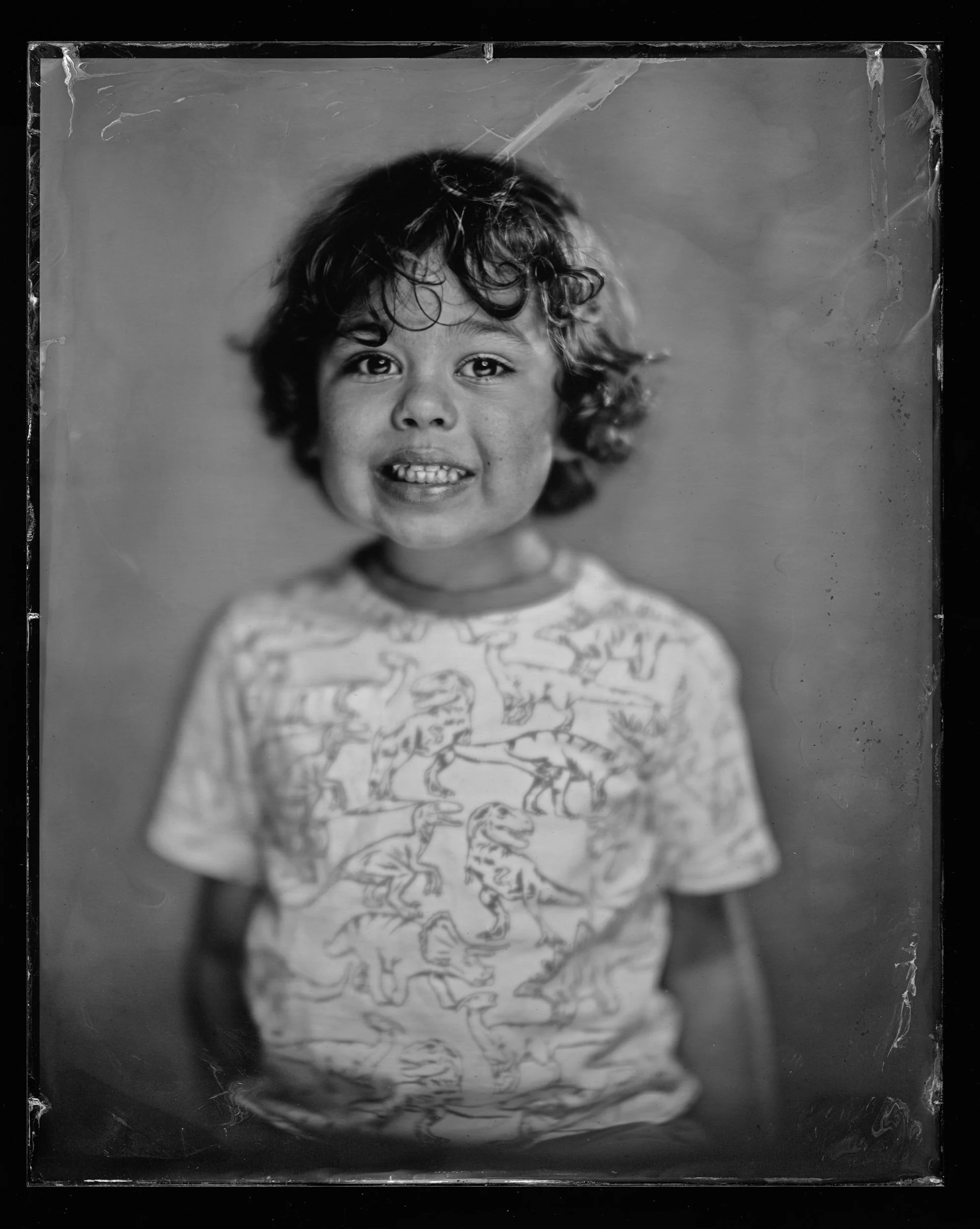
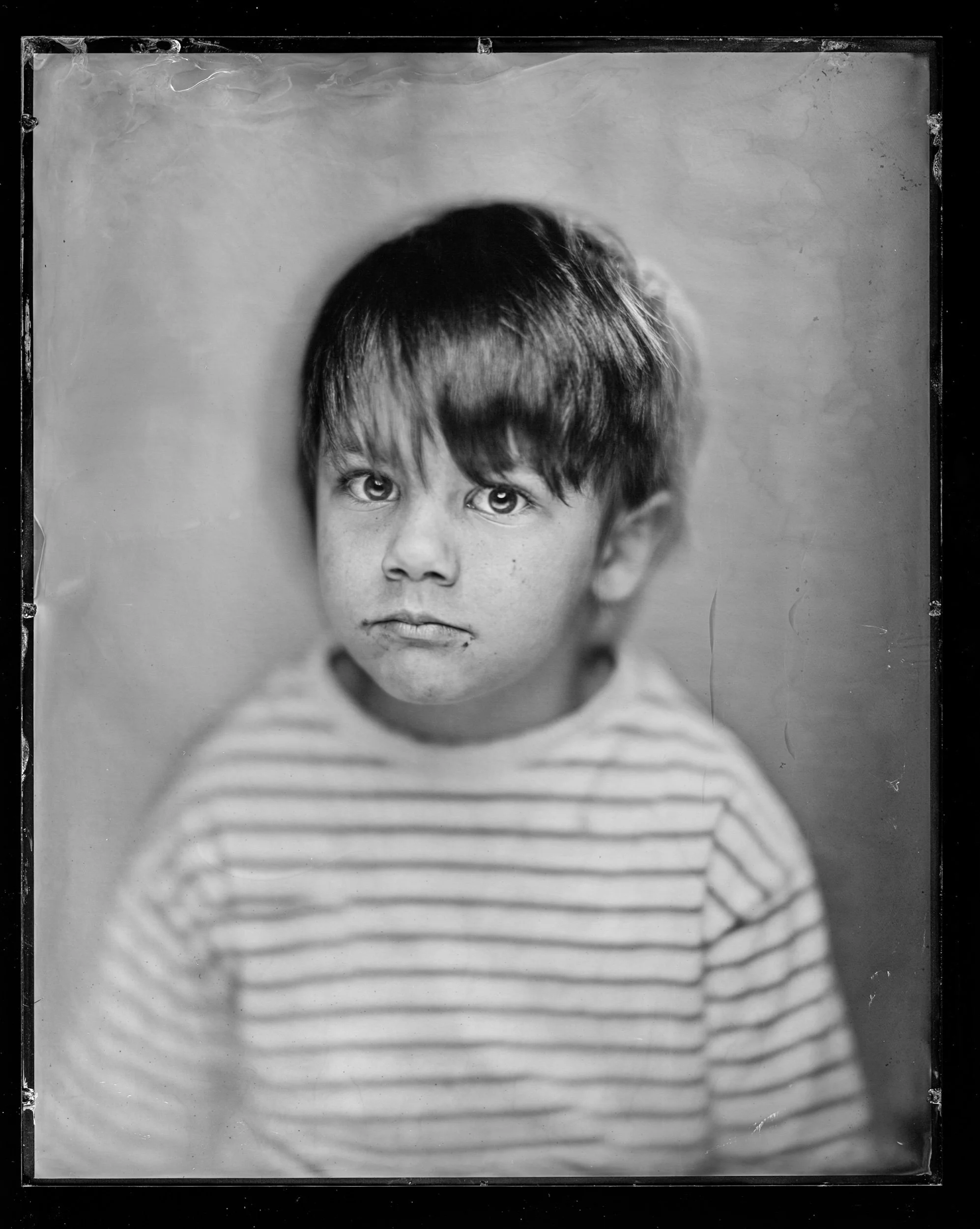
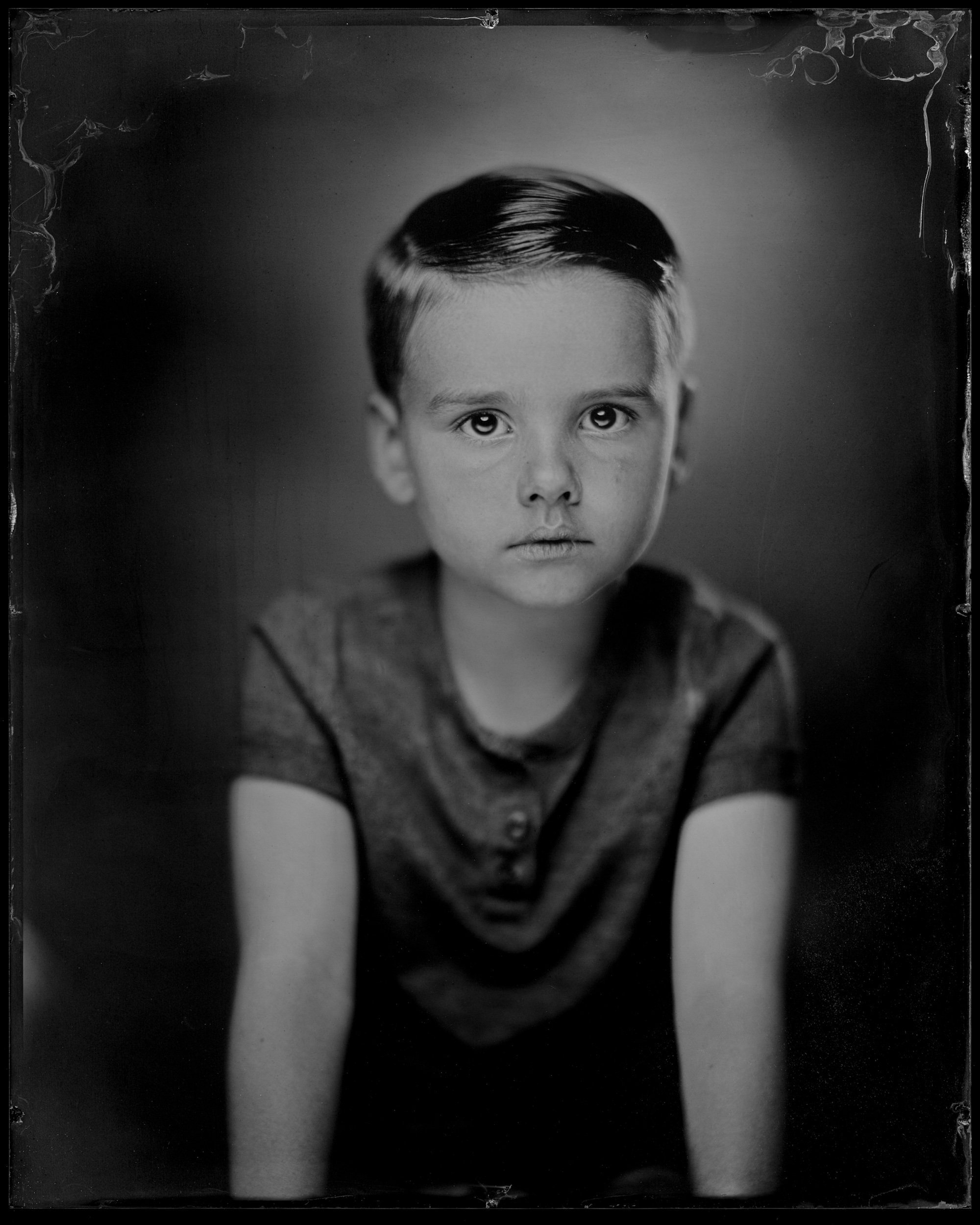
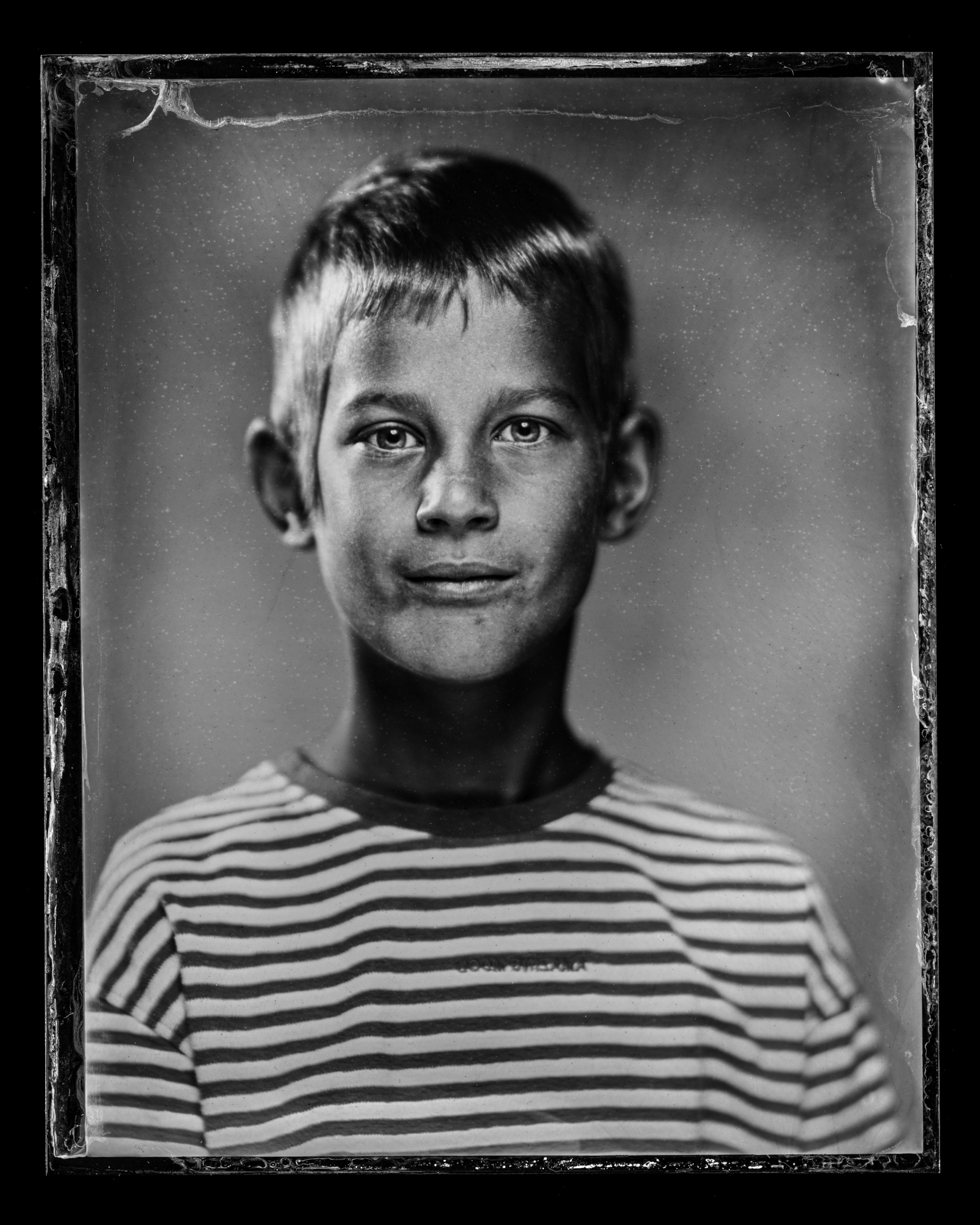
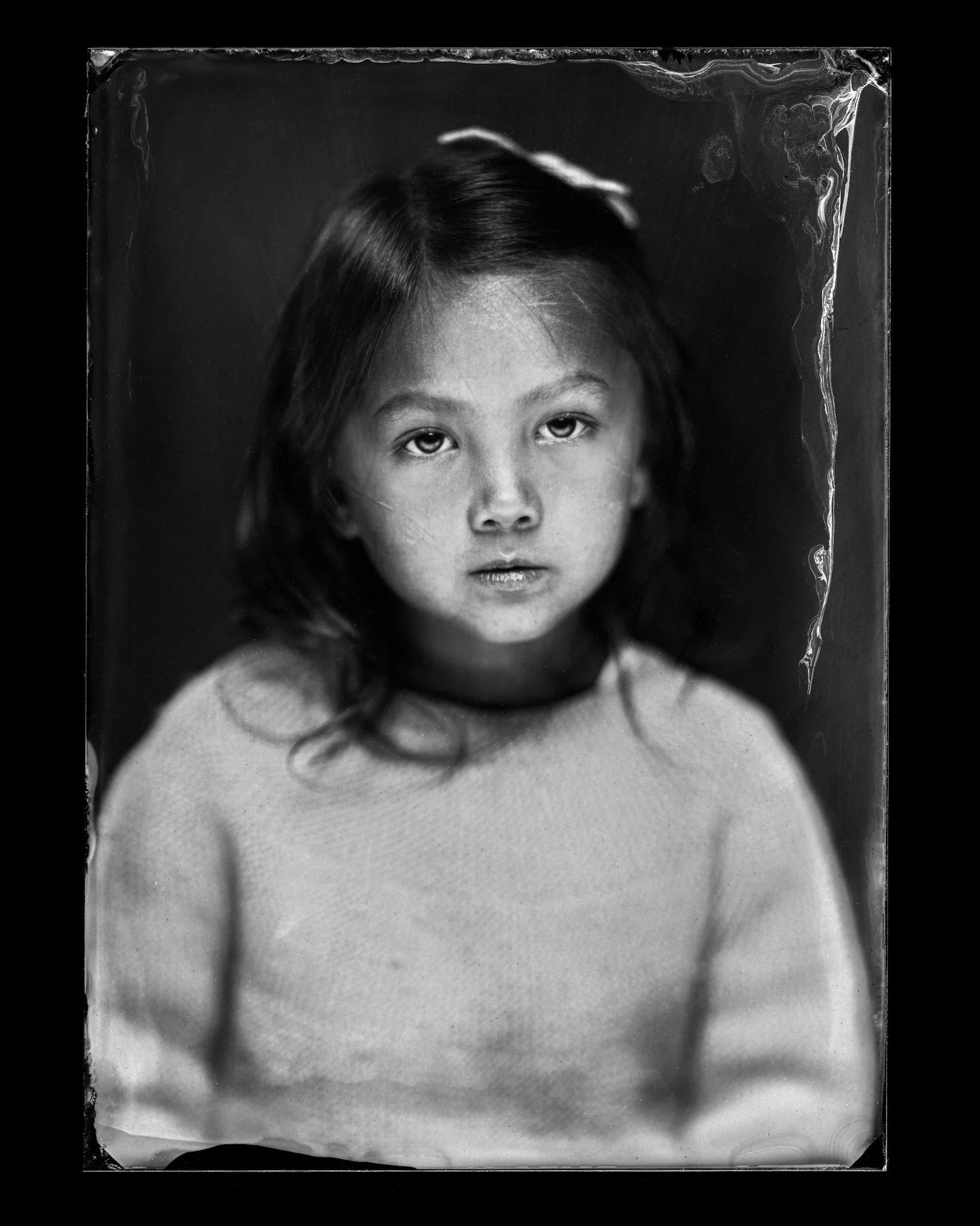
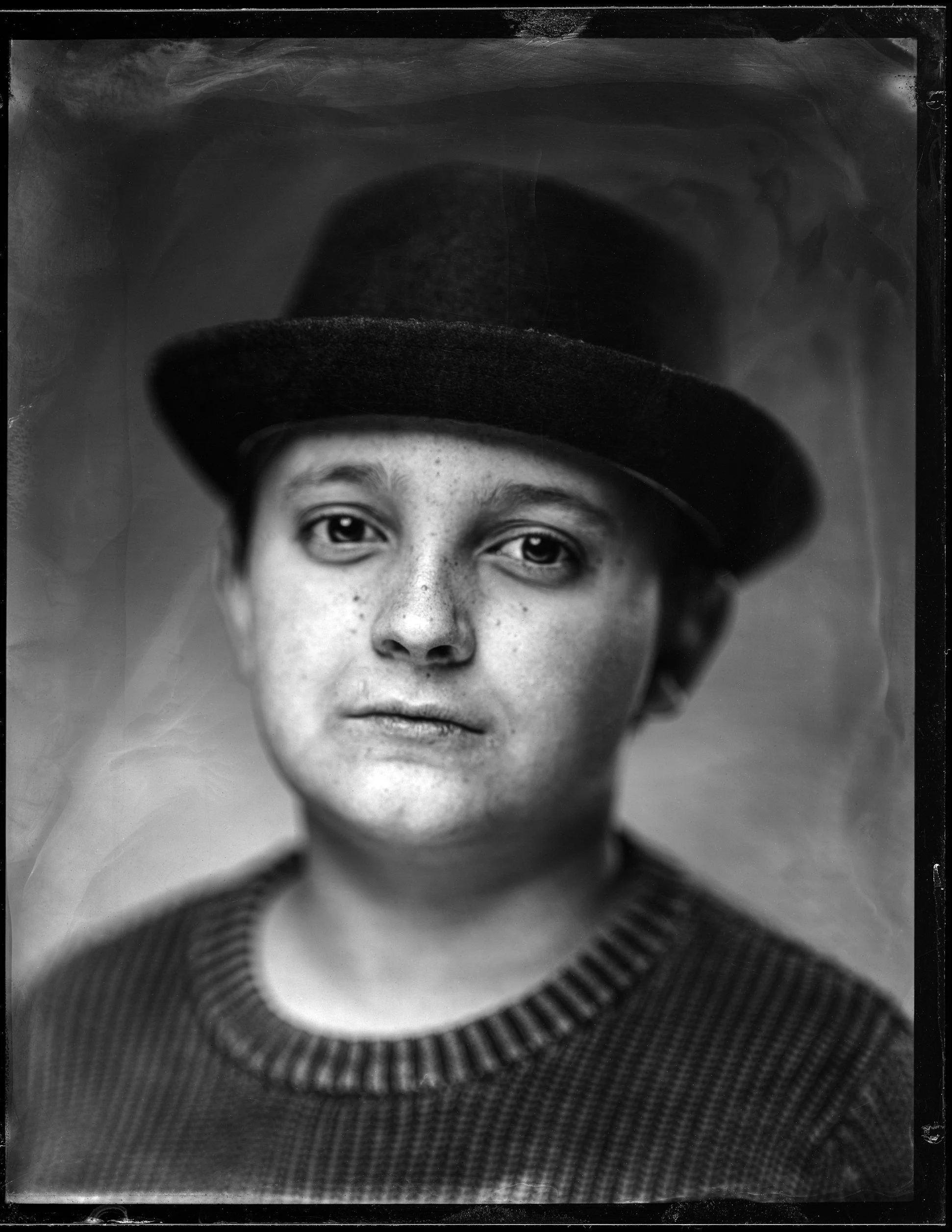
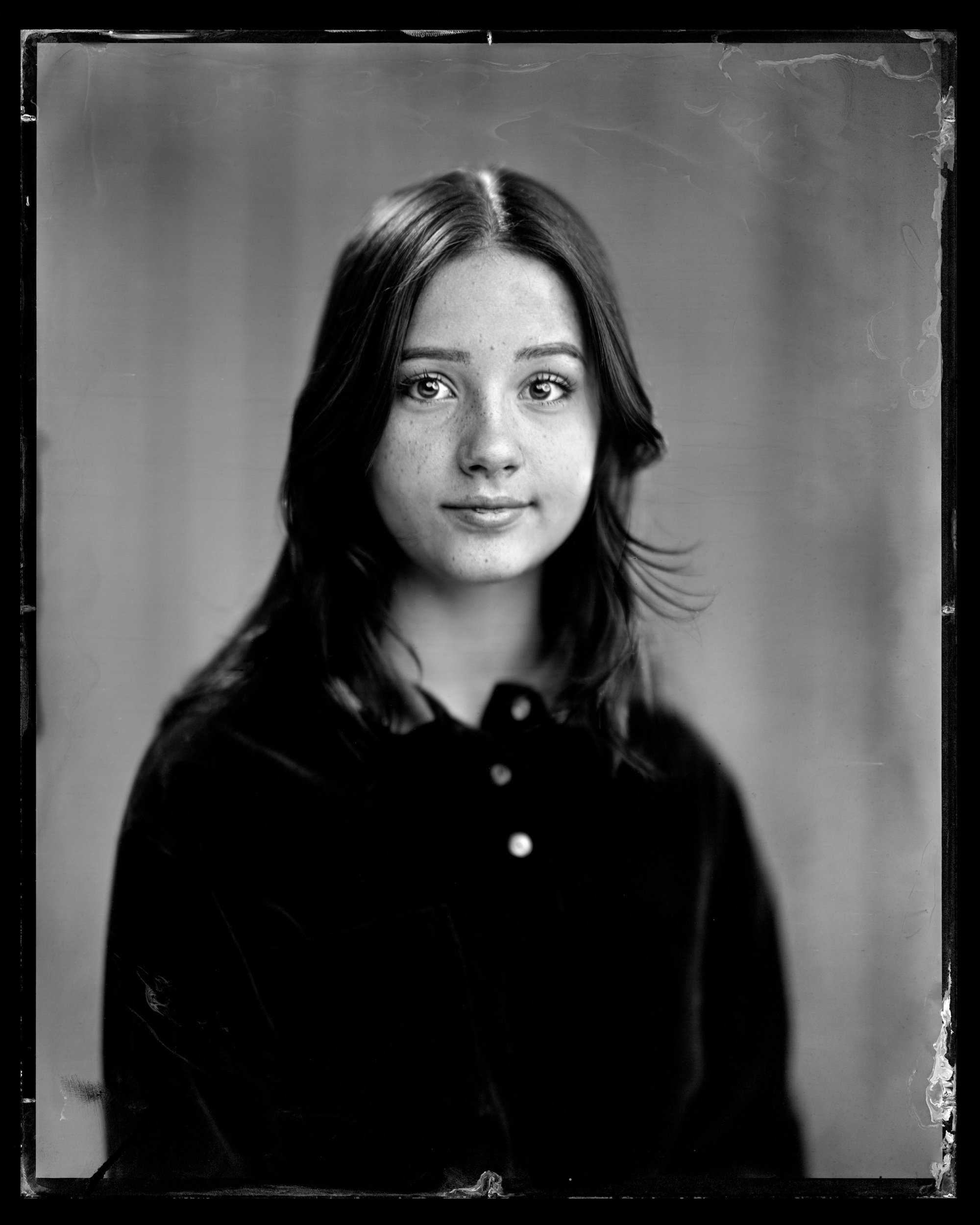
Children are usually much better at this than their parents expect. The camera is enormous and strange, and most kids find the whole thing fascinating rather than tedious.
Maternity + Newborn
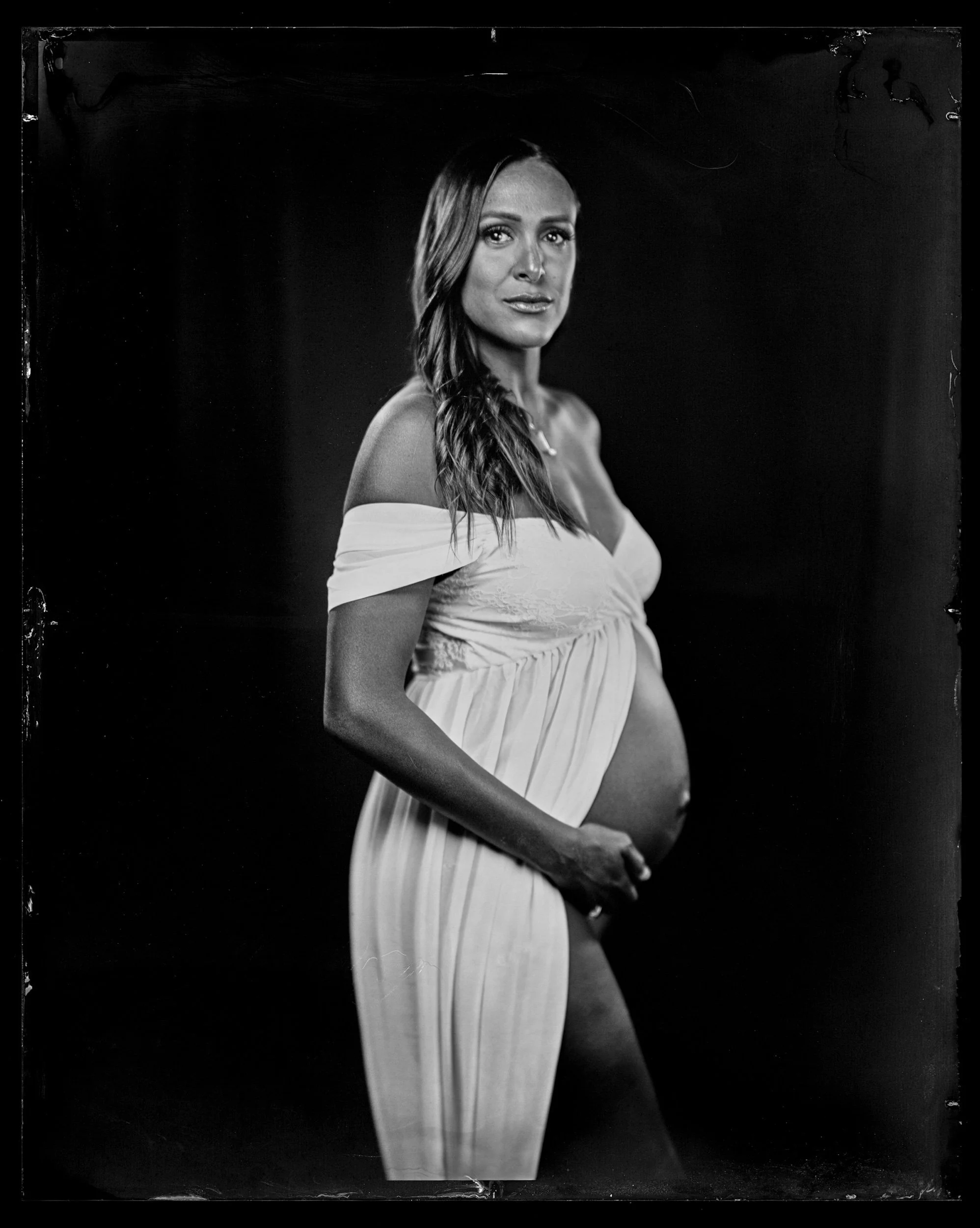
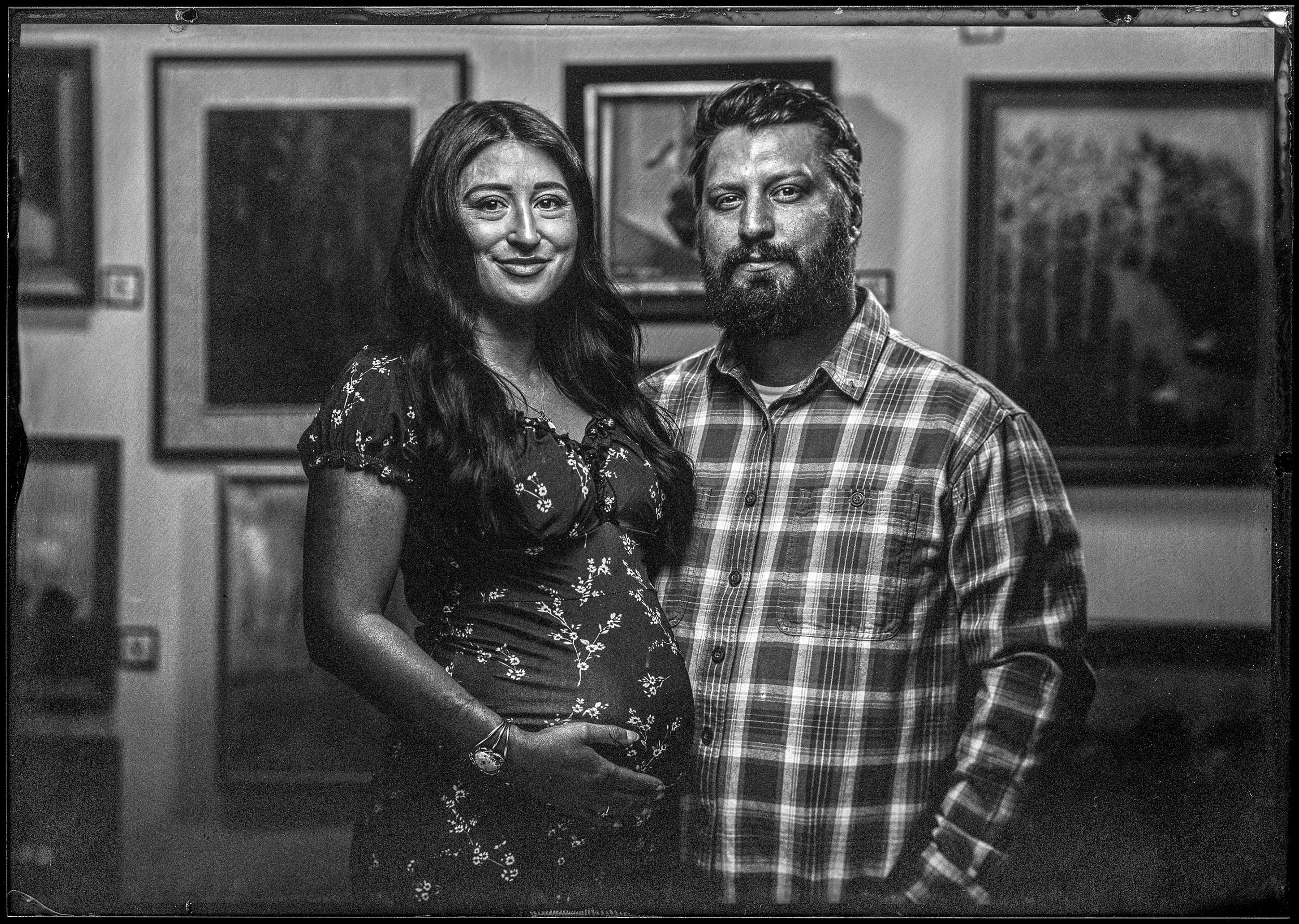
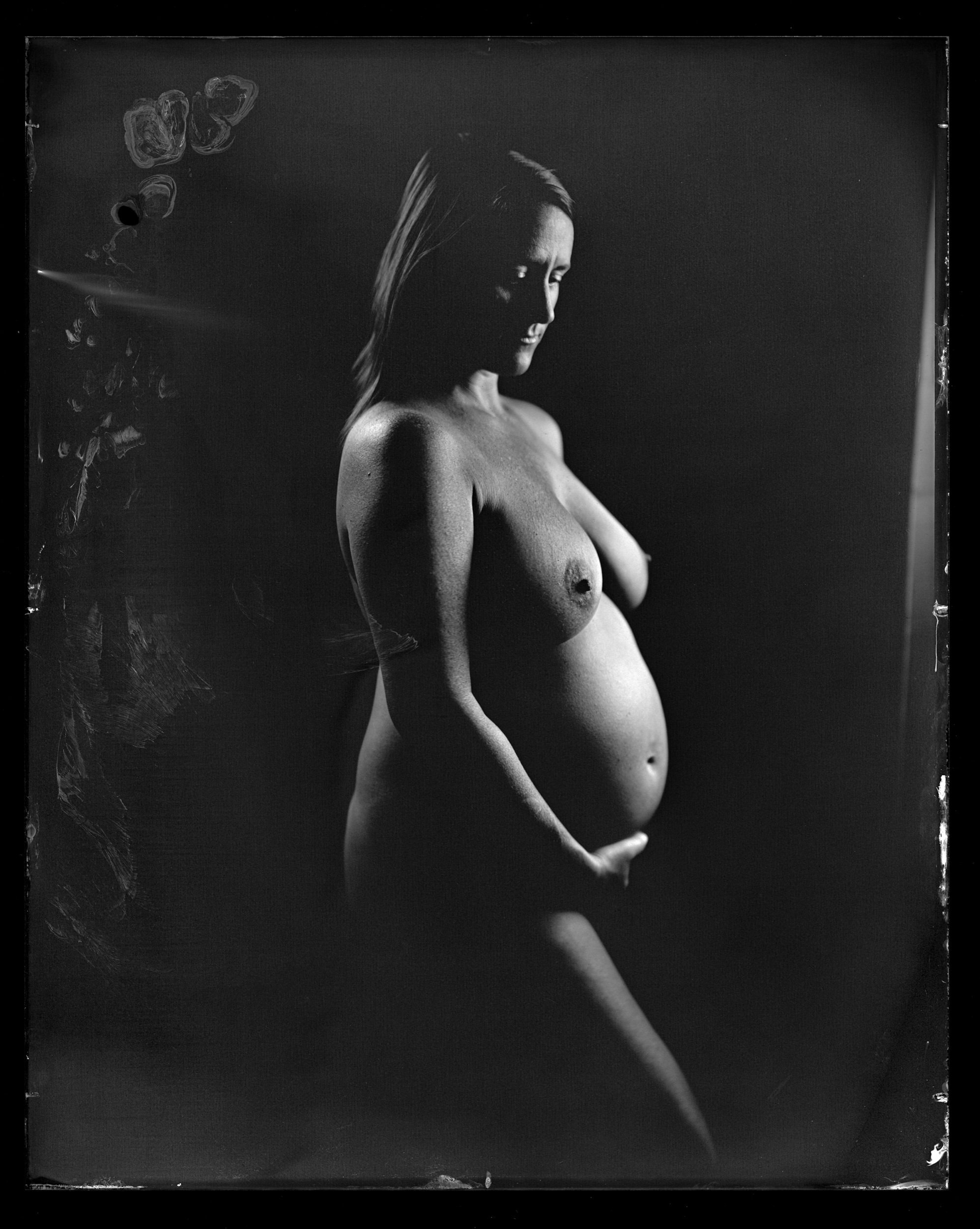
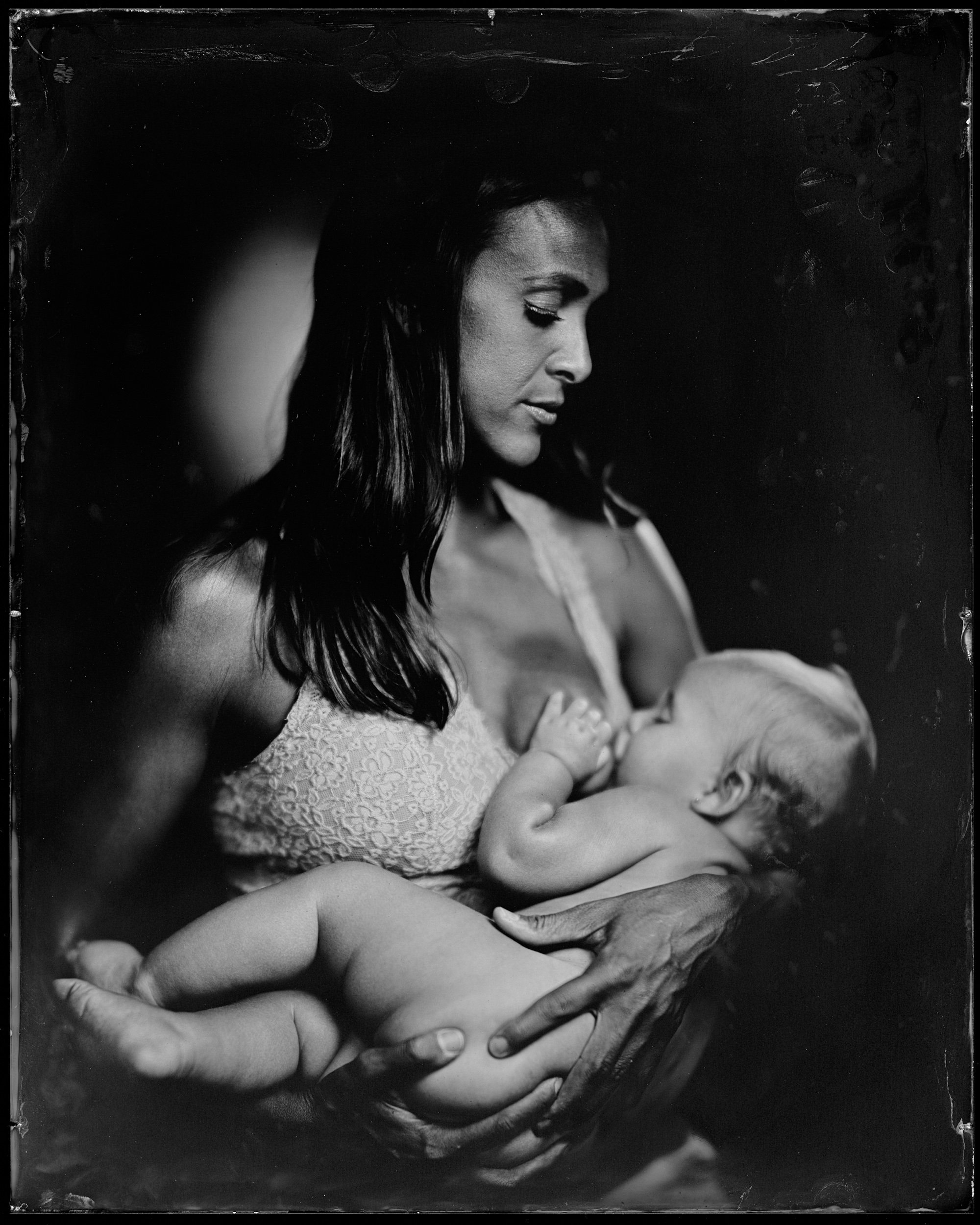
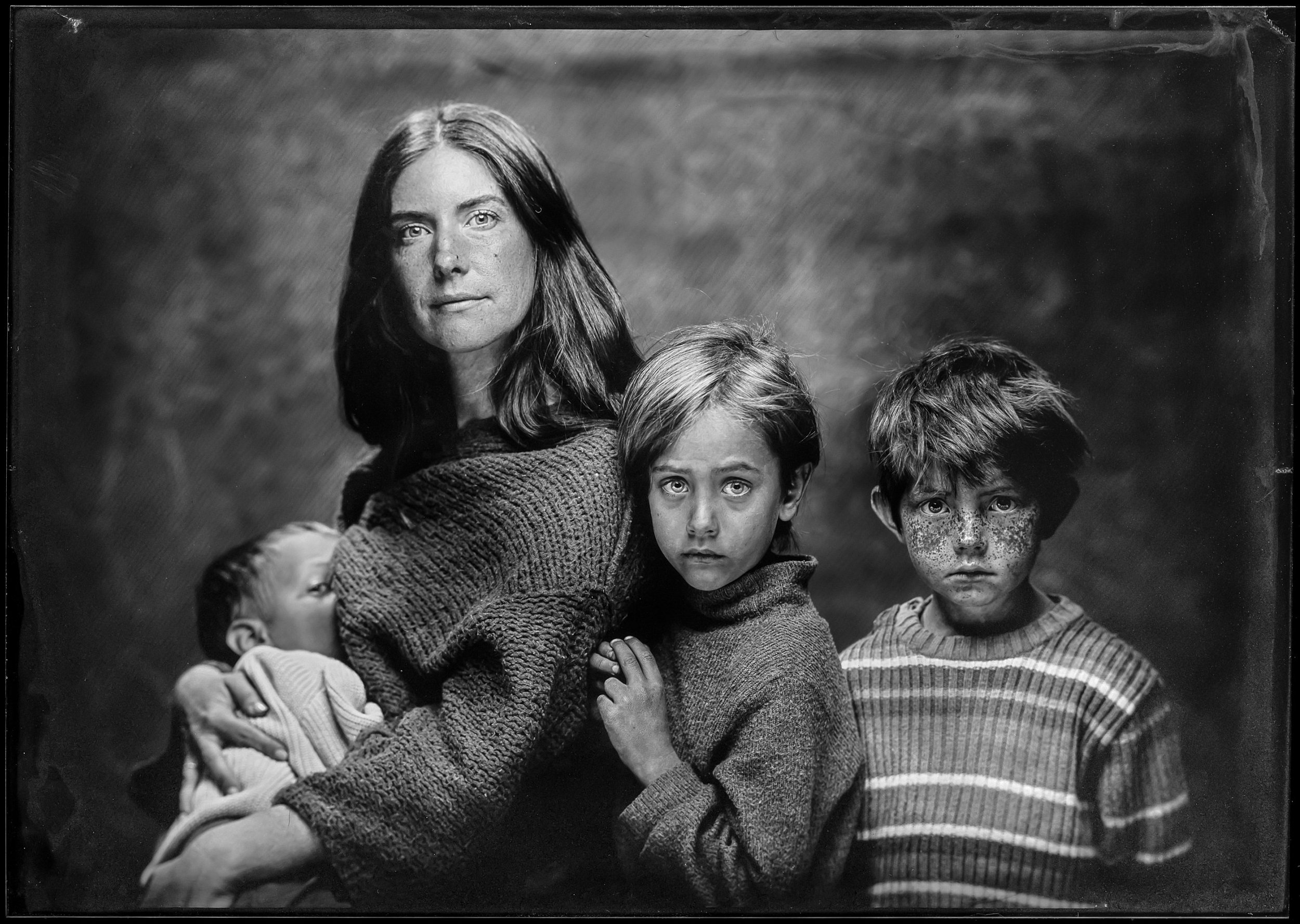
Pregnancy is a few weeks of looking a particular way, and then it is over. Wet plate suits the subject — slow, quiet and physical, and it renders skin in a way no digital sensor does. There is no retouching pass afterwards, because there is nothing to retouch: the plate is the finished photograph. Somewhere between 30 and 36 weeks is usually the sweet spot, and sessions can be as clothed or as bare as you want. Plates of a newborn in arms are some of the most affecting work I make — ask about pairing a maternity session with a newborn session a few weeks later.
Pets
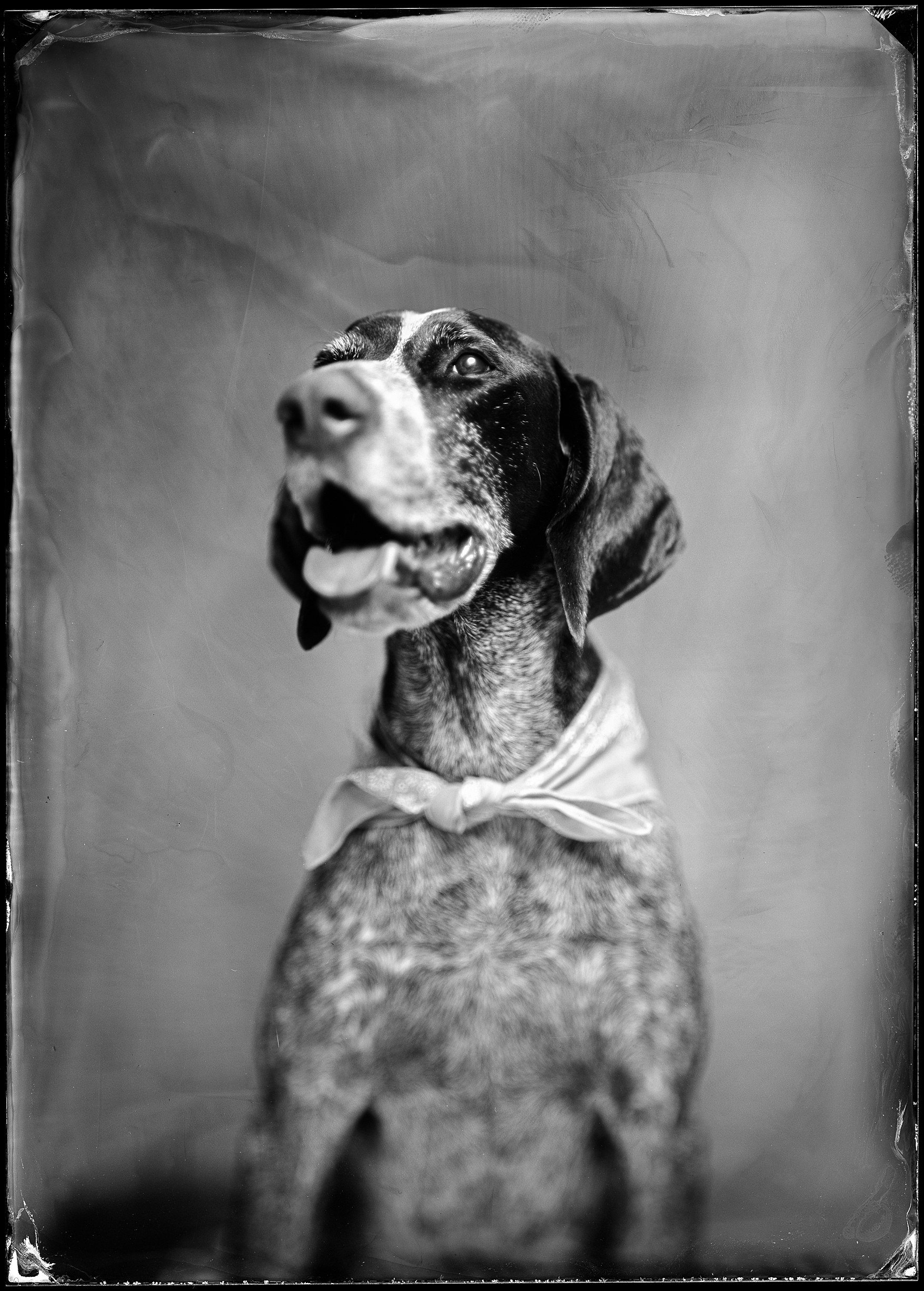
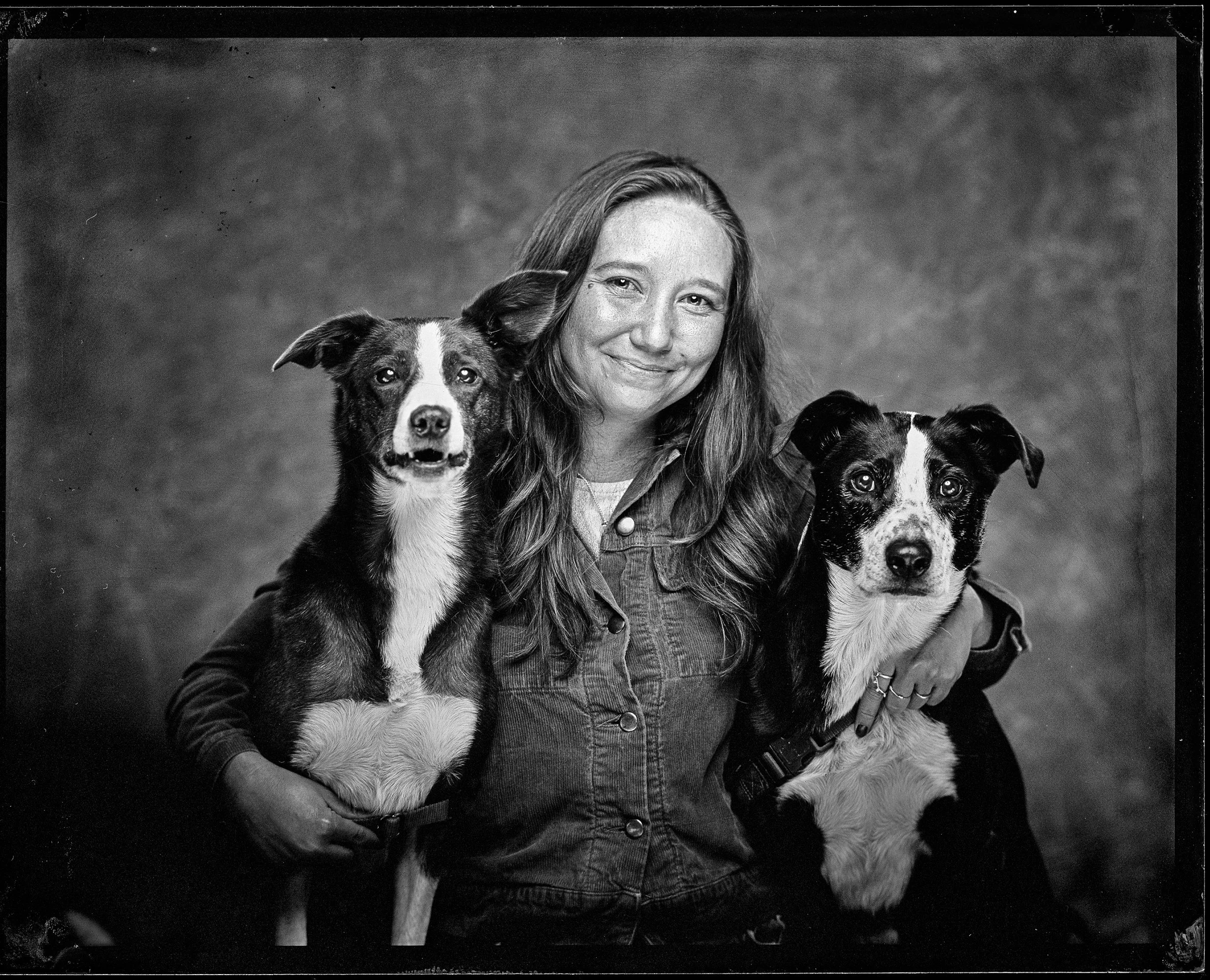
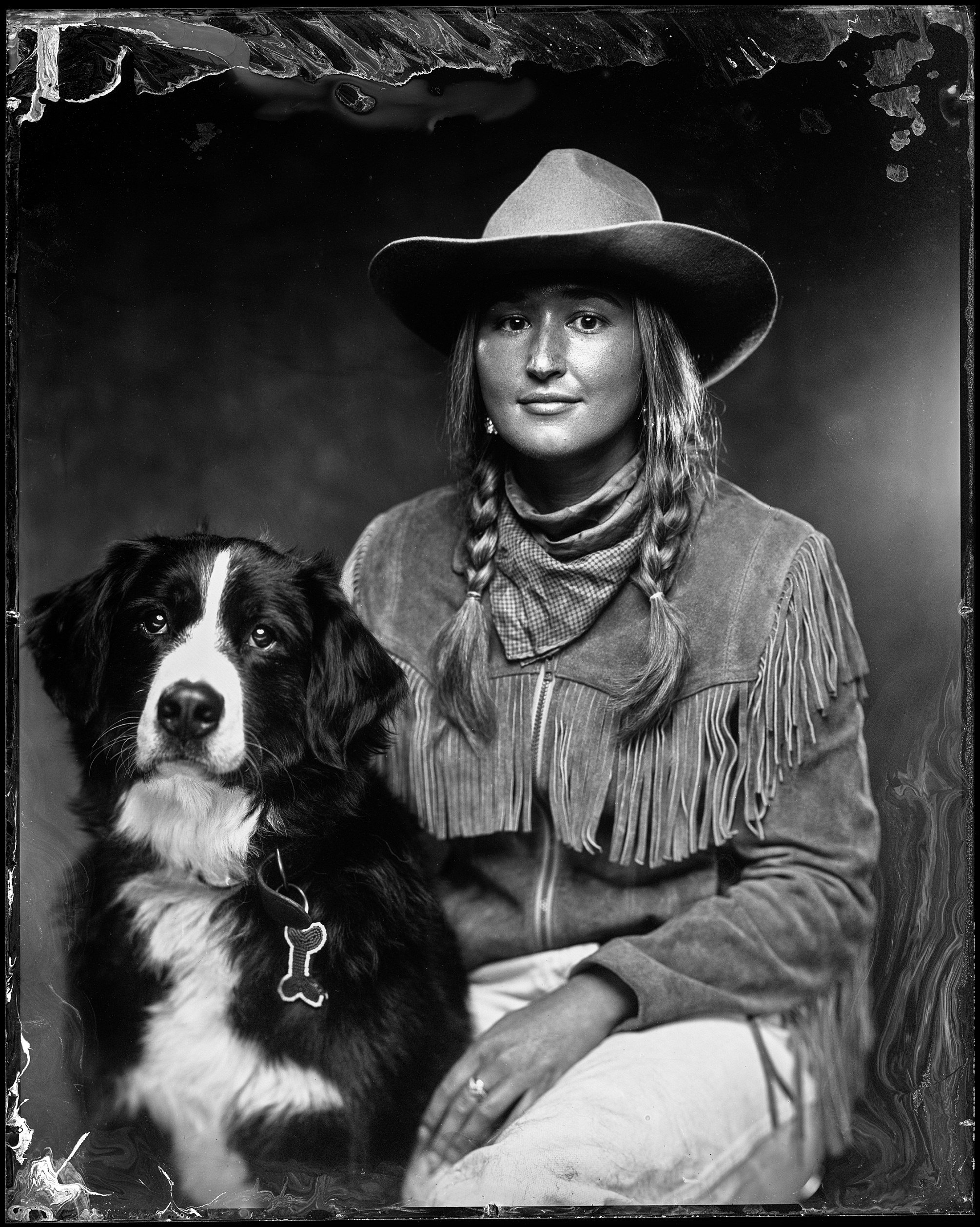
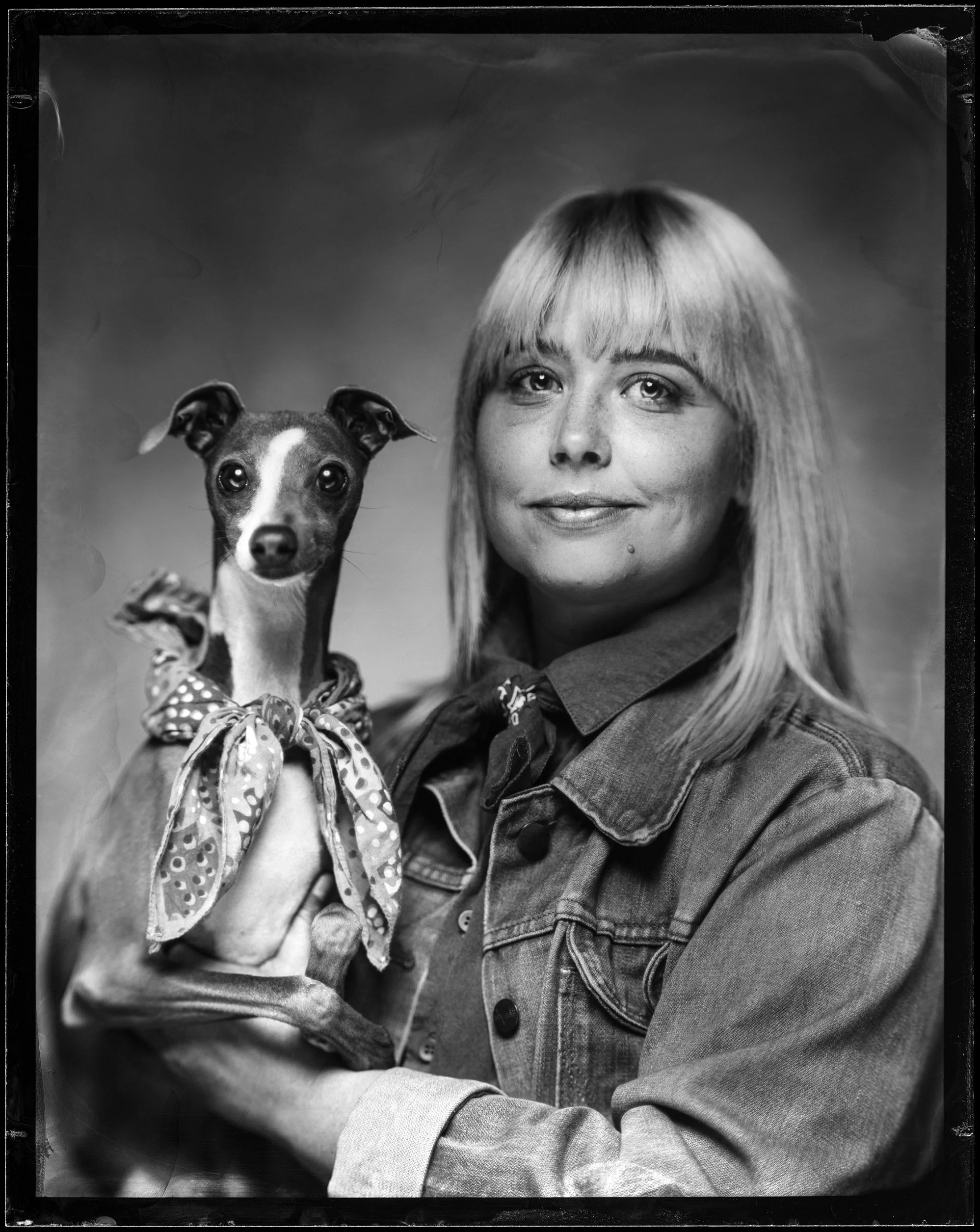
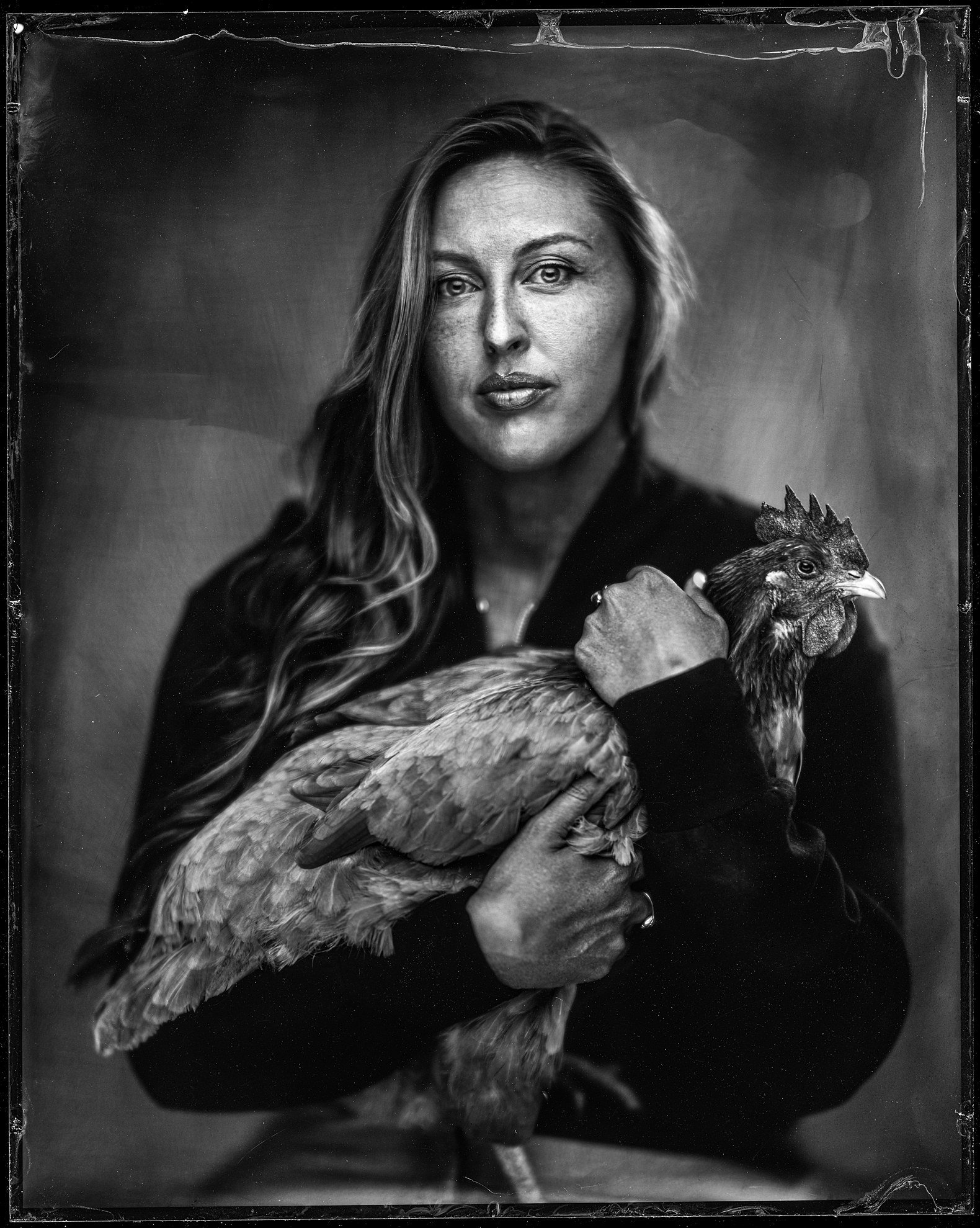
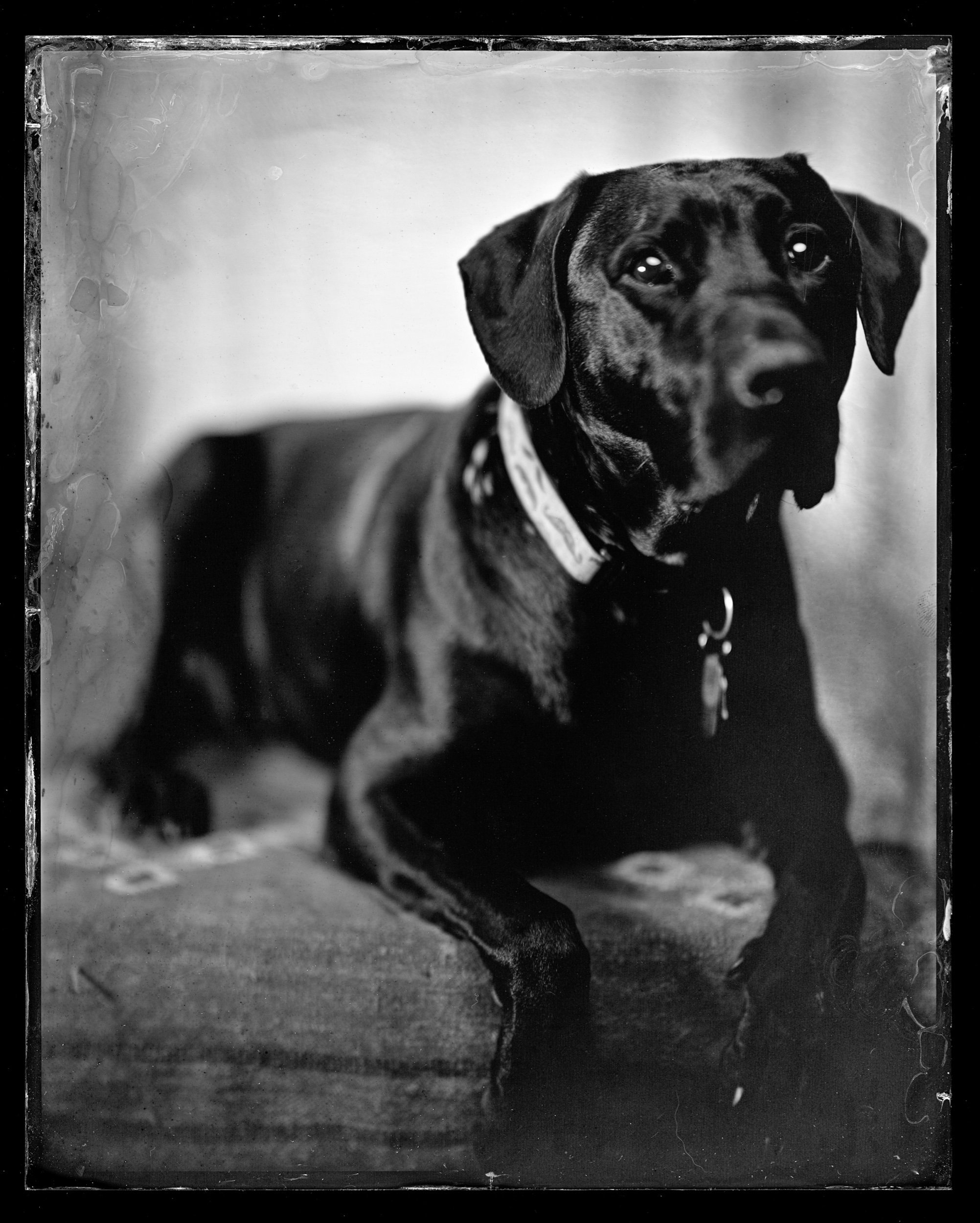
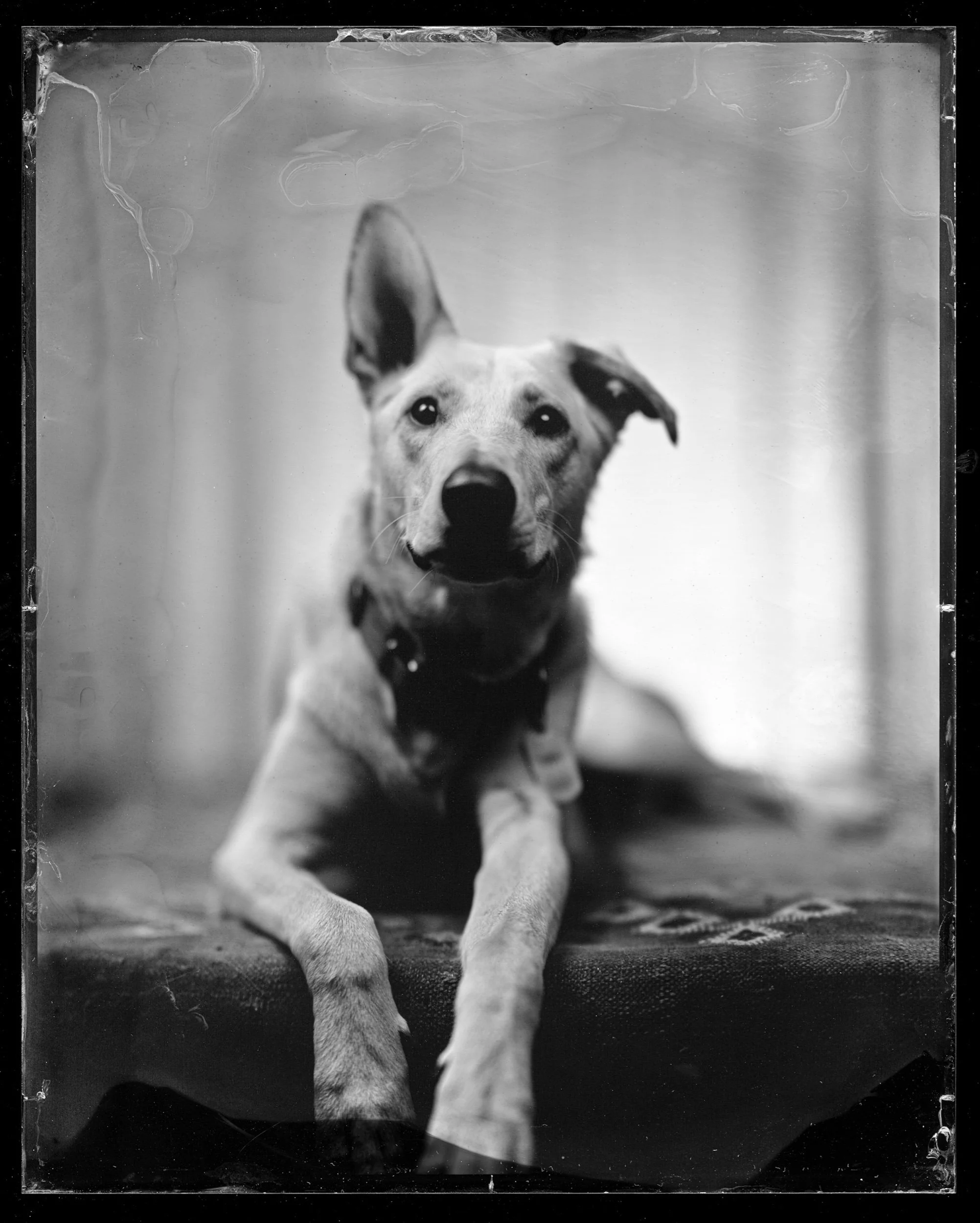
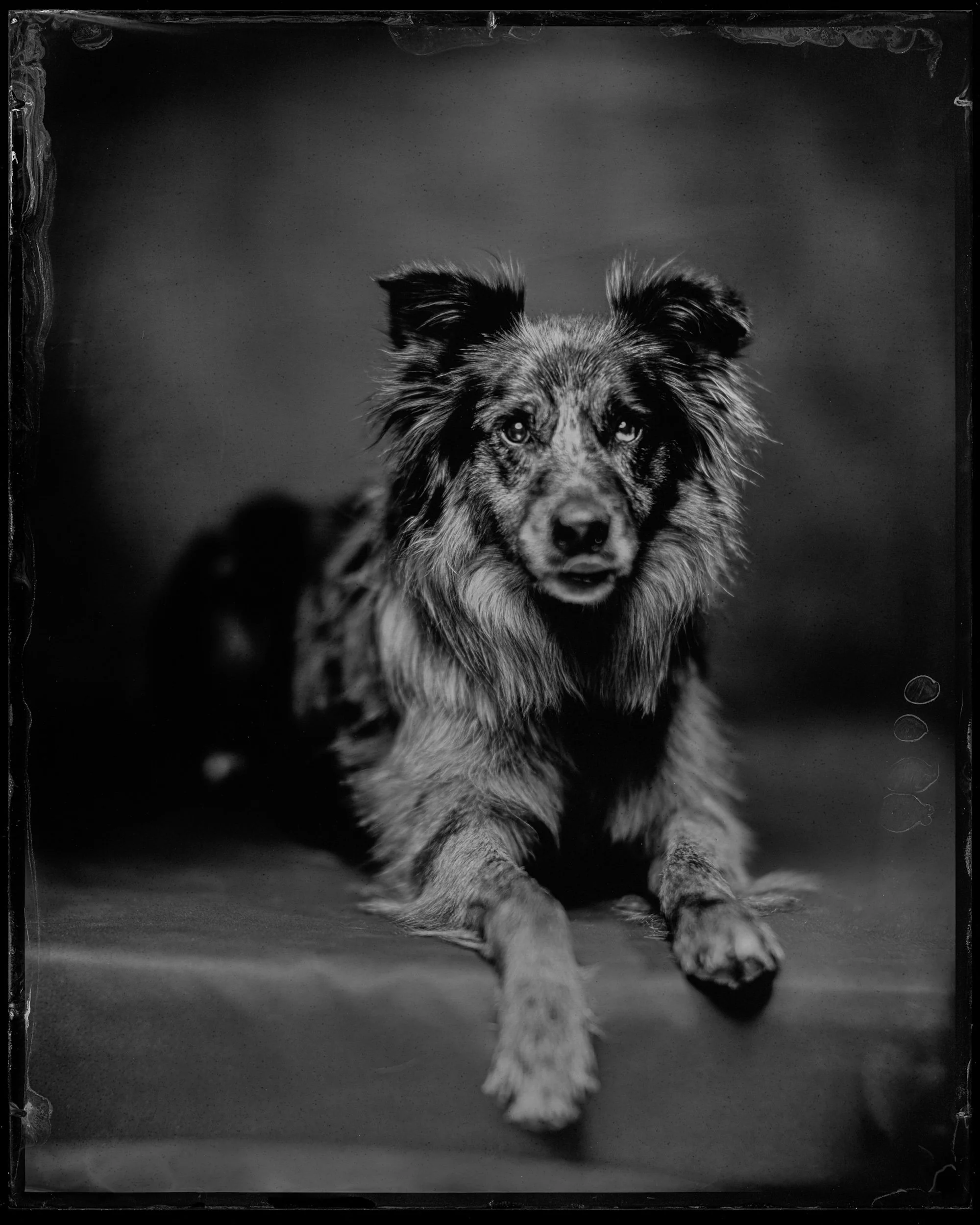
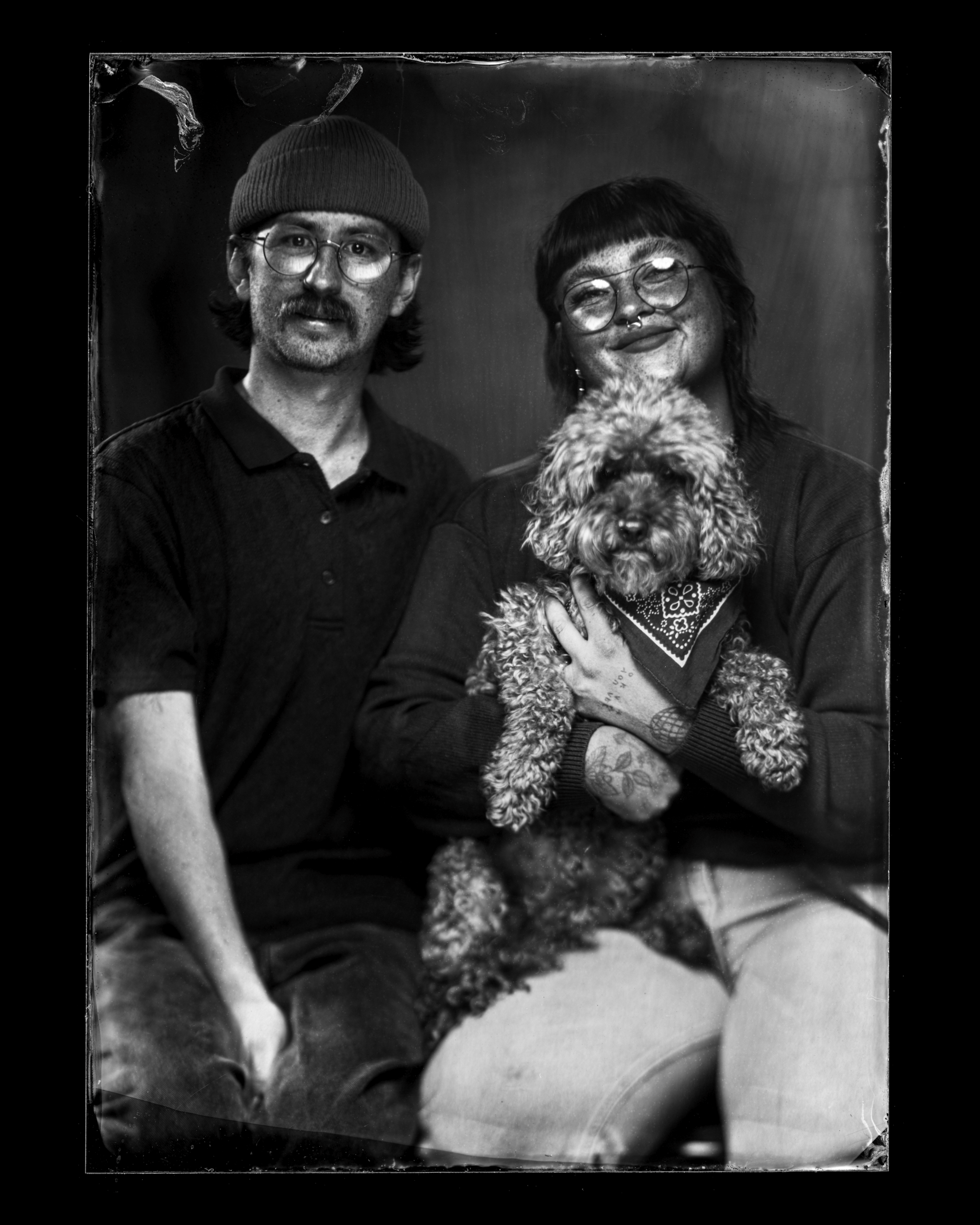
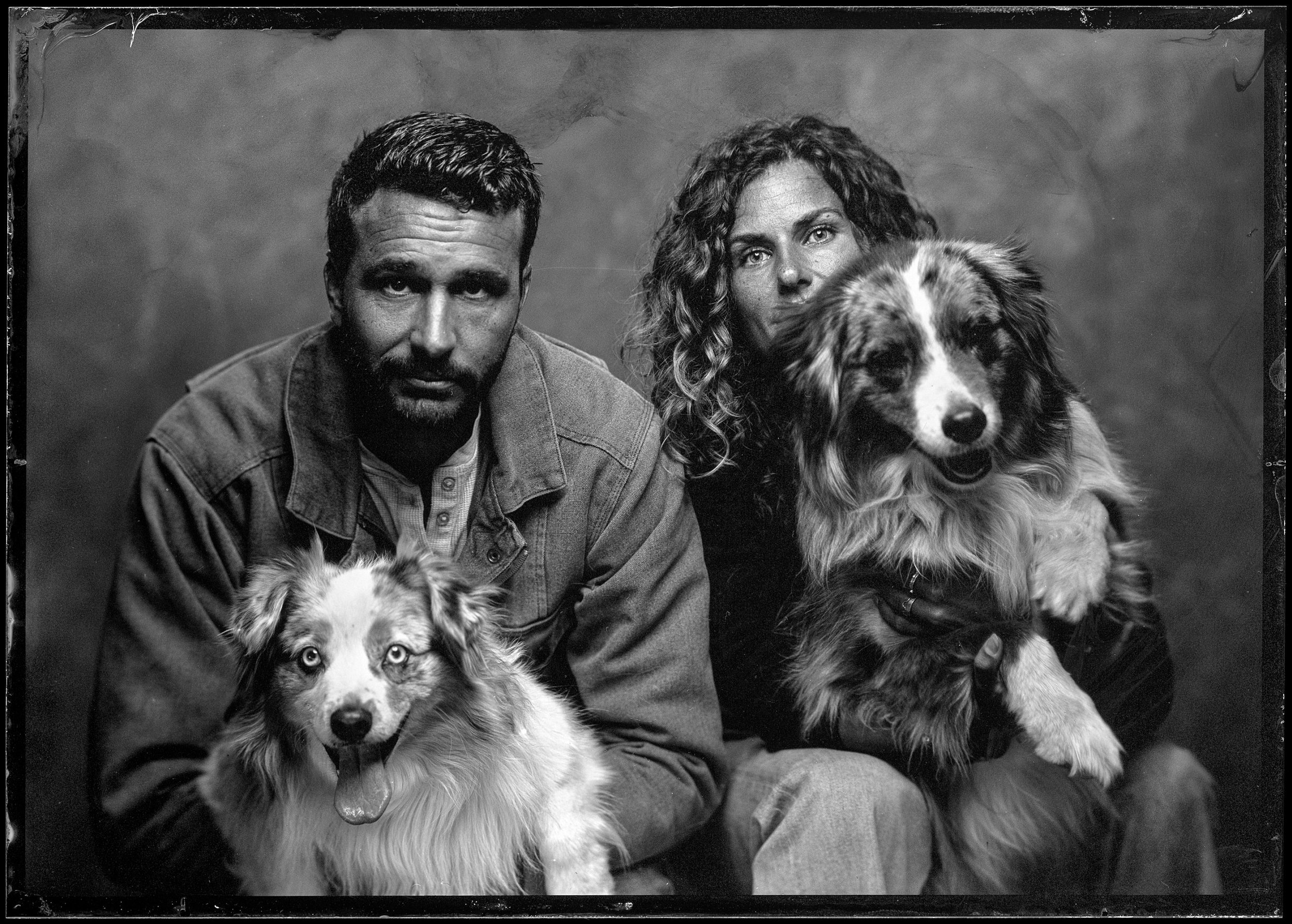
Making a tintype of a dog is genuinely difficult, and that is most of the appeal. Holding a deliberate pose is hard for a focused adult human; it is a near impossible ask for a four-legged athlete who has just found a room full of interesting smells. When it works the result has a seriousness no phone snapshot of your dog will ever have. Bring whatever your animal loves most and a second person to help wrangle.
Browse my portfolio
Testimonials
What you get
The physical plate, plus a digital scan sized for wherever you need to use it. The scan is what you send; the plate is what you keep. A tintype reads as a photograph rather than a filter at any size, and prints as well as it posts.
What to expect
Sessions run 1.5 to 3 hours depending on how many plates you want.
You watch the plate appear — the final stage of development happens in the studio, right in front of you. The darkroom itself stays closed: it is small, and the chemistry is not something to stand next to.
You keep the actual plate: silver on blackened metal, one of a kind, with no negative.
Every plate is scanned, and the process is filmed. Digital files and video are available as an add-on.
Plates are varnished with a traditional lavender-and-sandarac varnish and are archivally stable for well over a century.